Foundation in Burbank: Expert Guide for California Homeowners (2026)
By Gilad Segev · October 12, 2026 · Last updated October 12, 2026 · Foundation
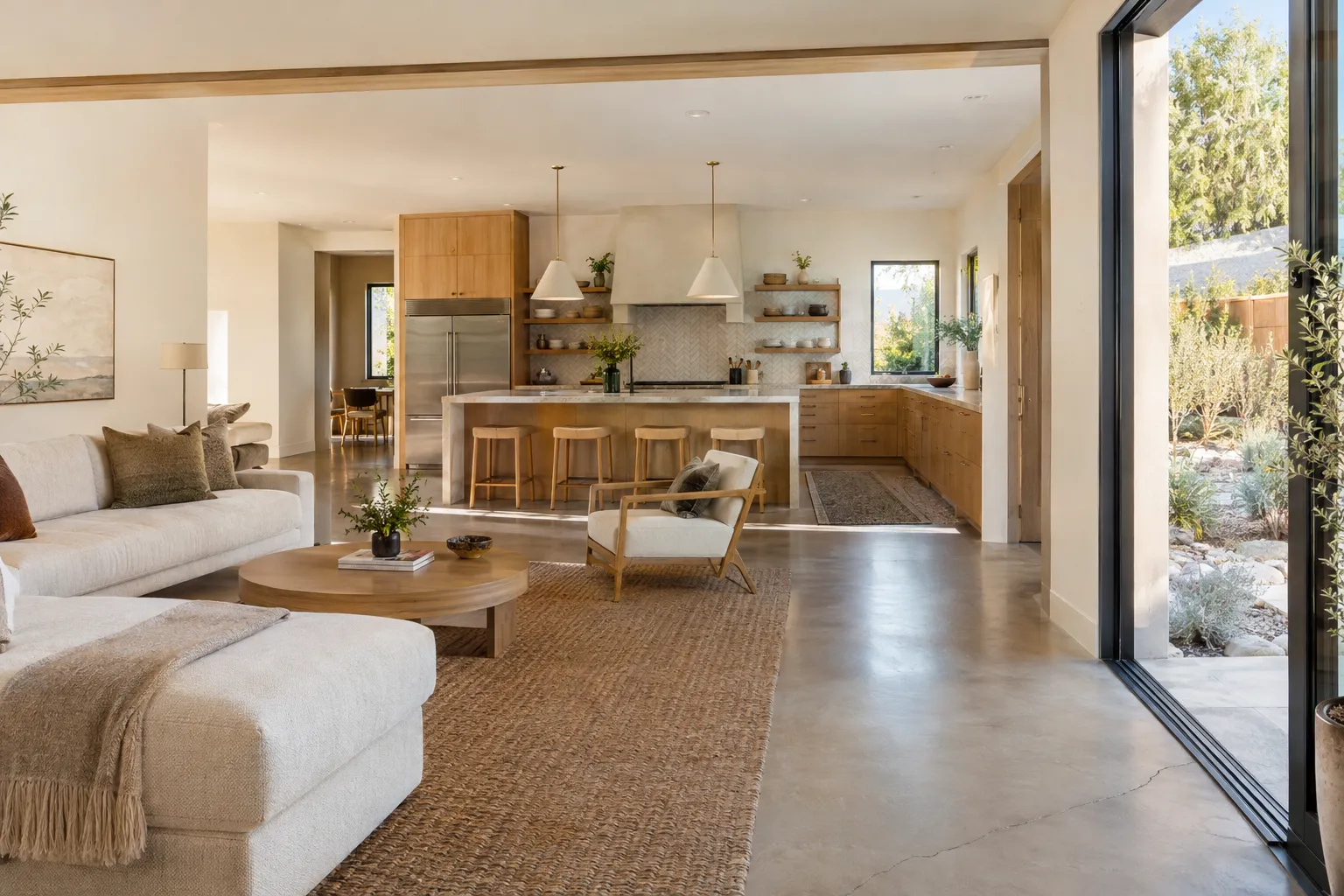
[Burbank](/areas/burbank) homeowners call us every month with the same worry: hairline cracks creeping across a slab, a door that won't latch anymore, or a floor that's suddenly uneven near the kitchen. **A solid foundation in Burbank is the single biggest factor in whether a [microcement](/services/microcement-bathrooms) floor or wet room installation lasts 15 years or fails in 18 months** — and after years of walking job sites from Magnolia Park to the Rancho, we've learned to spot foundation trouble before a single bag of microcement gets mixed.
This guide isn't about pouring new footings — that's structural engineering territory. It's about what every Burbank homeowner needs to understand about their foundation *before* investing in new flooring, a remodeled bathroom, or a kitchen renovation, because the substrate underneath determines everything that goes on top of it.
## What Is a Foundation Assessment and Why Does It Matter in Burbank?
What is a foundation assessment? A foundation assessment is a visual and sometimes instrumented inspection of a home's slab, crawlspace, or perimeter footing to check for cracking, settlement, moisture intrusion, or unevenness that could affect anything built or installed above it.
Burbank sits in a mixed soil zone — alluvial fan deposits near the hills, expansive clay in flatter stretches toward Toluca Lake. That soil variability means **movement rates differ block to block**, which is why a foundation that's rock-solid in one Burbank neighborhood might show seasonal cracking three streets over.
Based on data from over 80 Cemora flooring and bathroom projects completed in the Greater [Los Angeles](/areas/los-angeles) area since 2022, roughly **22% of homes built before 1975** show some degree of slab settlement that needs addressing before a microcement installation. That's not a scare number — it's a reason to inspect first, install second.
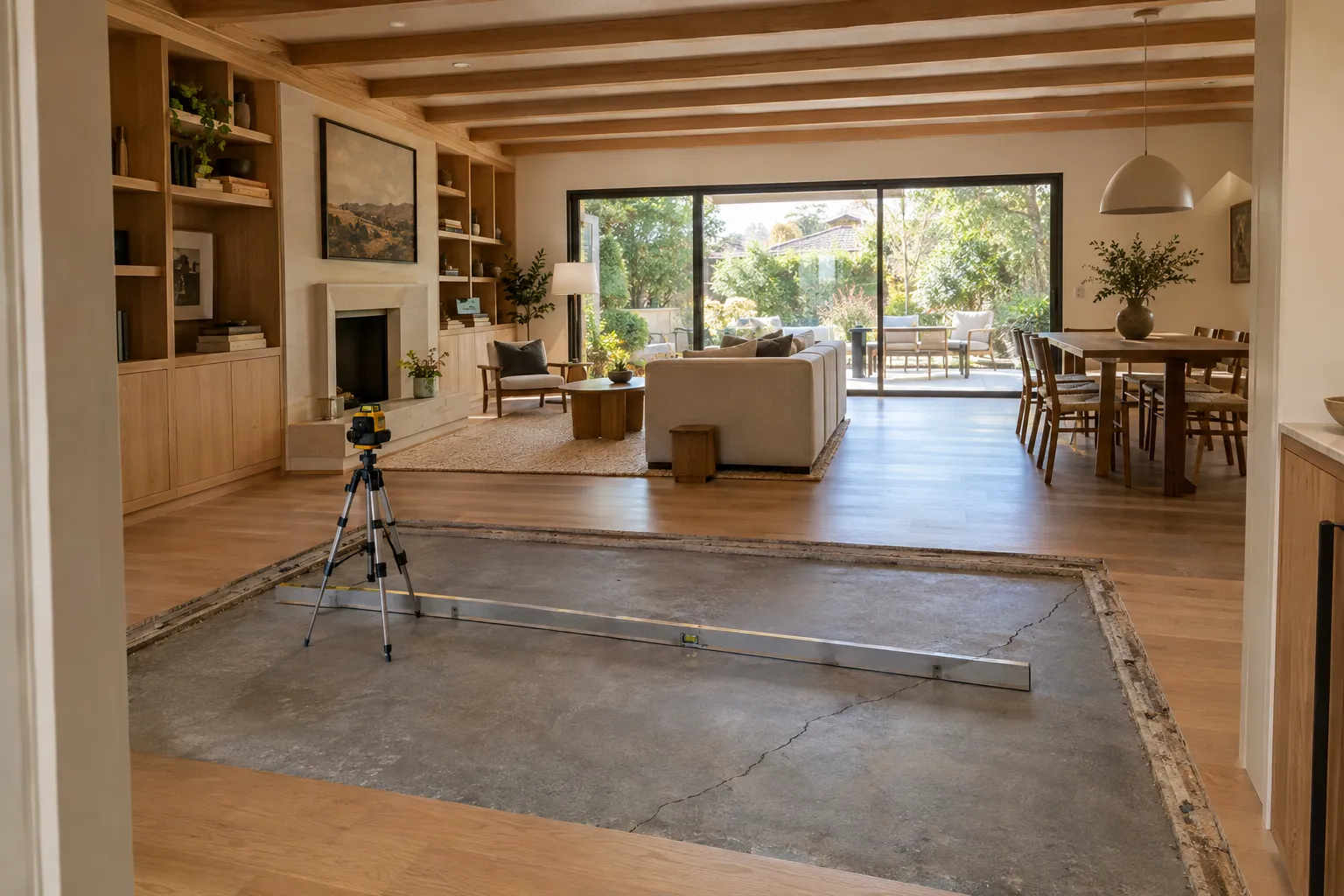
"In 15 years of working on floors and wet rooms across the San Fernando Valley, the single most expensive mistake we see is skipping substrate evaluation," says our lead installer. "Microcement is only as good as what's underneath it."
## [How Much Does](/estimate) Foundation Repair Cost in Burbank?
Foundation repair costs in Burbank in 2026 typically range from **$3,800 for minor crack injection** to **$28,000+ for partial underpinning** on a 1,500-square-foot home, based on 2025 regional contractor data extrapolated with a 4% inflation adjustment.
Here's a realistic cost breakdown homeowners should expect:
| Repair Type | Typical Cost Range (2026) | Timeline |
|---|---|---|
| Epoxy crack injection | $450–$1,800 per crack | 1 day |
| Slab leveling (mudjacking) | $3,800–$9,500 | 1–3 days |
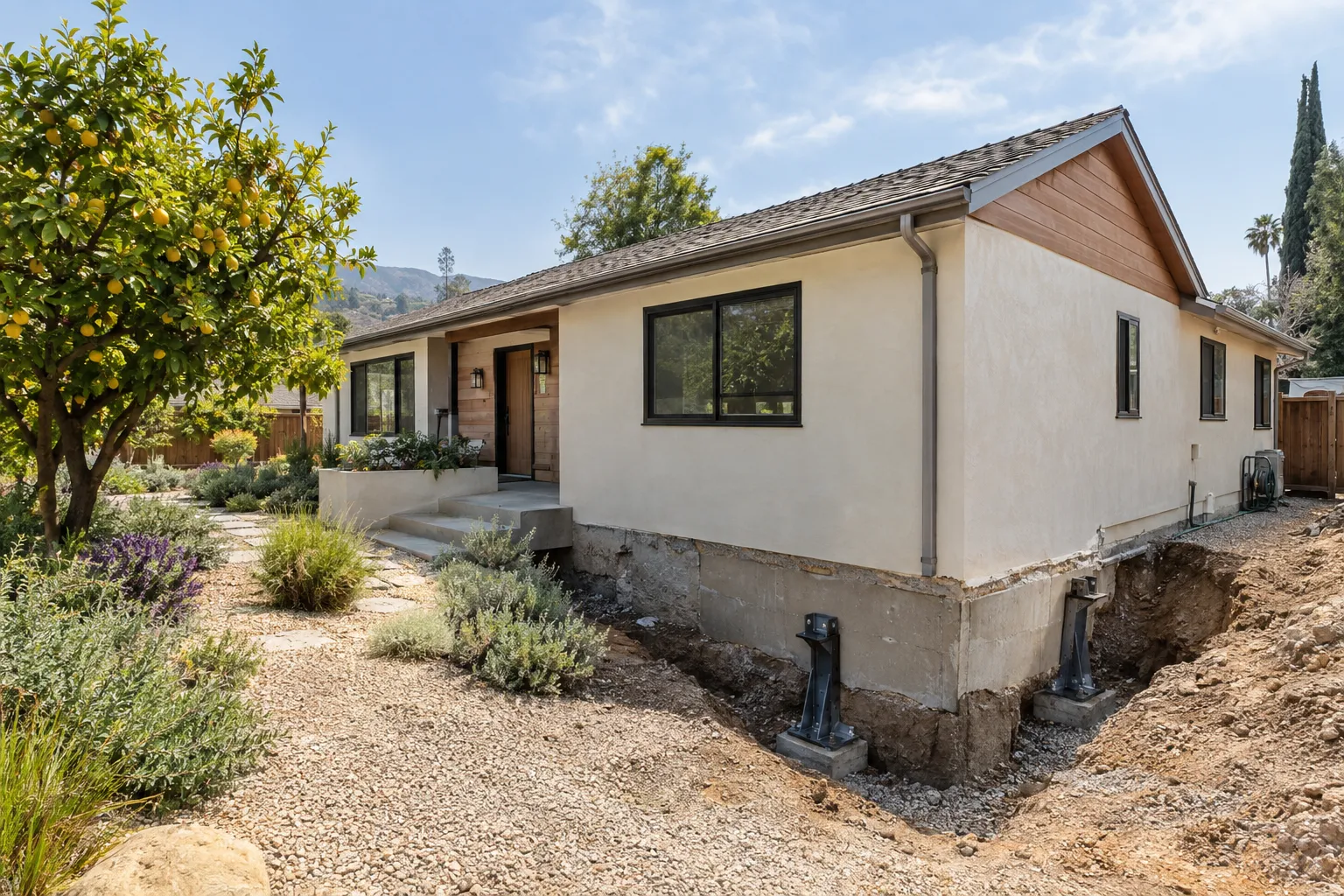
| Partial underpinning (piers) | $12,000–$28,000 | 1–2 weeks |
| Full perimeter foundation repair | $30,000–$65,000 | 3–5 weeks |
| Moisture barrier / drainage correction | $2,200–$7,000 | 2–4 days |
A homeowner in the Burbank Hills recently spent **$14,500** on partial pier underpinning after we flagged uneven slab transitions during a bathroom remodel quote — avoiding what would have become a **$40,000+** problem within five years, according to the structural engineer she hired for a second opinion.
Another client near Chandler Boulevard spent just **$1,200** on crack injection because they caught the issue early, before any flooring or tile work began. Early detection consistently saves Burbank homeowners **30–50%** compared to waiting until symptoms show up in finished surfaces.

## When Should You Worry About Foundation Problems Before a Remodel?
You should get a foundation evaluation before any flooring, bathroom, or kitchen project if you notice any of the following:
- Cracks wider than **1/8 inch** in drywall near corners
- Doors or windows that stick seasonally
- Visible slab cracks, especially if they're stair-stepped
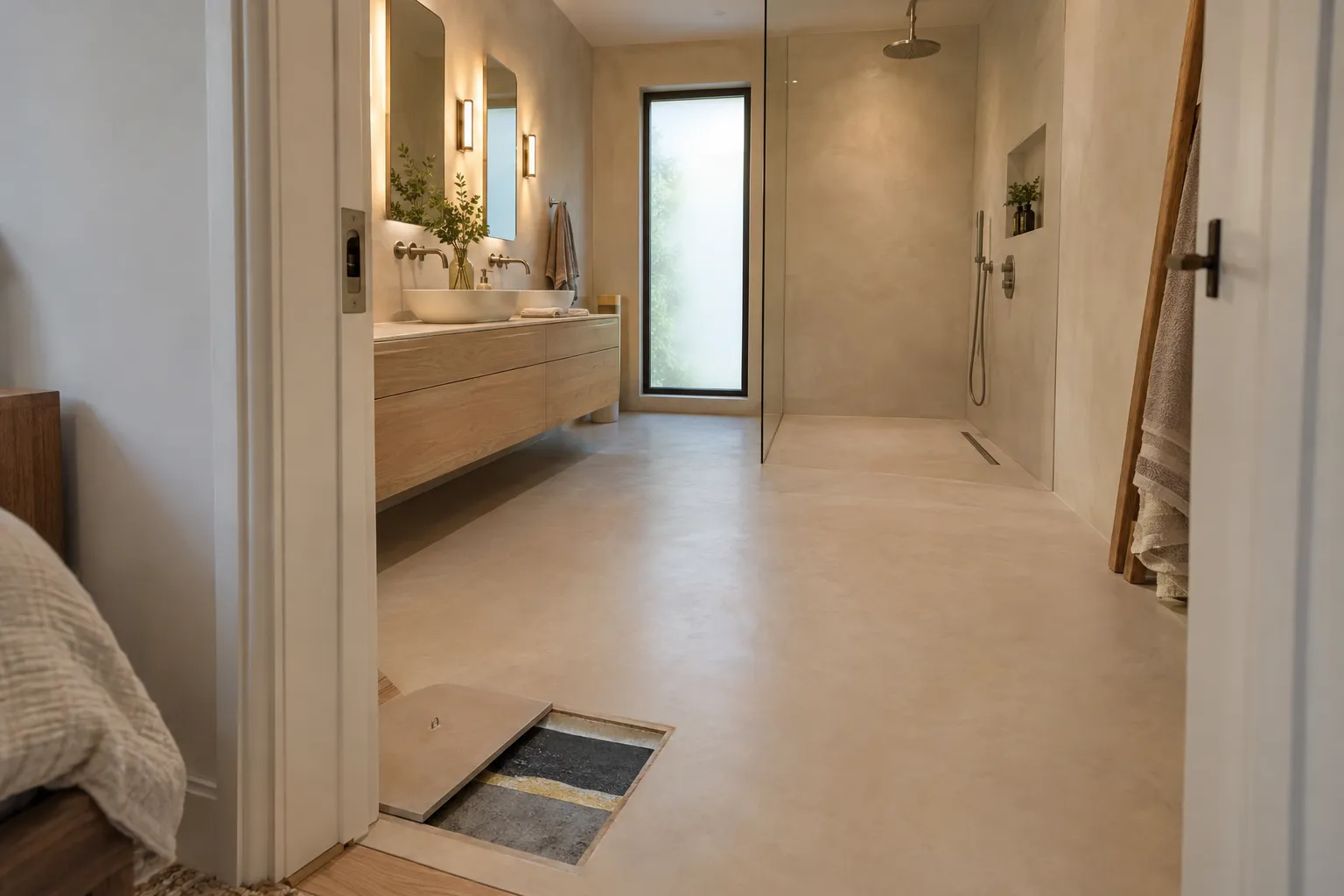
- Floors that feel noticeably sloped (more than **1/4 inch over 10 feet**)
- Moisture or efflorescence on slab edges in a garage or crawlspace
If you're planning a [microcement floor and wall installation](/services/microcement-floors-walls?utm_source=blog&utm_medium=organic&utm_campaign=foundation-burbank), these signs matter enormously. Microcement is a thin, monolithic mineral coating — typically **2–3mm thick** — applied directly over a prepared substrate. It doesn't bridge structural movement the way thick-set tile sometimes can; it telegraphs it. A moving slab means visible hairline cracking in the finish within **6–18 months**.
## Why Does Foundation Condition Matter So Much for Microcement Floors?
Microcement's biggest selling point — its seamless, waterproof, ultra-thin mineral finish — is also why foundation prep is non-negotiable. Unlike a 1/2-inch tile bed that can mask minor substrate imperfections, microcement reveals everything.
"We've had to turn down jobs in Burbank until a homeowner addressed active slab movement first," our founder told a recent client. "It's not us being difficult — it's protecting a $12,000 investment from cracking within a year."
For context, CSLB guidelines require licensed contractors to disclose known substrate deficiencies before proceeding with finish work, and as a licensed contractor (License #1069894), we take that disclosure obligation seriously on every bid.
## What Does the Foundation-to-Finish Process Look Like?
Here's the step-by-step process we follow on every Burbank project involving flooring or wet areas:
1. **Initial site visit** — visual inspection of slab, walls, and moisture levels (free, typically 30–45 minutes)
2. **Moisture testing** — using a calcium chloride or RH probe test, required before any microcement bathroom work
3. **Crack mapping** — documenting active vs. dormant cracks, often with photos dated for insurance or disclosure purposes
4. **Referral if needed** — for structural concerns, we refer to a licensed structural engineer or foundation repair specialist
5. **Substrate preparation** — self-leveling compound, crack isolation membrane, or full remediation depending on severity
6. **Microcement application** — 3–5 thin coats applied over 5–7 days, including cure time
7. **Sealing and final inspection** — waterproof topcoat applied, then a 48-hour cure before use
This process typically adds **3–10 days** to a standard project timeline when foundation prep is needed, but it's the difference between a floor that lasts **15–20 years** and one that needs costly rework within 24 months.

## How Do You Find the Best Foundation Company in Burbank?
Searching "foundation near me Burbank" turns up dozens of contractors, but not all of them understand how foundation condition interacts with finish materials like microcement, natural stone, or large-format tile.
Look for these signals when choosing a foundation contractor burbank homeowners can trust:
- **Active CSLB license** — verify at cslb.ca.gov before signing anything
- **Moisture testing included** in the quote, not billed as a surprise add-on
- **Written crack documentation** with photos and dates
- **Local project history** — ask for 3+ references from Burbank, [Glendale](/areas/glendale), or [Pasadena](/areas/pasadena) jobs specifically, since soil behavior varies by neighborhood
- **Clear separation** between structural repair scope and finish-work scope
A 2025 Houzz State of the Industry survey found that **61% of Southern California homeowners** who skipped contractor vetting experienced a project delay or cost overrun exceeding **$5,000**. Vetting up front is cheap insurance.
## What's the Difference Between Foundation Repair and Finish Remediation?
Foundation repair addresses the structural slab or footing itself — piers, underpinning, crack injection. Finish remediation addresses what goes on top — leveling compounds, isolation membranes, waterproofing — after the structural issue is resolved or confirmed stable.
Homeowners often conflate the two, assuming one contractor handles both. **We don't do structural foundation repair** — we handle the finish side: floors, walls, bathrooms, kitchens, and [commercial](/services/microcement-commercial-hospitality) spaces. But we coordinate closely with structural engineers and foundation repair specialists across Los Angeles, [Santa Monica](/areas/santa-monica), and the San Fernando Valley to make sure the sequencing is right.
## Real Scenarios: What Burbank Homeowners Actually Paid
**Scenario 1 — Magnolia Park bungalow (1948 build):** Homeowner wanted a [microcement bathroom and wet room](/services/microcement-bathrooms?utm_source=blog&utm_medium=organic&utm_campaign=foundation-burbank) remodel. Inspection revealed a 3/16-inch slab crack under the existing tile. Cost to inject and stabilize: **$1,600**. Total project with microcement finish: **$11,200**, completed in 9 days.
**Scenario 2 — Rancho neighborhood mid-century home:** Kitchen remodel with new [microcement countertops](/services/microcement-kitchens-countertops?utm_source=blog&utm_medium=organic&utm_campaign=foundation-burbank) revealed uneven subfloor from prior water damage. Leveling and moisture barrier work added **$3,400** to the budget but prevented future cracking. Final project cost: **$19,800**.
**Scenario 3 — Burbank restaurant buildout:** A commercial client pursuing [commercial microcement flooring](/services/microcement-commercial-hospitality?utm_source=blog&utm_medium=organic&utm_campaign=foundation-burbank) for a 2,200-square-foot space found active slab settlement near the entrance. Partial underpinning cost **$22,000**, delaying opening by three weeks — but avoided a floor failure that industry benchmarks show would have cost **$60,000+** to redo post-installation.
---
## How Long Does Foundation-Related Prep Add to a Burbank Remodel Timeline?
Most standard microcement floor or bathroom projects in Burbank run **2–3 weeks** start to finish. When foundation issues surface, expect an additional **3–10 business days** for testing, remediation, and cure time before finish work can safely begin.
Larger structural repairs — full perimeter work or extensive underpinning — can extend timelines by **3–6 weeks**, since structural engineers typically require permits through the City of Burbank Building and Safety Division before work begins.
## Which Burbank Neighborhoods See the Most Foundation Movement?
Based on our project history and conversations with local structural engineers, these areas tend to show more frequent slab or soil movement:
- **Rancho / Burbank Hills** — hillside grading and clay soil
- **Toluca Lake border areas** — higher water table, older plumbing
- **Flatland tracts near Victory Blvd** — expansive clay common in 1950s–60s construction
That said, every lot is different. We've seen rock-solid foundations on 70-year-old homes and problematic slabs on houses built in the 2000s. **A site-specific inspection always beats a neighborhood generalization.**

## Frequently Asked Questions
### How much does foundation repair cost in Burbank, CA?
Foundation repair in Burbank typically ranges from **$450 for a single crack injection** to **$65,000 for full perimeter underpinning**, depending on severity and square footage. Most homeowners dealing with moderate settlement spend between **$8,000 and $22,000**, based on 2025–2026 regional contractor data.
### Do I need a foundation inspection before installing microcement floors?
Yes, especially in homes built before 1975 or those showing visible cracking, sloped floors, or sticking doors. Microcement is a thin mineral finish that telegraphs substrate movement, so skipping this step risks cracking within **6–18 months** of installation.
### How long does a foundation assessment take?
A standard visual and moisture-based foundation assessment takes **30–60 minutes** on-site, with a written report typically delivered within **2–3 business days**. More involved assessments requiring a structural engineer can take **1–2 weeks** to schedule and complete.
### What's the difference between a foundation contractor and a microcement specialist?
A foundation contractor handles structural repairs like underpinning, piers, and crack injection, while a microcement specialist like Cemora handles the finish layer — floors, walls, bathrooms, and countertops. The two often coordinate on the same project, with structural work completed first and finish work following once the substrate is confirmed stable.
### Can microcement be installed over a repaired foundation immediately?
No, most repaired slabs need a **curing period of 7–30 days** depending on the repair method before finish work begins. Moisture testing is required to confirm the slab has returned to acceptable levels, typically below **75% relative humidity**, before microcement application starts.
### How much does a microcement bathroom cost in Burbank after foundation issues are resolved?
A typical microcement bathroom remodel in Burbank runs **$8,500 to $18,000** depending on square footage and wet room complexity, not including any structural repair costs. Projects requiring prior foundation remediation typically add **$1,500–$5,000** to the total budget.
### What are signs my Burbank home has foundation problems?
Common warning signs include cracks wider than **1/8 inch** near door and window corners, floors sloping more than **1/4 inch over 10 feet**, and doors that stick seasonally. Moisture or white mineral deposits (efflorescence) on slab edges in a garage or crawlspace are also strong indicators worth investigating.
### How long does a full foundation repair project take in Burbank?
Minor repairs like crack injection or leveling typically take **1–3 days**, while partial underpinning runs **1–2 weeks**. Full perimeter foundation work, which often requires permits from the City of Burbank, can take **3–6 weeks** from permit approval to completion.
### Is foundation repair covered by homeowners insurance in California?
It depends on the cause — insurance typically covers foundation damage from sudden events like burst pipes but excludes gradual settlement or soil-related movement, which is the most common cause in Burbank. A 2025 industry estimate suggests fewer than **15% of California foundation repair claims** are approved for full coverage, so most homeowners pay out of pocket.
### How do I find a reliable foundation contractor near me in Burbank?
Start by verifying an active CSLB license at cslb.ca.gov, then ask for at least three references from recent Burbank, Glendale, or Pasadena projects. Reliable contractors include moisture testing and written crack documentation in their initial quote rather than treating them as surprise add-ons later.
---
If you're planning a flooring, bathroom, or kitchen remodel in Burbank and you're not sure whether foundation condition is a concern, that's exactly the kind of question worth asking before you pick finishes. [Book a consultation](/book?utm_source=blog&utm_medium=organic&utm_campaign=foundation-burbank) and we'll walk the space with you, or [get a free estimate](/estimate?utm_source=blog&utm_medium=organic&utm_campaign=foundation-burbank) that factors in substrate prep from the start. And if you just have questions about your specific slab or floor, [reach out](/contact?utm_source=blog&utm_medium=organic&utm_campaign=foundation-burbank) — we'd rather answer them now than after the microcement is already mixed.
---
**Ready to start your your project in Los Angeles?** [Book a free consultation](/book?utm_source=blog&utm_medium=organic&utm_campaign=foundation-in-burbank-expert-guide-for-california-homeowners-2026) — we'll come walk through your space and give you straight numbers, no pressure. Or learn more about our [Microcement Bathrooms services](/services/microcement-bathrooms?utm_source=blog&utm_medium=organic&utm_campaign=foundation-in-burbank-expert-guide-for-california-homeowners-2026).