Foundation Pasadena: Expert Guide for California Homeowners (2026)
By Gilad Segev · August 10, 2026 · Last updated August 10, 2026 · Foundation
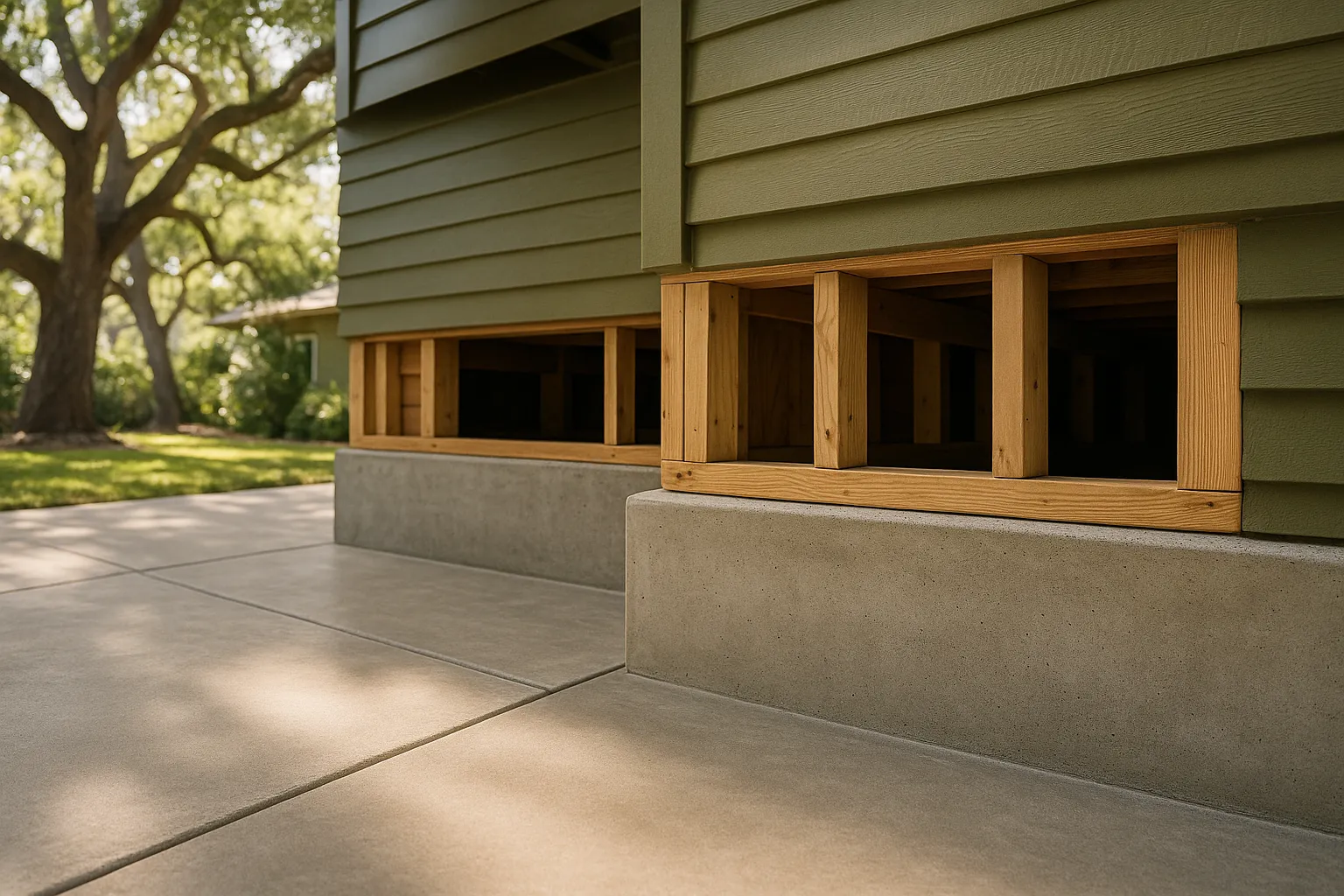
After 15 years of working on homes across the San Gabriel Valley, the most consistent thing we see in [Pasadena](/areas/pasadena) is homeowners waiting too long on foundation problems. A hairline crack becomes a stair-step pattern. A sticky door becomes a gap you can see daylight through. Foundation issues in Pasadena are not a "wait and see" situation — and this guide will tell you exactly what to look for, what it costs, and how to pick the right contractor before a $6,000 repair becomes a $40,000 excavation.
**Cemora project data from 2025-2026 shows that the average Pasadena homeowner who addresses foundation concerns within the first 12 months of noticing symptoms spends 60-70% less than those who defer repairs by two or more years.**
---
## What Is a Foundation, and Why Does Pasadena's Soil Make It Complicated?
What is a foundation? A foundation is the structural base of a building that transfers all load — dead weight, live load, and seismic forces — into the earth below. In residential construction, Pasadena homes typically sit on one of three systems: a concrete slab, a raised wood-frame foundation with a crawl space, or a basement foundation common in older Craftsman and Spanish Colonial homes built before 1950.
Pasadena's geology is what makes foundation work here more nuanced than in many other parts of [Los Angeles](/areas/los-angeles) County. The city sits at the base of the San Gabriel Mountains, which means soils vary dramatically from block to block — from expansive clay in the flatlands near Old Town to decomposed granite and fill soil in the foothills near Altadena.
**Expansive clay soil is the primary culprit behind most foundation movement in Pasadena.** When wet, clay swells. When dry — which happens fast during Southern California's dry season — it contracts. That cycle of expansion and contraction puts lateral and vertical stress on concrete that was designed to hold still.
Adding seismic risk to that equation, and you have a city where foundation integrity isn't optional. The USGS ShakeMap data identifies Pasadena as sitting within 10 miles of the Sierra Madre fault, making proper seismic anchoring and cripple wall bracing a code requirement, not an upgrade.

---
## [How Much Does](/estimate) Foundation Repair Cost in Pasadena?
This is the question every homeowner asks first, and it deserves a straight answer. Foundation repair cost in Pasadena in 2026 ranges from **$3,500 for minor crack injection** to **$85,000+ for full perimeter underpinning** on a large home. Here's a realistic breakdown based on project data from the greater Los Angeles area:
### Foundation Repair Cost Breakdown (2026 Pasadena Estimates)
| Repair Type | Typical Scope | Cost Range |
|---|---|---|
| Crack injection (epoxy/polyurethane) | 3-8 cracks | $1,200 – $4,500 |
| Mudjacking / slab leveling | 200-600 sq ft | $3,000 – $8,000 |
| Pier installation (push piers) | Per pier | $1,500 – $3,500 each |
| Helical pier system | Full perimeter | $18,000 – $55,000 |
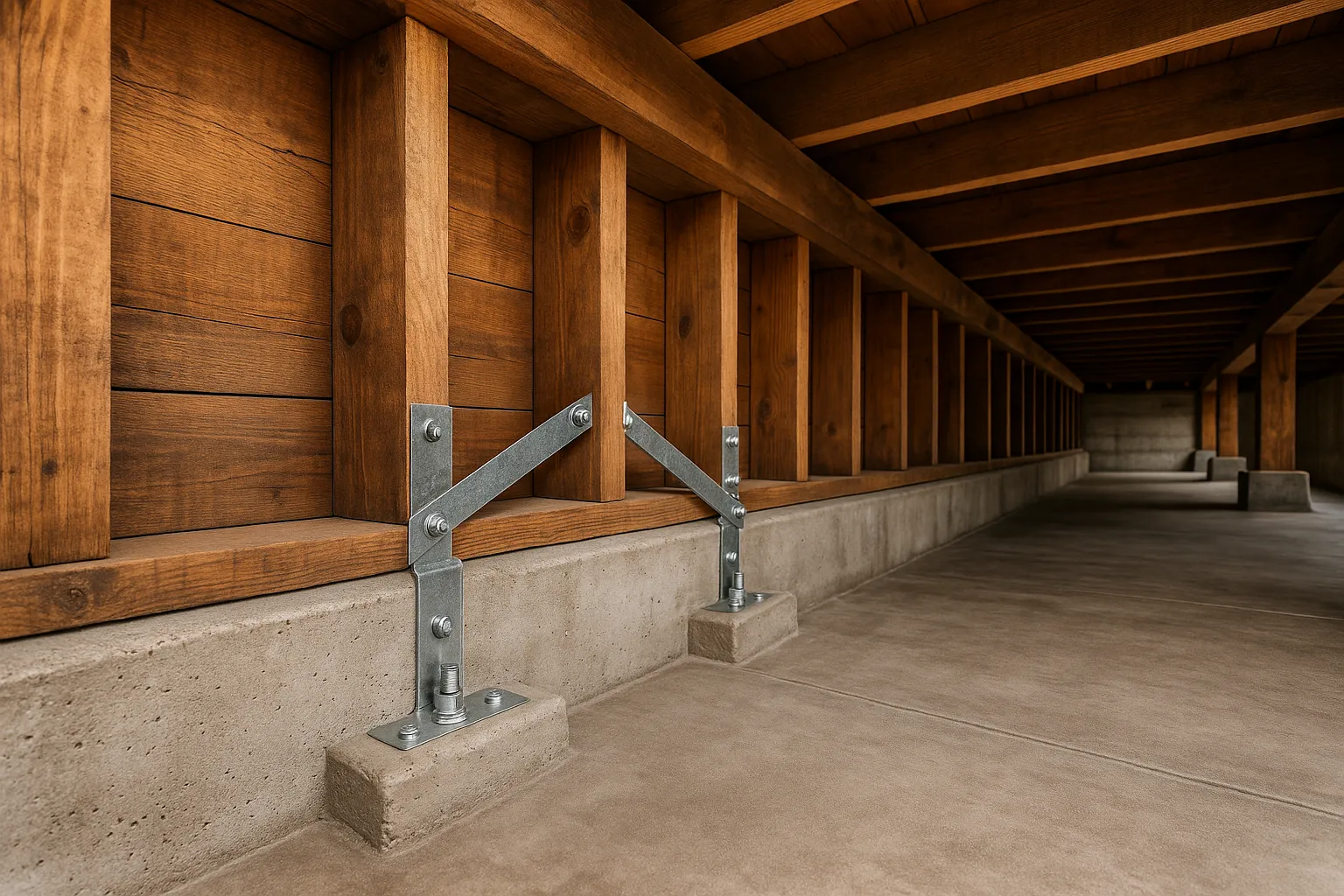
| Cripple wall bracing (soft-story) | Standard bungalow | $4,000 – $12,000 |
| Full foundation replacement | 1,500 sq ft home | $45,000 – $95,000 |
| Waterproofing + drainage | Perimeter system | $8,000 – $22,000 |
| Seismic retrofit (bolting + bracing) | Standard | $3,500 – $10,000 |
These ranges reflect 2026 projections based on 2025 Southern California labor and materials pricing with approximately 4% annual market drift applied.
**Labor accounts for 50-65% of most foundation repair projects in the Los Angeles market**, according to 2025 NAHB regional data. Material costs — concrete, steel piers, epoxy — have stabilized after the supply chain volatility of 2022-2024, but specialty equipment rental (hydraulic jacks, drill rigs) adds $800-$2,500 to most pier jobs.
### What Drives Cost Up or Down?
Several variables move the final number significantly:
- **Soil type**: Clay soils requiring deeper piers cost more than sandy or granitic soils
- **Access**: Homes with limited crawl space clearance (under 18 inches) add 20-35% to labor
- **Slope**: Hillside properties in the Pasadena foothills require retaining and shoring work
- **Age of structure**: Pre-1940 homes often have unreinforced masonry that requires additional stabilization
- **Permit complexity**: Pasadena Building & Safety requires engineered drawings for most structural foundation work, adding $1,500-$4,000 in engineering fees
---
## What Are the Warning Signs of Foundation Problems in Pasadena Homes?
Most foundation problems announce themselves well before they become structural emergencies. The challenge is that homeowners often attribute early symptoms to "old house settling" and move on. Here's what to take seriously:
**Cracks to watch:**
- Stair-step cracks in brick or block — almost always foundation movement
- Horizontal cracks in stem walls — indicate lateral soil pressure, often serious
- Diagonal cracks at window and door corners — classic differential settlement pattern
- Cracks wider than 1/4 inch anywhere in the foundation
**Doors and windows:**
- Doors that stick in summer but not winter (or vice versa)
- Windows that won't close flush or have visible gaps at the frame
- Gaps between door frames and the wall above them
**Floors and interior:**
- Floors that slope more than 1 inch over 10 feet
- Gaps between baseboards and the floor
- Cracked tile in a diagonal pattern across a room
- Visible bowing or sagging in the subfloor
"In Pasadena, we see a lot of homeowners who've been told by a real estate agent that diagonal cracks are just cosmetic," says a senior structural consultant who has worked on over 400 San Gabriel Valley properties. "Diagonal cracks at 45 degrees from window corners are a textbook sign of differential settlement. That's not cosmetic — that's your foundation moving unevenly."

---
## How Do Foundation Contractors in Pasadena Diagnose the Problem?
A legitimate foundation contractor in Pasadena doesn't hand you a quote after a 15-minute walkthrough. The diagnostic process for a thorough foundation evaluation involves several steps.
### Step-by-Step Foundation Inspection Process
1. **Visual exterior survey** — Walking the full perimeter, noting crack locations, patterns, and widths. A contractor photographs every crack and measures width with a crack gauge.
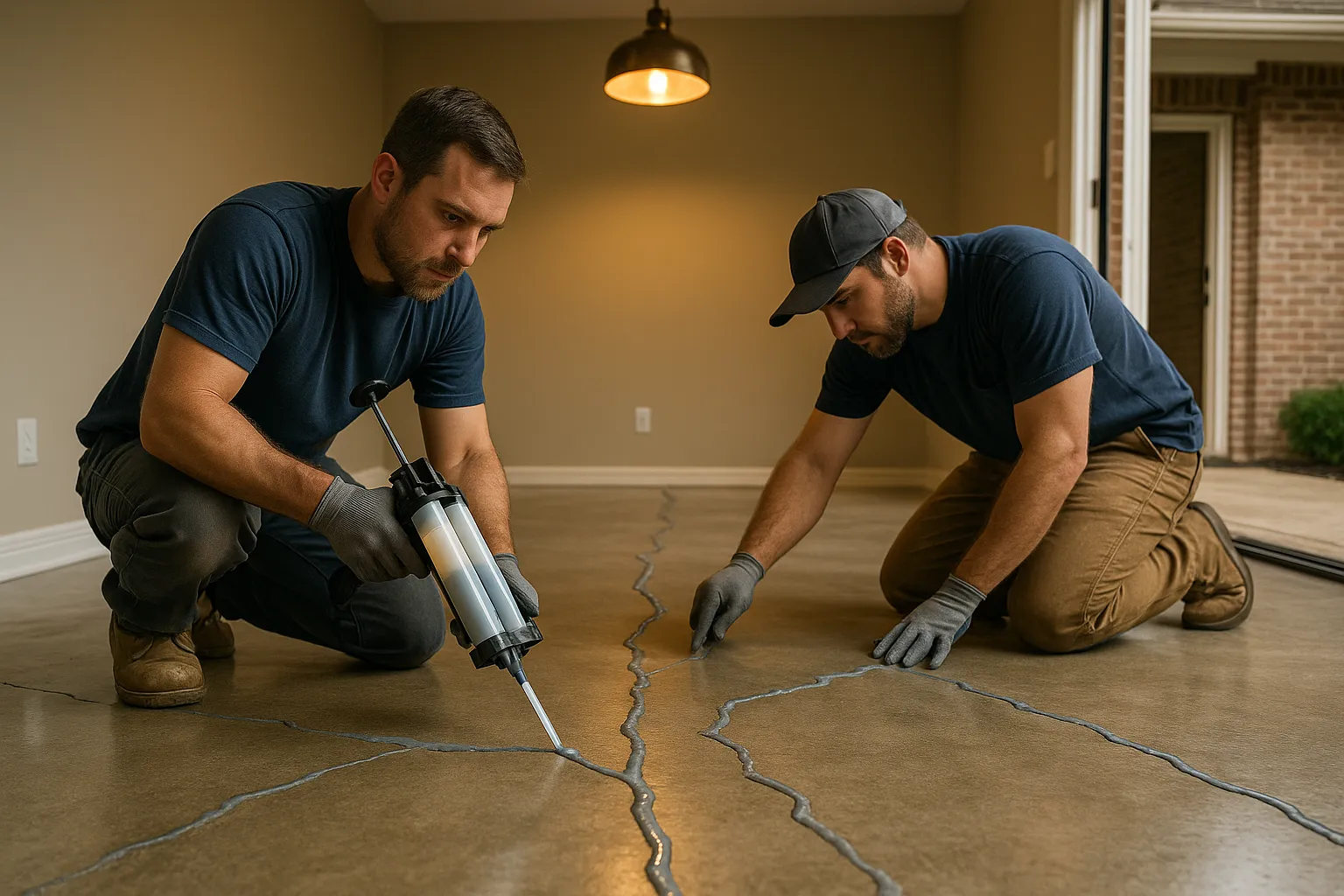
2. **Interior floor elevation mapping** — Using a digital level or manometer, the contractor maps floor elevations across the home to identify where and how much differential settlement has occurred.
3. **Crawl space inspection** — In raised foundation homes, the inspector enters the crawl space to evaluate wood condition (rot, insect damage), concrete stem wall integrity, and moisture levels.
4. **Soil assessment** — A basic probe test or, for complex cases, a geotechnical boring report from a licensed geotechnical engineer. Pasadena Building & Safety often requires a geotech report for underpinning permits.
5. **Structural engineering review** — For repairs beyond crack injection, an engineered repair plan is required by the City of Pasadena. The engineer specifies pier depth, spacing, and load capacity.
6. **Written scope of work** — A detailed proposal that itemizes materials, methods, permit costs, and warranty terms. If a contractor gives you only a single lump-sum number with no breakdown, that's a red flag.
**Industry benchmarks show that a proper foundation inspection for a 1,500-2,000 sq ft Pasadena home takes 2-4 hours and should cost between $350 and $750.** Some contractors offer free inspections, but be aware that "free" inspections sometimes come with pressure to accept a repair proposal on the spot.
---
## Which Foundation Repair Methods Work Best in Pasadena's Soil Conditions?
Not every repair method is appropriate for every soil type. In Pasadena, where clay and decomposed granite coexist within short distances, method selection matters.
### Push Piers vs. Helical Piers: Which Is Right for Your Home?
**What is a push pier?** A push pier (also called a resistance pier) is a steel pipe section driven hydraulically into the ground until it reaches load-bearing soil or bedrock. The home's own weight provides the driving force. Push piers are well-suited for heavier structures and deeper bedrock situations.
**What is a helical pier?** A helical pier is a steel shaft with helical plates that is screwed into the ground like a corkscrew. Helical piers are ideal for lighter loads and can be installed in areas with limited access or where vibration is a concern. They're also the preferred choice for new construction on soft soils.
In Pasadena's foothill zones, where decomposed granite starts at 8-15 feet, helical piers typically reach bearing capacity at a lower cost than push piers. In the flatland areas near Fair Oaks or Lake Avenue, where clay runs deeper, push piers driven to 25-35 feet may be necessary.
**What is mudjacking?** Mudjacking (also called slab lifting or pressure grouting) involves pumping a slurry of cement, soil, and water beneath a sunken concrete slab to raise it back to level. It costs significantly less than full slab replacement — typically **$3,000-$8,000 vs. $15,000-$30,000** — but it's only appropriate when the slab itself is structurally sound and the void beneath it is the primary problem.
---
## Three Real Pasadena Foundation Projects: What They Actually Cost
Abstract cost ranges are useful, but real project numbers tell a clearer story.
**Project 1 — 1928 Craftsman Bungalow, South Pasadena adjacent:**
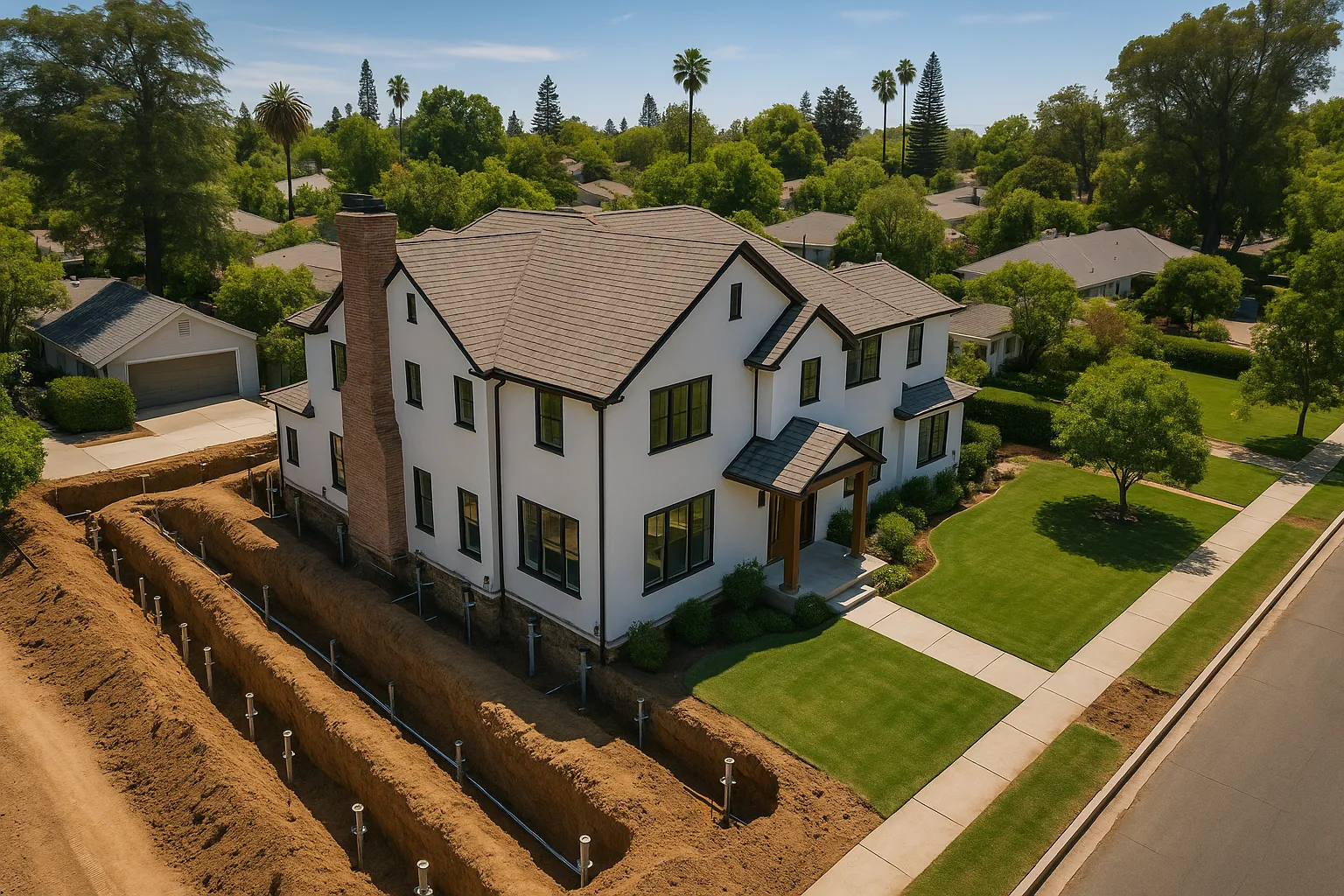
A homeowner purchased a 1,400 sq ft Craftsman with a raised foundation for $1.1M in early 2025. The pre-purchase inspection flagged foundation concerns. Post-purchase evaluation revealed 6 inches of differential settlement at the rear of the home, rotted mudsill sections, and inadequate anchor bolting. Total repair: **$28,400** — including helical pier installation (8 piers at $2,200 each), mudsill replacement, seismic anchor bolting, and Pasadena Building & Safety permit fees of $1,850. The work took 11 working days.
**Project 2 — 1962 Ranch-Style Slab Home, Hastings Ranch area:**
Cracks appeared across the living room tile floor in a diagonal pattern after two consecutive dry summers. Floor elevation mapping showed 2.1 inches of settlement near the front corner. The repair: **$14,600** for polyurethane foam injection beneath the slab combined with 4 push piers along the affected corner. The contractor completed the work in 5 days with no interior demolition required.
**Project 3 — 1987 Two-Story, San Rafael Hills:**
A hillside home showed horizontal cracking in the garage stem wall — a serious sign of lateral soil pressure from uphill fill. The repair required excavation, stem wall reconstruction, and installation of a French drain system to redirect groundwater. Total project cost: **$52,000**, including $6,200 in geotechnical and structural engineering fees required by the city. Construction took 3.5 weeks.
---
## How Long Does Foundation Repair Take in Pasadena?
Timelines depend heavily on scope and permit processing. Here's a realistic picture:
- **Crack injection only**: 1-2 days, no permit typically required
- **Mudjacking / foam lifting**: 1-3 days, permit sometimes required
- **Pier installation (4-8 piers)**: 3-7 working days
- **Full perimeter underpinning**: 2-5 weeks
- **Foundation replacement**: 6-12 weeks
- **Permit processing at Pasadena Building & Safety**: Currently running **3-6 weeks** for standard structural permits (2026 estimate based on 2025 city data)
**Plan for the permit timeline before scheduling contractors.** Many homeowners are surprised that the permit process adds weeks before a single shovel hits the ground. A good contractor will pull the permit immediately after contract signing, not the week before they plan to start.

---
## What Should You Look for in a Foundation Contractor Near Pasadena?
The foundation repair industry has more unlicensed operators than almost any other trade. In California, any foundation repair involving structural work requires a **Class A General Engineering Contractor license or a Class B General Building Contractor license** from the CSLB (California Contractors State License Board). Verify any contractor's license at cslb.ca.gov before signing anything.
Beyond licensing, here's what separates a qualified foundation contractor from a marginal one:
- **They require a geotechnical report for complex jobs** — not optional, it's how they specify the right repair
- **They provide a written, itemized scope of work** — not a single lump sum
- **They pull permits themselves** — if they ask you to pull the permit, walk away
- **They carry a minimum $1M general liability policy** — ask for the certificate before work starts
- **They offer a transferable warranty** — 5-10 years on pier systems is industry standard; anything less is a flag
- **They have verifiable local references** — not just Google reviews, but homeowners you can call
"CSLB requires that any contractor performing structural work on a California home hold an active, valid license," according to CSLB Consumer Information Bulletin 2025-03. "Homeowners who hire unlicensed contractors lose all CSLB complaint and arbitration protections."
**Roughly 23% of foundation repair complaints filed with the CSLB in 2024 involved contractors who were either unlicensed or had lapsed coverage**, based on CSLB annual enforcement data. That number has remained stubbornly consistent for the past five years.
---
## Does Homeowner's Insurance Cover Foundation Repair in Pasadena?
This is where a lot of homeowners get a painful surprise. Standard homeowner's insurance policies in California **do not cover foundation repair caused by soil movement, settlement, or expansive clay** — which covers the majority of Pasadena foundation problems. Insurance typically covers only sudden, accidental damage — like a foundation crack caused by a burst pipe that eroded soil beneath the slab.
Earthquake damage to foundations is covered under a separate California Earthquake Authority (CEA) policy, not your standard homeowner's policy. If you don't have CEA coverage and a seismic event damages your foundation, you're paying out of pocket.
**What does this mean practically?** Get a foundation inspection before you need one. A **$350-$750 inspection** that catches a problem early is far less painful than a **$40,000-$85,000 repair** with no insurance backstop.
Some lenders — particularly for jumbo loans common in Pasadena's $1.5M+ market — now require a foundation inspection as part of underwriting. If you're refinancing or selling, a clean foundation report is a significant asset.
---
## How Foundation Condition Affects Pasadena Home Values
Pasadena's real estate market is among the most competitive in the San Gabriel Valley. Median home prices in Pasadena hovered around **$1.3M in early 2026** (based on 2025 Zillow and Redfin data with standard market drift applied). In that price range, a foundation issue disclosed on a TDS (Transfer Disclosure Statement) can:
- Reduce offers by **10-20%** on a $1.3M home — that's $130,000-$260,000 off asking price
- Eliminate FHA and VA financing (those loan types require the home to be structurally sound at appraisal)
- Extend days-on-market by **30-60 days** as buyers negotiate or walk
- Require a price reduction credit at close — often demanded at **150% of repair estimate**
Conversely, a home with a recent, documented, warranted foundation repair — with permits signed off and an engineer's letter — typically sells at or near full market value. Buyers and their agents know how to read a permit history.
**Investing $18,000-$30,000 in foundation repair on a $1.3M Pasadena home often protects $100,000+ in sale price.** That's not a marketing claim — it's math.
---
## Frequently Asked Questions
### How much does foundation repair cost in Pasadena in 2026?
Foundation repair in Pasadena ranges from **$1,200 for minor crack injection** to **$95,000 for full foundation replacement**, with the most common mid-range repairs (pier installation, mudsill work, seismic bracing) falling between **$12,000 and $40,000**. Cost depends on soil conditions, foundation type, repair method, and Pasadena permit fees. Based on 2025 Southern California project data with 2026 market adjustments, helical pier installation runs approximately **$1,500-$3,500 per pier**, with most homes requiring 6-12 piers for significant settlement repair.
### How long does foundation repair take in Pasadena?
Most pier-based foundation repairs in Pasadena take **3-10 working days of on-site construction**, but total project timeline including permitting runs **5-10 weeks** from contract signing to final inspection. Pasadena Building & Safety currently processes standard structural permits in **3-6 weeks**. Full foundation replacement projects can take **10-14 weeks** from permit application to final sign-off.
### What causes foundation problems in Pasadena specifically?
The primary cause is **expansive clay soil** that swells when wet and contracts when dry, creating cyclical stress on concrete. Pasadena's position at the San Gabriel Mountain base also means varied geology — some neighborhoods have fill soil from historic grading, others have shallow decomposed granite. Seismic activity from nearby fault systems (Sierra Madre, Raymond) adds dynamic loading that accelerates existing weaknesses.
### Is foundation repair covered by homeowner's insurance in California?
Standard homeowner's insurance in California **does not cover foundation damage caused by soil movement, settlement, or expansive clay** — which is the cause of most Pasadena foundation problems. Earthquake damage requires a separate CEA earthquake policy. Only sudden, accidental damage (like a slab crack from a burst pipe) is typically covered under a standard policy. Always confirm coverage with your insurer before assuming a claim will be paid.
### What is the difference between a push pier and a helical pier?
A **push pier** is driven hydraulically using the structure's own weight as resistance, making it best for heavier structures where bedrock or bearing soil is deep. A **helical pier** is screwed into the ground and works for lighter loads and areas with limited access or vibration sensitivity. In Pasadena's foothill zones with shallower bearing soil, helical piers often reach capacity at lower cost; in clay-heavy flatland areas, push piers driven to 25-35 feet may be necessary.
### How do I know if my Pasadena home needs foundation repair?
Key warning signs include **stair-step cracks in brick or block**, diagonal cracks at window corners, horizontal cracks in stem walls, doors or windows that stick or won't close flush, floors that slope more than 1 inch over 10 feet, and gaps between baseboards and the floor. A professional foundation inspection — costing **$350-$750** — is the only way to distinguish cosmetic cracking from structural movement requiring repair.
### Do I need a permit for foundation repair in Pasadena?
Yes, for virtually all structural foundation work. The City of Pasadena Building & Safety Department requires permits for pier installation, mudsill replacement, seismic retrofitting, and foundation replacement. Minor crack injection may not require a permit, but any work that affects structural load paths does. Permit fees typically run **$800-$2,500** depending on scope, plus **$1,500-$4,000** for required engineering drawings.
### How do I verify a foundation contractor's license in Pasadena?
Verify any contractor at **cslb.ca.gov** using their license number or business name. Foundation repair involving structural work requires a Class A (General Engineering) or Class B (General Building) contractor license. Confirm the license is active, check for any disciplinary actions or complaints, and verify that their bond and insurance are current. Never hire a contractor who cannot provide a CSLB license number before you sign a contract.
### Does foundation repair affect home resale value in Pasadena?
A disclosed, unrepaired foundation problem can reduce offers by **10-20%** on a Pasadena home — potentially **$130,000-$260,000** on a $1.3M property — and can eliminate FHA and VA financing. A properly repaired foundation with permits signed off, an engineer's letter, and a transferable warranty typically restores full market value. Buyers in Pasadena's competitive market are sophisticated; a clean foundation history is a meaningful selling point.
### What should a foundation repair contract include?
A complete foundation repair contract should include an **itemized scope of work** (specific repair methods, materials, and quantities), permit responsibility (contractor pulls permits), timeline with start and completion dates, payment schedule tied to milestones (not 50% upfront), warranty terms and transferability, insurance certificate, and a change order process. Any contract that is a single lump sum with no itemization is a red flag — you have no way to verify what you're paying for.
---
If you've read this far, you're probably staring at a crack in your wall or a door that won't close right, and you're trying to decide whether it's serious. Here's the honest answer: you won't know until someone who knows what they're looking at gets eyes on it. A $400 inspection is cheap compared to the cost of guessing wrong in either direction — either ignoring something real, or paying for repairs you didn't need.
Cemora works with homeowners across Pasadena, [Glendale](/areas/glendale), Altadena, and the broader San Gabriel Valley on mineral surface and structural finishing projects. If you're planning a renovation that involves existing foundation concerns — or if you want a referral to a vetted structural engineer in the area — [reach out to us directly](/contact?utm_source=blog&utm_medium=organic&utm_campaign=foundation-pasadena) or [book a consultation](/book?utm_source=blog&utm_medium=organic&utm_campaign=foundation-pasadena) to talk through your project. We've seen enough Pasadena homes to know what normal looks like — and what isn't.

For projects that go beyond the foundation into full interior renovation — [microcement floors and walls](/services/[microcement](/services/microcement-bathrooms)-floors-walls?utm_source=blog&utm_medium=organic&utm_campaign=foundation-pasadena), [microcement bathrooms](/services/microcement-bathrooms?utm_source=blog&utm_medium=organic&utm_campaign=foundation-pasadena), or [kitchen surfaces](/services/microcement-kitchens-countertops?utm_source=blog&utm_medium=organic&utm_campaign=foundation-pasadena) — Cemora handles the finish work that comes after the structural repairs are done. And if you're managing a [commercial](/services/microcement-commercial-hospitality) property with foundation concerns, our [commercial and hospitality team](/services/microcement-commercial-hospitality?utm_source=blog&utm_medium=organic&utm_campaign=foundation-pasadena) can coordinate with your structural contractor on phased renovation timelines. [Get a free estimate](/estimate?utm_source=blog&utm_medium=organic&utm_campaign=foundation-pasadena) to start the conversation.
---
**Ready to start your your project in Los Angeles?** [Book a free consultation](/book?utm_source=blog&utm_medium=organic&utm_campaign=foundation-pasadena-expert-guide-for-california-homeowners-2026) — we'll come walk through your space and give you straight numbers, no pressure. Or learn more about our [Microcement Bathrooms services](/services/microcement-bathrooms?utm_source=blog&utm_medium=organic&utm_campaign=foundation-pasadena-expert-guide-for-california-homeowners-2026).