Foundation in Woodland Hills: Expert Guide for California Homeowners (2026)
By Gilad Segev · July 27, 2026 · Last updated August 3, 2026 · Foundation
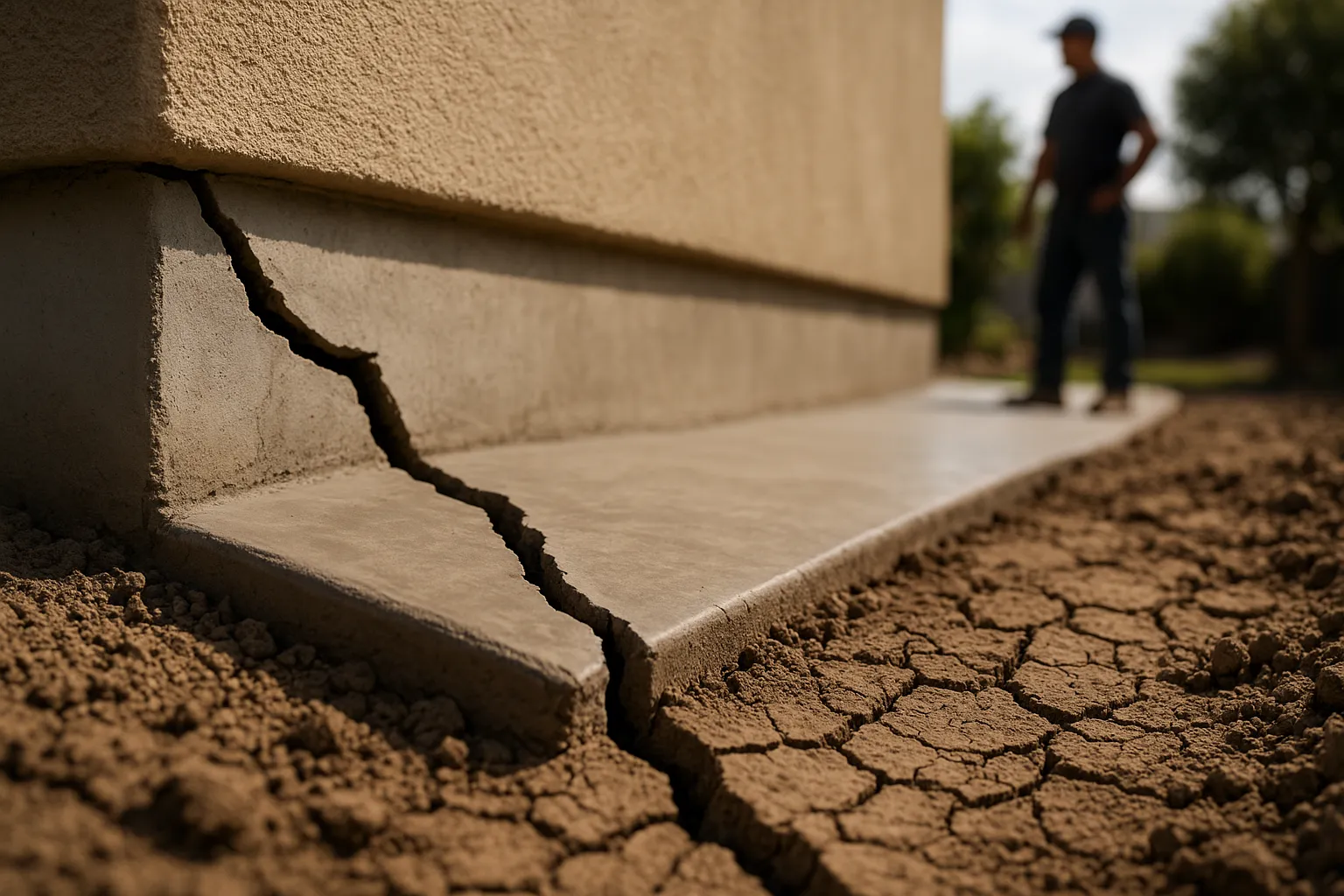
Most homeowners in [Woodland Hills](/areas/woodland-hills) don't think about their foundation until a door stops closing or a crack appears across the living room wall. By that point, a problem that could have cost **$4,000–$8,000** to fix has often grown into a **$25,000–$60,000** structural repair. Foundation in Woodland Hills is a serious topic — the combination of expansive clay soils, seasonal drought cycles, and the seismic activity common throughout the San Fernando Valley creates conditions that stress foundations harder than almost anywhere else in Southern California.
This guide covers what every Woodland Hills homeowner needs to know: warning signs, soil-specific risks, realistic costs, how to choose a foundation contractor, and what the repair process actually looks like from start to finish.
---
## What Is Foundation Failure — and Why Does Woodland Hills Have More of It?
What is foundation failure? Foundation failure is any condition in which a home's structural base can no longer adequately support the load of the building above it, resulting in movement, cracking, or settlement that compromises the integrity of the structure.
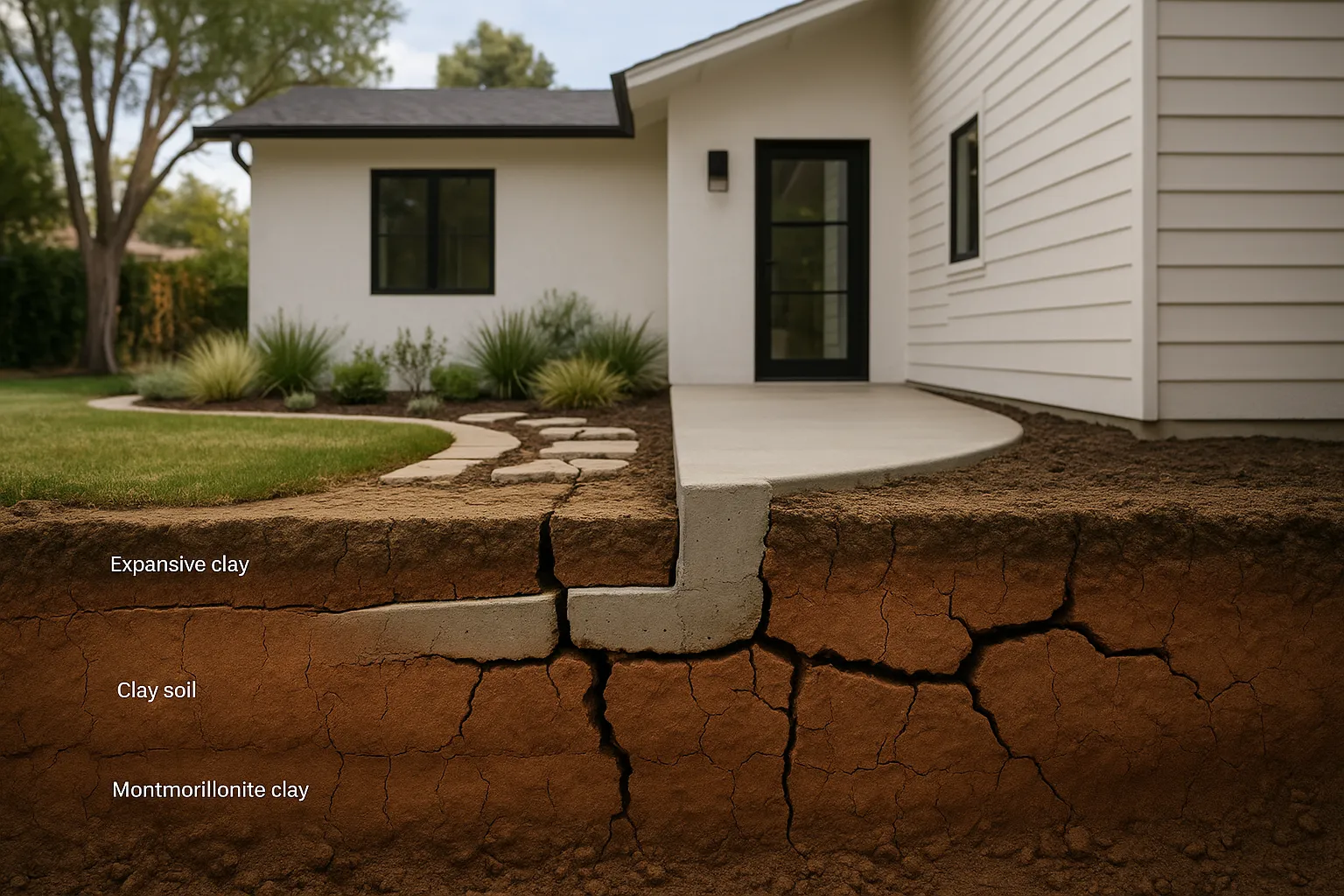
Woodland Hills sits in the western San Fernando Valley, where the soil profile is dominated by **expansive Montmorillonite clay**. This clay absorbs water and swells dramatically during the wet season, then contracts and shrinks during the dry months — and in a region where droughts can stretch 18–24 months, that shrink-swell cycle is extreme.
According to the **California Geological Survey (2025)**, more than 60% of the San Fernando Valley sits on soils rated "high" to "very high" for expansive clay content. That means the ground beneath your home is essentially moving every single year, and over a decade or two, that movement adds up.
Seismic risk compounds the problem. The [Santa Monica](/areas/santa-monica) Fault and the Chatsworth Fault both run through or near the Woodland Hills area. Ground shaking — even minor events below 4.0 magnitude — can accelerate existing settlement and open hairline cracks into structural gaps.

---
## Warning Signs: How Do You Know Your Foundation Needs Attention?
The early signs of foundation distress are easy to dismiss as "the house settling." Some settling is normal — but progressive movement is not. Here's what to watch for:
**Structural red flags:**
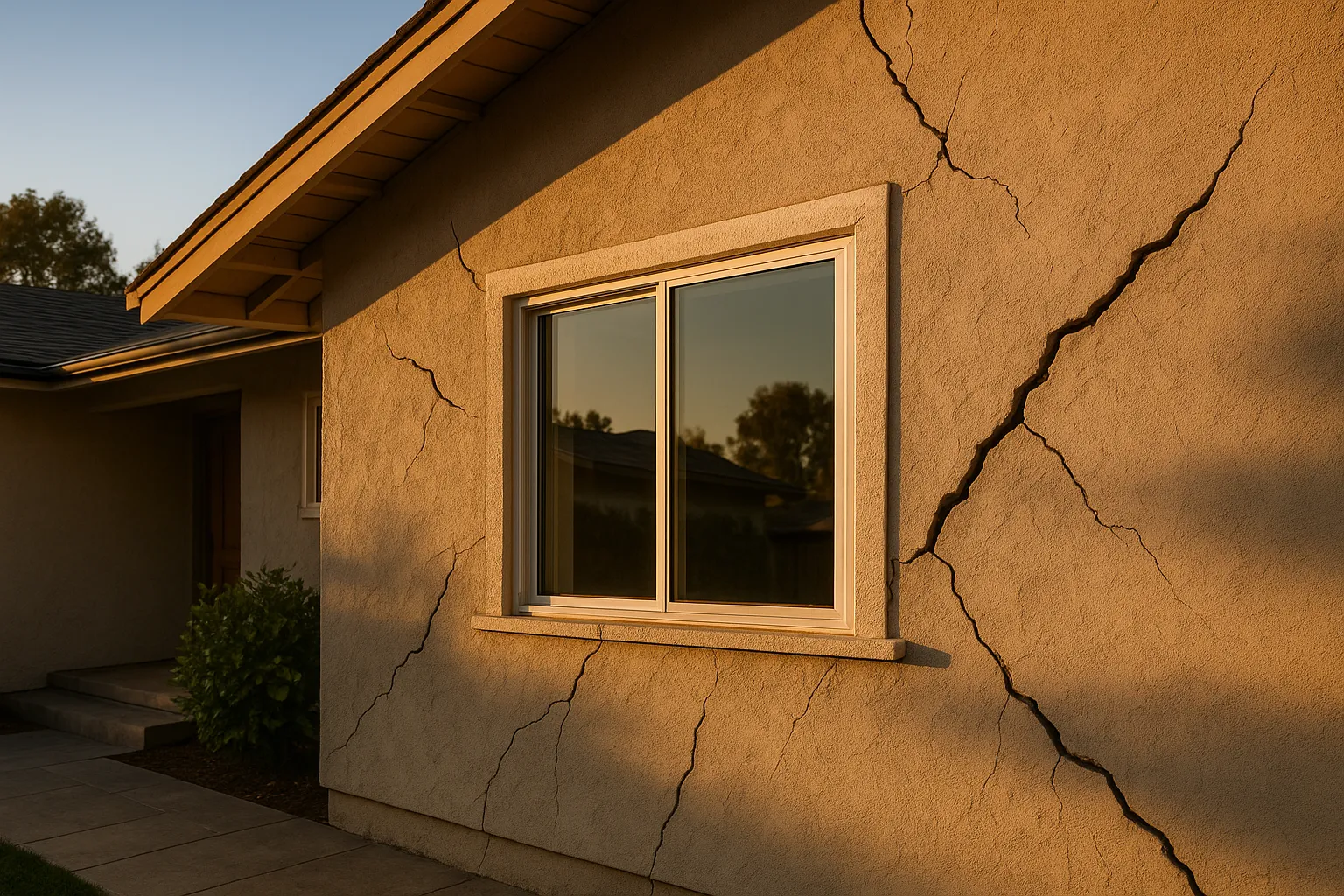
- Diagonal cracks running from the corners of doors or windows
- Floors that slope more than **1 inch per 10 feet** (use a 4-foot level to check)
- Doors or windows that stick, bind, or no longer latch
- Gaps between walls and ceilings or walls and floors
- Exterior stucco cracks wider than **1/4 inch**
- Visible separation between the foundation and the framing above it
**Drainage-related signs:**
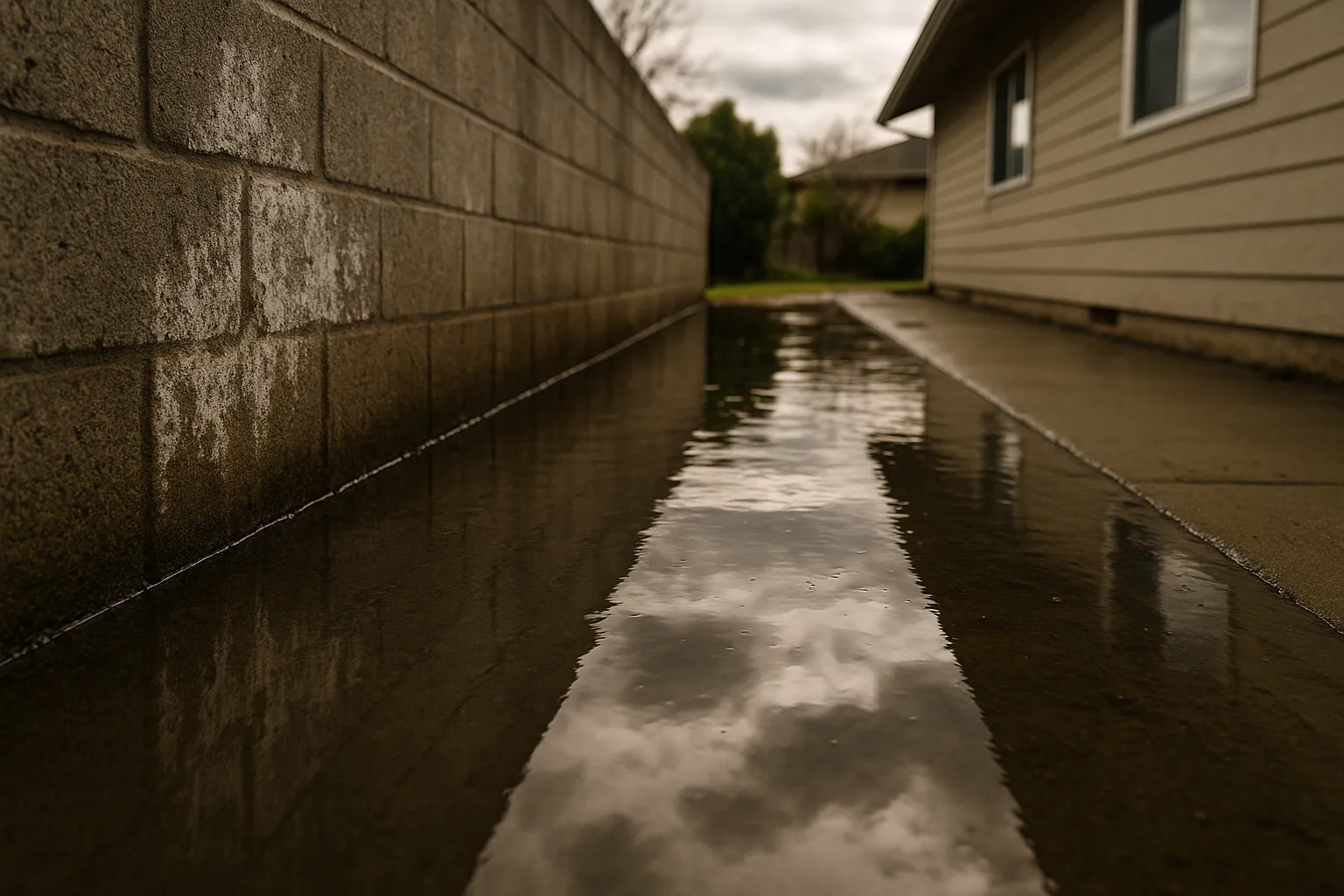
- Standing water near the perimeter after rain
- Efflorescence (white mineral deposits) on concrete block walls
- Musty smell or visible mold in the crawl space
If you're seeing two or more of these at once, don't wait. A structural inspection in the Woodland Hills area typically costs **$350–$750** and is money well spent before any repair conversation begins.
---
## What Are the Most Common Foundation Problems in Woodland Hills?
### Differential Settlement
What is differential settlement? Differential settlement occurs when one part of a foundation sinks at a different rate than another — creating an uneven load that cracks walls, warps floors, and eventually compromises the structural frame.
This is the most common foundation issue in Woodland Hills. Because the clay soil shrinks unevenly (areas near irrigation lines stay wetter longer, for example), one corner of a home might drop **2–3 inches** while the opposite corner remains stable. That differential creates enormous stress on the slab or stem wall.
### Slab Cracking and Heave
What is slab heave? Slab heave is upward movement of a concrete slab caused by soil expansion beneath it — the opposite of settlement, but equally damaging. In wet years, Woodland Hills clay can push a slab up by **1–2 inches** in localized areas, cracking tile, hardwood, and the slab itself.
Post-tension slabs (common in homes built after the 1980s) are more resistant to cracking but are not immune. Cutting into a post-tension slab for repairs requires a licensed structural engineer's involvement — this is not a DIY situation.
### Stem Wall and Cripple Wall Failures
Older Woodland Hills homes — particularly those built in the **1950s through 1970s** — often sit on raised foundations with cripple walls (short stud walls between the foundation and the first floor). These cripple walls were frequently built without adequate shear bracing, making them vulnerable to racking during seismic events.
California's **Earthquake Brace + Bolt program** has funded retrofits for thousands of these homes, but eligibility is limited. As of 2025 program data, the average grant covered **$3,000** of a typical **$4,500–$7,000** cripple wall retrofit.

---
## [How Much Does](/estimate) Foundation Repair Cost in Woodland Hills?
This is the question every homeowner asks first, and the honest answer is: it depends heavily on the failure type, the foundation system, and the soil conditions. Based on Cemora's project data and current 2026 contractor pricing across the West San Fernando Valley, here are realistic ranges:
### Foundation Repair Cost Breakdown (Woodland Hills, 2026 Projections)
| Repair Type | Typical Range | Scope |
|---|---|---|
| Crack injection (epoxy/polyurethane) | $500–$3,500 | Minor cosmetic + structural cracks |
| Mudjacking / slab leveling | $1,500–$6,000 | Sunken concrete slabs, walkways |
| Polyurethane foam lifting | $2,000–$8,000 | Interior slab lifting, garage floors |
| Pier installation (push piers) | $1,500–$3,500 per pier | Settlement correction, 8–15 piers typical |
| Helical pier system | $2,000–$4,500 per pier | Soft soil, hillside, or seismic applications |
| Cripple wall / stem wall retrofit | $4,500–$12,000 | Older raised-foundation homes |
| Full foundation replacement | $35,000–$90,000+ | Complete structural failure |
| Drainage correction + waterproofing | $3,000–$15,000 | Perimeter drains, waterproof membranes |
**A real example:** A homeowner in Woodland Hills near Ventura Boulevard recently had **14 push piers installed** to stabilize a 1,800 sq ft home that had settled **3.5 inches** on the south side. Total cost: **$41,200**, including engineering, permits, and backfill. The repair brought the floor back to within **3/8 inch** of level and came with a **25-year transferable warranty**.
**A second scenario:** A family in the Walnut Acres neighborhood discovered slab heave after a wet winter — two sections of their post-tension slab had lifted **1.5 inches**, cracking the kitchen tile and buckling a doorframe. Polyurethane foam void-fill and targeted mudjacking brought the repair cost to **$7,800**, completed in two days.
**A third example:** An investor purchasing a 1962 ranch home near Topanga Canyon Boulevard paid **$5,500** for a cripple wall retrofit — including engineered plywood sheathing and new anchor bolts — before listing the property. The retrofit satisfied the buyer's lender and added a measurable safety improvement without the cost of a full foundation replacement.
---
## How Do You Choose the Best Foundation Contractor in Woodland Hills?
Not every foundation contractor is qualified for the specific challenges of the West San Fernando Valley. Here's what to verify before signing anything:
### Licensing and Insurance
California requires foundation contractors to hold a **C-61/D-6 (Concrete-Related Services)** or **A (General Engineering)** license through the **Contractors State License Board (CSLB)**. Verify any contractor's license at cslb.ca.gov before the first conversation. As of 2025 CSLB enforcement data, unlicensed contractor complaints in [Los Angeles](/areas/los-angeles) County increased **18%** year-over-year — foundation work is a frequent target.
Require a minimum of **$1 million in general liability** and current workers' compensation coverage. Ask for certificates, not just verbal confirmation.
### Engineering Involvement
For any repair involving piers, stem wall replacement, or post-tension slab work, a licensed **structural engineer (SE)** must be involved. Engineering fees typically run **$1,500–$4,500** for a residential foundation assessment and repair plan in the Woodland Hills area. This is not optional — it's required for permits and protects you legally.
### Warranty Terms
Reputable foundation contractors offer **lifetime or 25-year transferable warranties** on pier systems. Shorter warranties — or warranties that don't transfer to future buyers — are a red flag. Ask specifically whether the warranty covers future movement or only the installed hardware.
### What to Ask During a Foundation Estimate
1. What specific failure mechanism are you addressing?
2. Will you pull permits through the City of Los Angeles or LA County?
3. Is a structural engineer part of your process?
4. How do you verify the repair depth reached stable bearing soil?
5. What does your warranty cover, and does it transfer at sale?
6. Can you provide three references from Woodland Hills or the immediate area?
---
## The Foundation Repair Process: Step by Step
Understanding the process helps you evaluate bids and avoid being surprised by timelines or disruptions.
1. **Initial inspection** — A foundation specialist walks the property, measures floor slopes, photographs cracks, and reviews the drainage situation. This typically takes **2–4 hours** and costs **$350–$750** (sometimes credited toward the repair).
2. **Engineering assessment** — For significant repairs, a structural engineer reviews the inspection findings, may order a soil report (geotechnical investigation, **$800–$2,500**), and produces a stamped repair plan.
3. **Permit application** — The contractor submits plans to the **City of Los Angeles Department of Building and Safety (LADBS)** or LA County, depending on jurisdiction. Permit timelines in the West Valley currently run **3–6 weeks** for standard residential foundation work.
4. **Site preparation** — Interior flooring may need to be removed over repair zones. Exterior excavation exposes the foundation perimeter. Utility locates are required before any drilling.
5. **Pier installation or repair work** — Push piers or helical piers are driven to refusal depth (typically **15–35 feet** in Woodland Hills soils to reach stable bearing). Slab repairs, crack injections, or stem wall work happen in parallel where applicable.
6. **Lifting and leveling** — Once piers are set, hydraulic jacks simultaneously lift the structure. This is a precise process — experienced crews can typically restore a settled section to within **1/4 to 1/2 inch** of original grade.
7. **Backfill and site restoration** — Excavations are backfilled and compacted. Interior concrete is patched. Flooring reinstallation is typically the homeowner's responsibility (coordinate with your flooring contractor in advance).
8. **Final inspection** — The city or county inspector signs off on the permitted work. You receive a copy of the inspection record — keep this with your property documents, as it matters at resale.
**Total timeline for a mid-scale pier repair:** **4–10 weeks** from initial inspection to final sign-off, depending on permit speed and contractor scheduling.

---
## Does Foundation Repair Affect Home Value in Woodland Hills?
This is a nuanced question. **Unrepaired foundation problems** are among the top deal-killers in California real estate transactions — a 2025 survey by the **California Association of Realtors** found that **73% of buyers** would either walk away or demand a significant price reduction upon discovering active foundation movement.
**Properly repaired foundations with documentation**, on the other hand, often have a neutral to mildly positive effect on value. Buyers and their lenders want to see:
- Permitted repair records from LADBS
- A structural engineer's sign-off
- A transferable warranty from the repair contractor
- No ongoing movement (verified by a current inspection)
In the Woodland Hills market, homes with documented, warranted foundation repairs sell at approximately **95–98% of comparable homes** without any foundation history — a much better outcome than the **15–30% discount** buyers typically demand for unrepaired issues.
---
## Preventing Foundation Problems: What Woodland Hills Homeowners Can Do
The best foundation repair is the one you never need. These practices reduce risk significantly:
**Water management:**
- Keep gutters clean and extend downspouts **at least 6 feet** from the foundation
- Maintain positive drainage — grade should slope away from the house at **1 inch per foot** for the first 6 feet
- Avoid overwatering landscaping within **5 feet** of the foundation
- Install a drip irrigation system instead of spray heads near the perimeter
**Vegetation control:**
- Large trees (oak, eucalyptus, ficus) with aggressive root systems should be planted **at least 20–30 feet** from the foundation
- Remove dead stumps — decaying roots leave voids that can cause localized settlement
**Annual inspection habits:**
- Walk the perimeter after every significant rain event
- Check interior floors with a 4-foot level once a year
- Monitor any existing cracks with a crack monitor (available at hardware stores for **$15–$30**) — if a crack grows, it's active
**Proactive drainage investment:** A French drain system around a typical Woodland Hills home runs **$3,500–$9,000** installed. That's a fraction of what differential settlement repairs cost if water intrusion is left unmanaged for years.
---
## Foundation and [Microcement](/services/microcement-bathrooms): What Happens to Your Floors After Repair?
One question we get frequently at Cemora: "Can we do microcement floors after a foundation repair?"
The answer is yes — and in many cases, foundation repair actually creates the ideal opportunity to upgrade your floors. Once the slab has been stabilized and leveled, microcement can be applied directly over the concrete substrate, creating a seamless, waterproof surface that's far more forgiving of minor future movement than tile or hardwood.
For Woodland Hills homeowners who've just gone through a pier installation or slab leveling, our [microcement floors and walls service](/services/microcement-floors-walls?utm_source=blog&utm_medium=organic&utm_campaign=foundation-woodland-hills) is a natural next step — you're already disrupting the floors, so it's an efficient time to upgrade.
Similarly, if your foundation repair involved the bathroom or kitchen area, exploring [microcement bathrooms and wet rooms](/services/microcement-bathrooms?utm_source=blog&utm_medium=organic&utm_campaign=foundation-woodland-hills) or [microcement kitchens and countertops](/services/microcement-kitchens-countertops?utm_source=blog&utm_medium=organic&utm_campaign=foundation-woodland-hills) while the space is already open makes scheduling and cost sense.
For [commercial](/services/microcement-commercial-hospitality) property owners in Woodland Hills dealing with foundation issues in retail or hospitality spaces, our [commercial and hospitality microcement services](/services/microcement-commercial-hospitality?utm_source=blog&utm_medium=organic&utm_campaign=foundation-woodland-hills) can help restore and elevate the finished space after structural work is complete.
---
## Frequently Asked Questions
### How much does foundation repair cost in Woodland Hills?
Foundation repair in Woodland Hills typically ranges from **$3,500 for minor crack injection** to **$90,000+ for full foundation replacement**, based on 2026 contractor pricing across the West San Fernando Valley. Most mid-range repairs — pier installation for settlement correction, for example — fall between **$18,000 and $45,000** for an average single-family home. Getting at least three licensed bids with engineering involvement is the only way to get an accurate number for your specific situation.
### How long does foundation repair take in Woodland Hills?
A straightforward crack injection or mudjacking job can be completed in **1–2 days**. A pier-based settlement repair on a typical Woodland Hills home takes **3–7 days of active work**, but the full timeline from inspection to permitted sign-off is usually **4–10 weeks** due to engineering and permit processing at LADBS. Plan for some interior disruption, especially if flooring needs to be removed over repair zones.
### What causes foundation problems specifically in Woodland Hills?
The primary culprit is the expansive Montmorillonite clay soil that underlies most of the West San Fernando Valley — it swells when wet and shrinks when dry, creating cyclical movement that stresses foundations year after year. Seismic activity from nearby faults, poor drainage around older homes, and aging infrastructure (particularly in homes built before 1980) all compound the problem. The California Geological Survey rates over **60% of the San Fernando Valley** as high to very high risk for expansive soil-related foundation damage.
### Does homeowners insurance cover foundation repair in California?
Standard California homeowners insurance policies **do not cover foundation damage caused by soil movement, settlement, or expansive clay** — these are classified as earth movement exclusions. Damage caused by a sudden, covered event (like a burst pipe that saturates the soil) may be partially covered, but you'll need to document the causal connection carefully. Earthquake damage to foundations requires a separate **California Earthquake Authority (CEA)** policy, which carries its own deductibles typically ranging from **10–25% of dwelling coverage**.
### How do I find the best foundation contractor in Woodland Hills?
Start by verifying any contractor's license at **cslb.ca.gov** — look for a C-61/D-6 or A-license classification. Ask specifically about their experience with expansive clay soils and post-tension slabs, which are common in Woodland Hills. The best foundation companies in Woodland Hills will require a structural engineer's involvement for significant repairs, pull permits through LADBS, and offer transferable warranties of at least **25 years** on pier systems.
### What is a helical pier and when is it used?
What is a helical pier? A helical pier is a steel shaft with helical (screw-shaped) plates that is rotated into the ground using hydraulic equipment, advancing until it reaches stable bearing soil — functioning similarly to a giant screw being driven into the earth. Helical piers are preferred in Woodland Hills for hillside properties, soft or disturbed soils, and seismic applications because they can be installed with less vibration than driven push piers and can be loaded immediately after installation. They typically cost **$2,000–$4,500 per pier** installed, compared to **$1,500–$3,500** for push piers in more accessible conditions.
### Will foundation repair disrupt my daily life?
For exterior pier work, disruption is moderate — excavation around the perimeter creates noise and limits yard access, but most families remain in the home throughout. Interior work (slab repairs, mudjacking through drilled holes) is more disruptive: furniture must be moved, flooring may be removed, and dust control is critical. Most contractors work **Monday through Friday, 7 a.m. to 4 p.m.**, and a typical pier job runs **3–7 working days**. Plan to be home or have someone available during the lifting phase, as crews may need access to interior rooms to monitor floor movement.
### Is foundation repair worth it before selling a home in Woodland Hills?
In almost every case, yes — particularly in the current Woodland Hills market. Unrepaired foundation issues trigger mandatory seller disclosure under California Civil Code, and buyers routinely use foundation problems to negotiate **15–30% price reductions** or walk away entirely. A documented, permitted, warranted repair typically costs **$20,000–$45,000** but protects the full market value of a home worth **$900,000–$1.5 million** in today's West Valley market. The math is straightforward for most sellers.
### What permits are required for foundation repair in Woodland Hills?
Most structural foundation repairs in Woodland Hills require permits through either the **City of Los Angeles Department of Building and Safety (LADBS)** or LA County, depending on the specific parcel's jurisdiction. Cosmetic crack patching typically doesn't require a permit, but any work involving piers, stem wall replacement, anchor bolts, or slab penetration does. Permit fees for residential foundation work in LA generally run **$500–$2,500** depending on the valuation of the repair. Always insist your contractor pulls permits — unpermitted foundation work creates serious problems at resale.
### How do I know if my foundation crack is serious?
Not all cracks are equal. **Hairline cracks less than 1/16 inch wide** that run horizontally or vertically are often cosmetic, especially in older concrete. **Diagonal cracks wider than 1/4 inch**, cracks that are wider at one end than the other (indicating rotation), or any crack accompanied by floor slope or sticking doors should be evaluated by a licensed structural engineer. Active cracks — those that continue to grow — are always serious, regardless of current width. Use a crack monitor or mark the ends of a crack with pencil and date it; if it grows beyond **1/8 inch in 90 days**, get a professional opinion immediately.
---
Foundation issues in Woodland Hills are common enough that you shouldn't feel alarmed by early warning signs — but they're serious enough that ignoring them is genuinely costly. The homeowners who come out ahead are the ones who get a professional inspection early, understand what they're actually dealing with, and choose a licensed contractor with real engineering backing.
If you're planning a floor or surface upgrade alongside your foundation work — or if you've just completed repairs and want to restore your interior to something better than what was there before — [reach out to Cemora](/contact?utm_source=blog&utm_medium=organic&utm_campaign=foundation-woodland-hills) or [book a consultation](/book?utm_source=blog&utm_medium=organic&utm_campaign=foundation-woodland-hills) to talk through what microcement can do for your stabilized slab. We work with homeowners across Woodland Hills, West Hills, [Calabasas](/areas/calabasas), and throughout the San Fernando Valley — and we're happy to coordinate timing with your foundation contractor so the sequencing makes sense.
You can also [request a free estimate](/estimate?utm_source=blog&utm_medium=organic&utm_campaign=foundation-woodland-hills) if you have a specific space in mind and want to understand what a mineral finish would cost before you commit to anything.
---
**Ready to start your your project in Los Angeles?** [Book a free consultation](/book?utm_source=blog&utm_medium=organic&utm_campaign=foundation-in-woodland-hills-expert-guide-for-california-homeowners-2026) — we'll come walk through your space and give you straight numbers, no pressure. Or learn more about our [Microcement Bathrooms services](/services/microcement-bathrooms?utm_source=blog&utm_medium=organic&utm_campaign=foundation-in-woodland-hills-expert-guide-for-california-homeowners-2026).