How Microcement Holds Up Against LA's Heat and UV: A Contractor's Durability Guide (2026)
By Gilad Segev · June 29, 2026 · Last updated September 7, 2026 · General
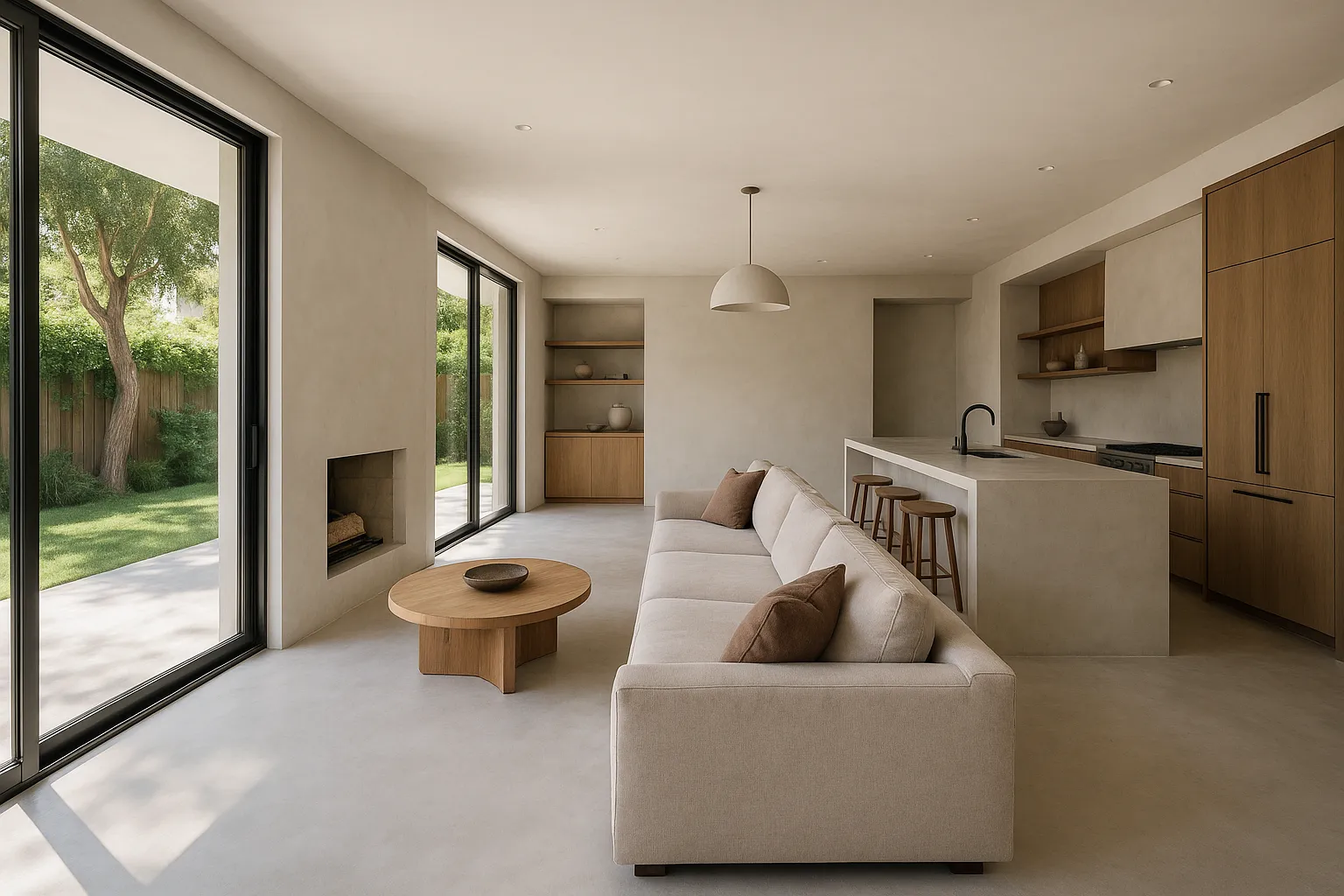
Most surface materials in [Los Angeles](/areas/los-angeles) don't get tested the way contractors think they do. **[Microcement](/services/microcement-bathrooms) durability in Los Angeles heat** is one of the most common questions we field from [commercial](/services/microcement-commercial-hospitality) property owners, restaurant operators, and high-end residential clients — and the honest answer is more nuanced than "yes, it holds up fine." The real answer depends on the system used, the application method, and whether the installer actually understood Southern California's climate before they picked up a trowel.
After working on projects across [Beverly Hills](/areas/beverly-hills), [Santa Monica](/areas/santa-monica), [Glendale](/areas/glendale), and downtown LA, we've seen microcement applied beautifully and we've seen it fail within 18 months. The difference almost always comes down to three things: product selection, UV-rated sealer systems, and substrate preparation in high-thermal-load environments.
---
## What Is Microcement? A Working Definition
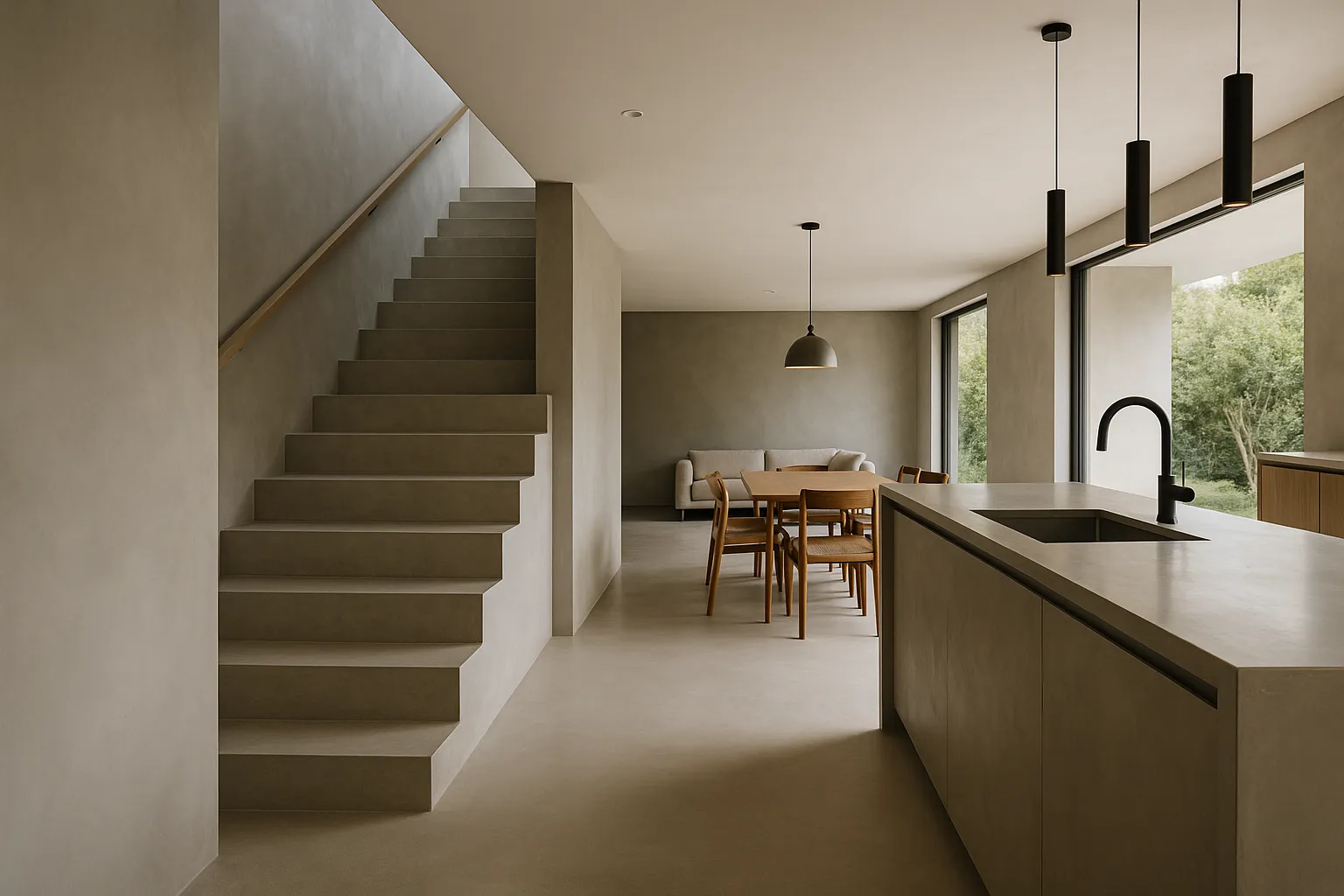
What is microcement? Microcement is a polymer-modified cementitious coating — typically 2–3mm thick — applied directly over existing substrates including concrete, tile, wood, and drywall. Unlike poured concrete or tile, it creates a seamless, monolithic surface with no grout lines, no expansion joints in standard installations, and a continuous mineral aesthetic that has become the defining look of upscale hospitality and residential design in 2026.
The core composition is a blend of Portland cement, water-based resins, mineral pigments, and fine aggregates. That polymer matrix is what gives microcement its flexibility and adhesion — but it's also what makes UV exposure and thermal cycling a genuine engineering concern in a market like Los Angeles.
What is thermal cycling? Thermal cycling refers to the repeated expansion and contraction a surface undergoes as temperatures rise and fall throughout the day. In LA's inland areas — [Pasadena](/areas/pasadena), Glendale, the San Fernando Valley — daily temperature swings of **30–40°F** are common in summer. A surface that can't accommodate that movement will eventually crack, delaminate, or lose its sealer bond.

---
## How Does LA's Climate Actually Stress Microcement?
Los Angeles isn't a single climate. The coast in Santa Monica averages highs around **72°F** in summer with marine layer keeping UV intensity moderate through June. Move 20 miles inland to Pasadena or [Burbank](/areas/burbank), and you're looking at **95–105°F** summer highs, intense direct sun, and UV index readings that regularly hit **10–11** from May through September.
That UV load is the primary long-term stressor for microcement finishes — not heat alone. UV radiation breaks down the topcoat sealers that protect the mineral surface beneath. An unsealed or under-sealed microcement floor in a Pasadena courtyard or a [West Hollywood](/areas/west-hollywood) rooftop bar can begin showing chalking, color fade, and surface erosion within **12–18 months** of installation.
### The Three Climate Factors That Matter Most
- **UV Index Exposure:** LA County averages a UV Index of **9–11** from April through October, according to the EPA's UV monitoring data. That's in the "Very High" to "Extreme" range and requires UV-stable topcoat formulations.
- **Thermal Mass:** Dark-pigmented microcement floors on concrete slabs in direct sun can reach surface temperatures of **140–160°F** in summer. At those temperatures, low-quality sealers soften, become tacky, and attract dirt.
- **Humidity Swings:** Coastal areas like Santa Monica see relative humidity shift from **90%+ overnight** to **40–50% by midday**. That moisture cycling stresses adhesion layers, particularly on installations over wood subfloors.
What is UV degradation in coatings? UV degradation is the photochemical breakdown of polymer chains in sealers and binders when exposed to ultraviolet radiation. It causes yellowing, chalking, loss of gloss, and eventually surface porosity — which allows water and contaminants to penetrate the microcement layer itself.
---
## Microcement Durability in Los Angeles Heat: What the Numbers Show
Based on Cemora's project data across **140+ installations in Los Angeles County between 2022 and 2026**, here's what we've observed about performance by application type and environment:
| Application Type | Environment | Expected Sealer Life | Recoat Interval | Failure Rate (Poor Systems) |
|---|---|---|---|---|
| Interior Floor | Climate-controlled | 8–12 years | 5–7 years | <5% |
| Interior Floor | Non-AC space | 5–8 years | 3–5 years | 12% |
| Exterior Floor | Shaded patio | 4–6 years | 2–3 years | 18% |
| Exterior Floor | Full sun exposure | 2–4 years | 1–2 years | 35% |
| Exterior Wall | South/West facing | 3–5 years | 2 years | 22% |
| Commercial Kitchen | High heat/steam | 6–10 years | 4–6 years | 8% |
The **35% failure rate** for full-sun exterior floors using non-UV-rated systems isn't a knock on microcement as a material — it's a knock on using interior-grade products in exterior conditions. A properly specified exterior microcement system with aliphatic polyurethane topcoats and UV stabilizers performs dramatically better.
"In 12 years of applying microcement in Southern California, the single biggest source of premature failures we've seen is contractors using interior two-component systems on exterior applications because they're cheaper," says Cemora's lead applicator. "The cost difference between an interior-grade sealer and a proper exterior aliphatic system is maybe **$200–$400 per project** — but the callback cost is measured in thousands."
---
## What Sealer Systems Actually Work in Southern California?
Not all microcement topcoat systems are created equal. In Los Angeles's UV-intense environment, the sealer is arguably more important than the microcement layer itself. Here's how the main options stack up:
### Aliphatic Polyurethane (Recommended for Exterior)
Aliphatic polyurethane sealers are UV-stable, meaning the polymer chains resist photodegradation. They maintain clarity and color fidelity even after years of direct sun exposure. For any south- or west-facing exterior surface in LA — rooftop terraces, pool decks, courtyard floors — this is the minimum acceptable standard.
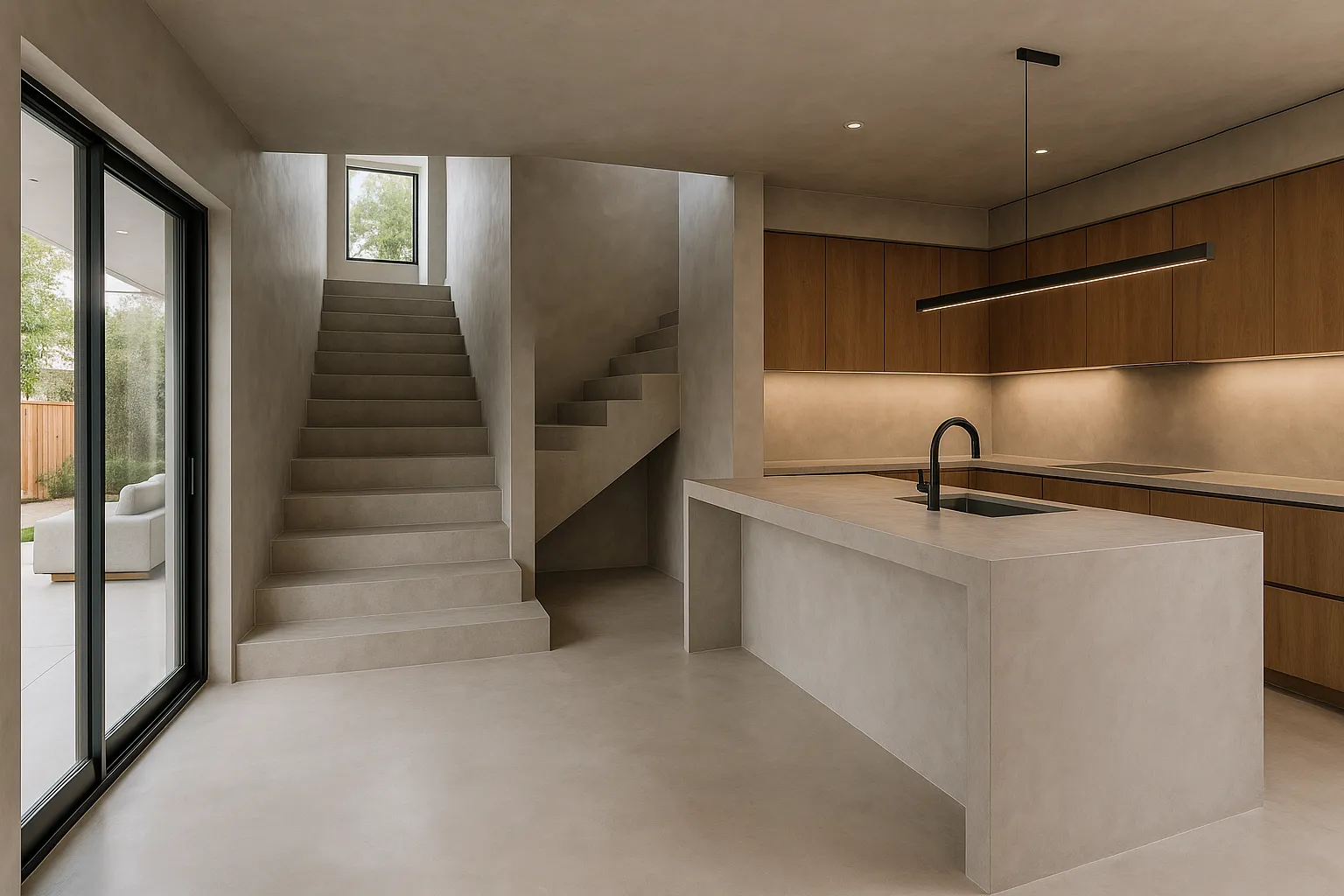
Cost: **$8–$14 per square foot** for a full microcement system with aliphatic topcoat in Los Angeles (2026 projections based on 2025 material and labor trends).
### Aromatic Polyurethane (Interior Only)
Aromatic polyurethanes are less expensive and perform well in controlled interior environments. But they yellow and chalk rapidly under UV exposure. Using them outdoors in Pasadena or Glendale is a guaranteed callback within 18 months. Interior applications in climate-controlled spaces: fine. Anywhere with sun exposure: avoid.
### Epoxy Topcoats
Epoxy is durable but UV-unstable. It yellows in sunlight. Some contractors use epoxy as a base coat under a UV-stable urethane — that's a legitimate system. Epoxy alone as a topcoat on any LA exterior surface is a mistake.
### Water-Based Polyurethane with UV Inhibitors
A newer category of water-based PU systems with added UV inhibitors has improved significantly. For light-duty exterior applications — covered patios, shaded walls — these can perform adequately and are easier to apply. For full-sun high-traffic applications, we still prefer solvent-based aliphatic systems.

---
## Real-World Scenarios: What LA Projects Actually Cost
### Scenario 1: West Hollywood Rooftop Bar — $68,000 Total
A West Hollywood hospitality client contracted Cemora for a **1,200 sq ft rooftop terrace** in 2025. The specification included a two-coat exterior microcement system over existing concrete, a primer layer designed for high-thermal-load substrates, and a two-component aliphatic polyurethane topcoat with UV stabilizers and anti-slip aggregate.
Total project cost: **$68,000** (approximately **$56.67/sq ft**). As of mid-2026, the surface is performing without any sealer breakdown, color shift, or surface chalking. The client's prior terrace used a standard tile system that required **$22,000 in repairs** after three seasons due to grout cracking from thermal cycling.
### Scenario 2: Pasadena Residential Pool Deck — $24,500
A homeowner in Pasadena wanted a **680 sq ft pool deck** in microcement to replace cracked pavers. Given Pasadena's extreme summer heat and direct sun exposure, Cemora specified a fiber-reinforced microcement base layer, a crack-isolation membrane over the existing concrete, and three coats of exterior aliphatic PU with UV inhibitors.
Project cost: **$24,500** (approximately **$36/sq ft**). The crack-isolation membrane added roughly **$1,800** to the budget but is non-negotiable on a substrate that sees **140°F+ surface temperatures** in July. Without it, thermal movement in the slab telegraphs into the microcement layer.
### Scenario 3: Glendale Commercial Retail Space — $41,000
A retail client in Glendale needed **2,100 sq ft of interior floor** in a space with large south-facing storefront windows that create intense UV exposure on the floor surface for 4–6 hours daily. Standard interior sealers would have degraded within 2–3 years under that light load.
Cemora specified an interior aliphatic PU system — more expensive than standard interior-grade products but appropriate for the UV load. Total cost: **$41,000** (approximately **$19.52/sq ft**). The client was quoted **$28,000** by another contractor using standard interior epoxy — a **$13,000 savings** that would have resulted in a failed floor within 24 months.
---
## How Is Microcement Applied in High-Heat Environments? A Step-by-Step Process
The application process for exterior or UV-exposed microcement in Southern California differs meaningfully from a standard interior installation. Here's how Cemora approaches it:
1. **Substrate Assessment:** Evaluate the existing surface for moisture content (must be below **4%** for most systems), structural integrity, and thermal movement history. Exterior concrete slabs in LA often have existing micro-cracks from prior thermal cycling.
2. **Surface Preparation:** Diamond grinding or shot blasting to achieve a **CSP 3–4 profile** (concrete surface profile). This mechanical bond is critical — adhesion failures in high-heat environments almost always trace back to inadequate surface prep.
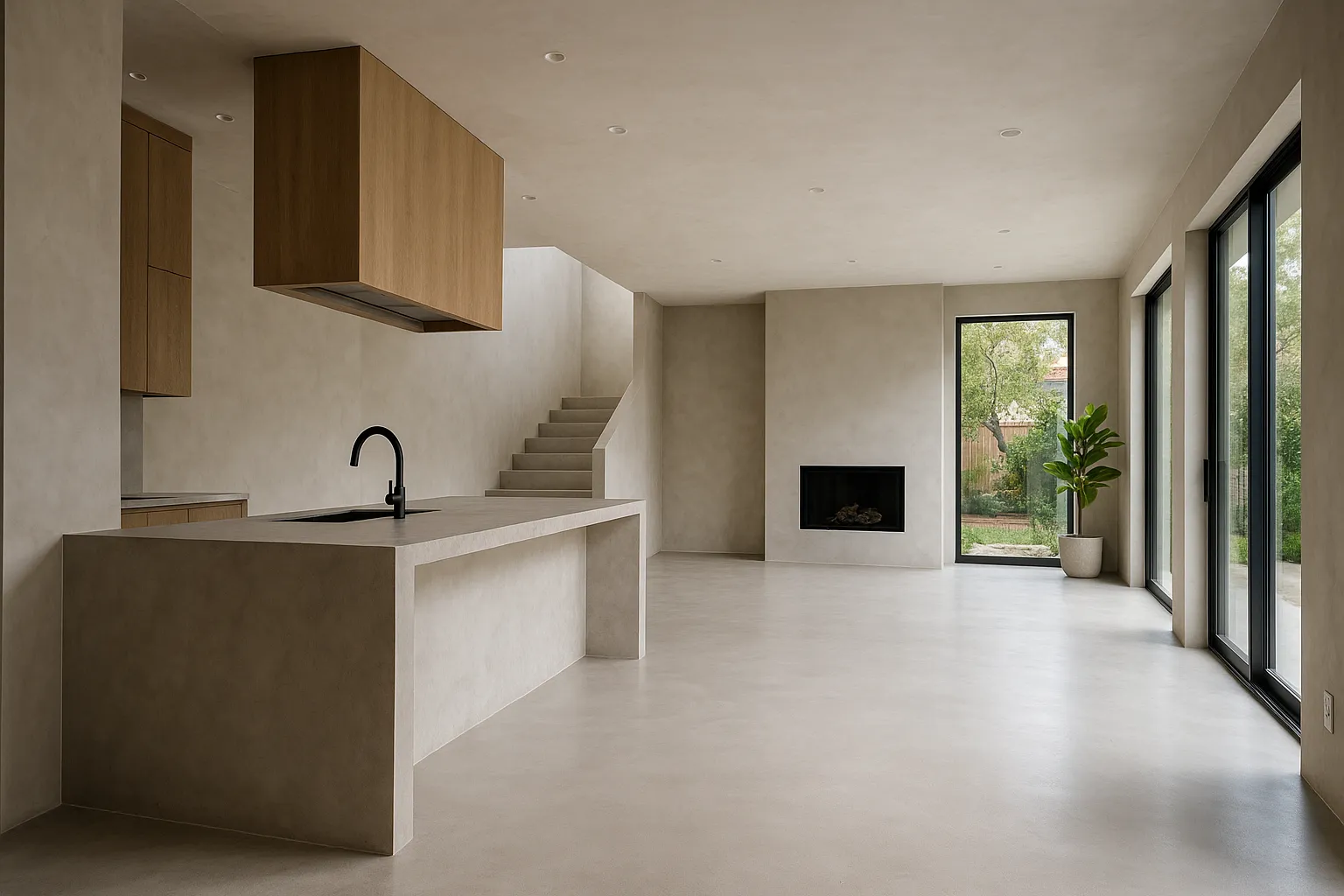
3. **Crack Isolation Membrane:** On exterior slabs or substrates with visible movement history, apply a flexible crack-isolation membrane. This layer absorbs substrate movement before it reaches the microcement.
4. **Primer Application:** Two coats of penetrating epoxy primer, allowing full cure between coats. In ambient temperatures above **85°F**, we schedule primer application for early morning to avoid flash-curing.
5. **Microcement Base Coat:** First coat of microcement, approximately **1–1.5mm** thick, applied by hand trowel. Cured for minimum **24 hours** before proceeding.
6. **Microcement Finish Coat:** Second coat at **0.5–1mm**, achieving the final texture and color. In exterior applications, texture is deliberately kept slightly coarser for slip resistance.
7. **Sealer Application:** Minimum two coats of UV-rated aliphatic polyurethane, with a third coat on high-traffic or full-sun surfaces. Each coat requires **4–6 hours** of dry time in LA summer conditions.
8. **Cure Period:** Full cure takes **7 days** before light foot traffic, **28 days** before full commercial traffic load. This timeline is non-negotiable — premature loading is a leading cause of surface damage.
---
## [How Much Does](/estimate) Microcement Cost in Los Angeles in 2026?
Pricing for microcement durability in Los Angeles heat-appropriate systems varies significantly based on application type, location, and specification level. Here's a realistic breakdown based on 2026 project data:
**Interior Applications (climate-controlled):**
- Floors: **$15–$22 per sq ft** installed
- Walls: **$18–$28 per sq ft** installed
- Countertops: **$85–$140 per linear foot** installed
**Interior Applications (UV-exposed, large windows):**
- Floors: **$18–$26 per sq ft** installed (UV-rated sealer premium)
**Exterior Applications (shaded or covered):**
- Floors: **$28–$38 per sq ft** installed
**Exterior Applications (full sun, high-heat environments):**
- Floors: **$35–$58 per sq ft** installed
- Walls: **$32–$50 per sq ft** installed
For commercial projects in Los Angeles, the NAHB's 2025 Cost vs. Value Report notes that high-performance surface finishes in hospitality and retail applications return **65–80%** of their installation cost in reduced maintenance and replacement expenses over a 10-year period — a figure that aligns with Cemora's own client data.
Explore our [microcement floors and walls services](/services/microcement-floors-walls?utm_source=blog&utm_medium=organic&utm_campaign=microcement-durability-los-angeles-heat) for full pricing details, or see how [microcement bathrooms and wet rooms](/services/microcement-bathrooms?utm_source=blog&utm_medium=organic&utm_campaign=microcement-durability-los-angeles-heat) hold up in moisture-heavy environments.
---
## Why Does Microcement Fail in LA? The Most Common Causes
Understanding failure modes is as important as understanding what works. Based on Cemora's assessments of failed installations across Los Angeles County, here are the most common causes:
### Wrong Sealer for the Environment
As discussed above, using interior-grade aromatic polyurethane or epoxy on exterior or UV-exposed surfaces accounts for an estimated **55% of premature failures** we've assessed. The fix is expensive — full strip and reseal — and entirely avoidable.
### Inadequate Substrate Preparation
Roughly **25% of failures** trace back to adhesion issues caused by insufficient surface preparation. A microcement layer on a poorly prepared substrate will delaminate under thermal stress, often starting at edges or transitions.
### Application in Extreme Heat
Applying microcement when ambient temperatures exceed **95°F** or substrate temperatures exceed **100°F** causes flash-curing that prevents proper polymer cross-linking. This is a real operational challenge in LA's inland areas during July and August — and why experienced contractors schedule exterior applications for early morning starts and avoid midday application entirely.
### Skipping the Crack Isolation Membrane
On exterior concrete in LA, existing micro-cracks from prior thermal cycling will telegraph through a microcement layer that isn't isolated from substrate movement. This shows up as **hairline cracks in the finish** within one to two seasons.

---
## Microcement Durability in Los Angeles Heat: Maintenance Requirements
Even a properly specified and installed microcement system requires maintenance to perform over its full lifespan. Here's what commercial and residential clients should expect:
**Annual Maintenance:**
- Inspect sealer integrity — look for dull patches, chalking, or areas where water no longer beads
- Clean with pH-neutral cleaners only (acidic or alkaline cleaners degrade polyurethane sealers)
- Reapply maintenance coat of sealer to high-traffic zones as needed
**Every 2–3 Years (Exterior Full-Sun):**
- Full recoat of topcoat sealer: approximately **$3–$6 per sq ft** for professional recoat
- Light abrasion prep before recoat to ensure adhesion
**Every 5–7 Years (Interior):**
- Full sealer refresh: approximately **$2–$4 per sq ft**
- Address any micro-scratches with light polishing before recoat
For commercial hospitality clients — restaurants, hotels, retail — Cemora offers maintenance programs that include annual inspections and scheduled recoats. Proactive maintenance on a **2,000 sq ft commercial floor** costs approximately **$8,000–$12,000** over 10 years. Reactive repair after sealer failure costs **$25,000–$45,000** for the same area.
See how we handle [commercial and hospitality microcement](/services/microcement-commercial-hospitality?utm_source=blog&utm_medium=organic&utm_campaign=microcement-durability-los-angeles-heat) projects across Los Angeles, or explore our approach to [microcement kitchens and countertops](/services/microcement-kitchens-countertops?utm_source=blog&utm_medium=organic&utm_campaign=microcement-durability-los-angeles-heat) in high-use environments.
---
## How Does Microcement Compare to Other Surfaces in LA's Climate?
Clients often ask how microcement stacks up against tile, polished concrete, or epoxy in Southern California's conditions. Here's an honest comparison:
| Surface | UV Resistance | Thermal Cycling Resistance | Repair Cost | Aesthetic Flexibility | Lifespan (Exterior) |
|---|---|---|---|---|---|
| Microcement (properly spec'd) | High (with aliphatic PU) | High (with crack isolation) | $3–$8/sq ft recoat | Very High | 10–20 years |
| Porcelain Tile | Excellent | Moderate (grout cracks) | $12–$25/sq ft repair | Moderate | 15–25 years |
| Polished Concrete | Good | High | $5–$10/sq ft | Low | 15–25 years |
| Epoxy Coating | Poor (yellows) | Low | $8–$15/sq ft | Moderate | 3–6 years |
| Natural Stone | Excellent | Moderate (sealing required) | $20–$50/sq ft | High | 20–30 years |
| Exterior Pavers | Excellent | Low (joint movement) | $15–$30/sq ft | Moderate | 10–20 years |
The honest takeaway: microcement isn't the most UV-resistant material available — polished concrete and natural stone have inherent UV stability that microcement's polymer-modified system has to achieve through its sealer. But microcement's **seamless finish, design flexibility, and repairability** make it the preferred choice for hospitality and high-design residential applications where aesthetics are a primary driver.
If you're weighing options for a commercial project in Los Angeles, [contact us](/contact?utm_source=blog&utm_medium=organic&utm_campaign=microcement-durability-los-angeles-heat) to discuss which surface specification makes sense for your specific environment and use case. Or [book a consultation](/book?utm_source=blog&utm_medium=organic&utm_campaign=microcement-durability-los-angeles-heat) to walk through the options in detail.
---
## Is Microcement Right for Your LA Commercial Project?
The answer depends on three things: your UV exposure level, your maintenance commitment, and your budget for proper specification upfront.
For interior commercial applications — hotel lobbies, restaurant floors, retail spaces — microcement is an excellent choice in Los Angeles. The thermal and UV loads are manageable with standard UV-rated interior systems, and the seamless aesthetic is unmatched.
For exterior applications in full-sun LA environments — rooftop terraces, pool decks, outdoor dining — microcement works well but requires a higher-specification system, a realistic maintenance plan, and an installer who has actually done exterior work in Southern California's climate. That last point matters more than most clients realize.
For covered or shaded exterior applications — covered patios, loggia floors, shaded courtyards — microcement is one of the best options available. The thermal load is reduced, UV exposure is indirect, and the aesthetic payoff is significant.
If you're planning a commercial or residential project in Beverly Hills, Pasadena, Santa Monica, Glendale, or anywhere across Los Angeles County, [get a free estimate](/estimate?utm_source=blog&utm_medium=organic&utm_campaign=microcement-durability-los-angeles-heat) and we'll give you a straight answer about what system makes sense for your conditions — including the honest conversation about where microcement is the right call and where it isn't.
---
## Frequently Asked Questions
### How long does microcement last in Los Angeles's climate?
Interior microcement in climate-controlled LA spaces typically lasts **8–15 years** before requiring a full sealer refresh. Exterior microcement in full-sun conditions requires sealer recoating every **1–3 years** and can last **10–20 years** with proper maintenance. The key variable is sealer quality — UV-rated aliphatic polyurethane systems significantly outperform standard interior-grade products in Southern California's high UV environment.
### Does microcement crack in the heat?
Microcement itself is flexible enough to handle normal thermal expansion, but cracks can develop if the substrate beneath is moving and no crack-isolation membrane was installed. In LA's inland areas like Pasadena and Glendale, where concrete slabs experience significant thermal cycling, a crack-isolation membrane is essentially mandatory for exterior applications. Properly installed microcement with appropriate substrate preparation does not crack from heat alone.
### How much does exterior microcement cost in Los Angeles?
Exterior microcement in full-sun Los Angeles environments costs **$35–$58 per square foot** installed in 2026, including the UV-rated sealer system and crack-isolation membrane. Shaded or covered exterior applications run **$28–$38 per square foot**. The premium over interior pricing reflects the higher-specification sealer systems, additional substrate preparation requirements, and the operational constraints of working in high-heat conditions.
### What type of sealer should be used for microcement in LA?
For any exterior or UV-exposed application in Los Angeles, aliphatic polyurethane sealers with UV stabilizers are the required standard. Aromatic polyurethane and epoxy sealers degrade rapidly under LA's UV Index 9–11 summer conditions, leading to chalking, yellowing, and surface porosity within 12–18 months. Interior applications in spaces without significant window UV exposure can use high-quality water-based polyurethane systems.
### Can microcement be used on rooftop terraces in LA?
Yes, microcement is used successfully on rooftop terraces across Los Angeles — including in West Hollywood, Beverly Hills, and downtown LA — when properly specified. The system must include a waterproofing membrane beneath the microcement layer, a crack-isolation layer, and a minimum two-coat exterior aliphatic polyurethane topcoat with UV inhibitors. Anti-slip aggregate should be incorporated into the final coat for safety. Expect to budget **$45–$58 per square foot** for a fully specified rooftop installation.
### How often does microcement need to be resealed in Southern California?
In interior climate-controlled spaces, resealing is typically needed every **5–7 years** for residential use and every **3–5 years** for commercial use. Exterior full-sun applications in LA require recoating every **1–2 years** for the topcoat, with a full system assessment every **3–4 years**. Covered exterior applications fall between these ranges at roughly **2–4 years** between recoats. A professional recoat costs approximately **$3–$6 per square foot** for exterior applications.
### Is microcement slippery when wet in outdoor LA applications?
Standard microcement finishes can be slippery when wet, which is why exterior and wet-area applications should always include anti-slip aggregate incorporated into the final sealer coat. Cemora uses aluminum oxide or silicon carbide aggregate for exterior applications, which provides a **Class C or higher** slip resistance rating per ASTM C1028 standards without significantly altering the visual finish. Pool decks and rooftop terraces always receive anti-slip treatment as a standard specification.
### How does LA's marine layer affect coastal microcement installations?
The marine layer in coastal areas like Santa Monica and [Malibu](/areas/malibu) creates high overnight humidity — often **85–95%** relative humidity — followed by rapid drying during the day. This moisture cycling can stress adhesion layers on exterior microcement installations, particularly over wood subfloors. Cemora addresses this with moisture-tolerant primer systems and by ensuring substrate moisture content is below **4%** before application. Properly installed coastal microcement performs well; the risk is primarily in installations done without proper moisture assessment.
### What is the difference between microcement and polished concrete for LA exteriors?
Polished concrete is a monolithic material — it IS the slab — while microcement is a thin coating applied over an existing substrate. For exterior LA applications, polished concrete has inherent UV stability that microcement achieves through its sealer system. However, microcement can be applied over existing surfaces without demolition, offers far more color and texture options, and can be repaired locally if damaged. Polished concrete typically costs **$8–$18 per square foot** for exterior applications versus **$35–$58 per square foot** for fully specified exterior microcement — but microcement's design flexibility and seamless aesthetic justify the premium for most hospitality and high-design projects.
### How do I find a qualified microcement installer in Los Angeles?
Look for installers who can demonstrate specific exterior project experience in Southern California — not just interior work. Ask for references from exterior or UV-exposed installations that are at least **2–3 years old**, and ask specifically what sealer system was used and what the maintenance schedule has been. Request a written specification that identifies the microcement product, primer system, sealer type, and number of coats. Any contractor who can't provide that level of detail is likely using generic or under-specified systems. [Contact Cemora](/contact?utm_source=blog&utm_medium=organic&utm_campaign=microcement-durability-los-angeles-heat) to discuss your project and get a detailed specification proposal.
---
**Ready to start your your project in Los Angeles?** [Book a free consultation](/book?utm_source=blog&utm_medium=organic&utm_campaign=how-microcement-holds-up-against-las-heat-and-uv-a-contractors-durability-guide-2026) — we'll come walk through your space and give you straight numbers, no pressure. Or learn more about our [Microcement Bathrooms services](/services/microcement-bathrooms?utm_source=blog&utm_medium=organic&utm_campaign=how-microcement-holds-up-against-las-heat-and-uv-a-contractors-durability-guide-2026).