Microcement Bathrooms & Wet Rooms Cost CA: What to Expect in 2026
By Gilad Segev · August 10, 2026 · Last updated August 17, 2026 · Cost Guide
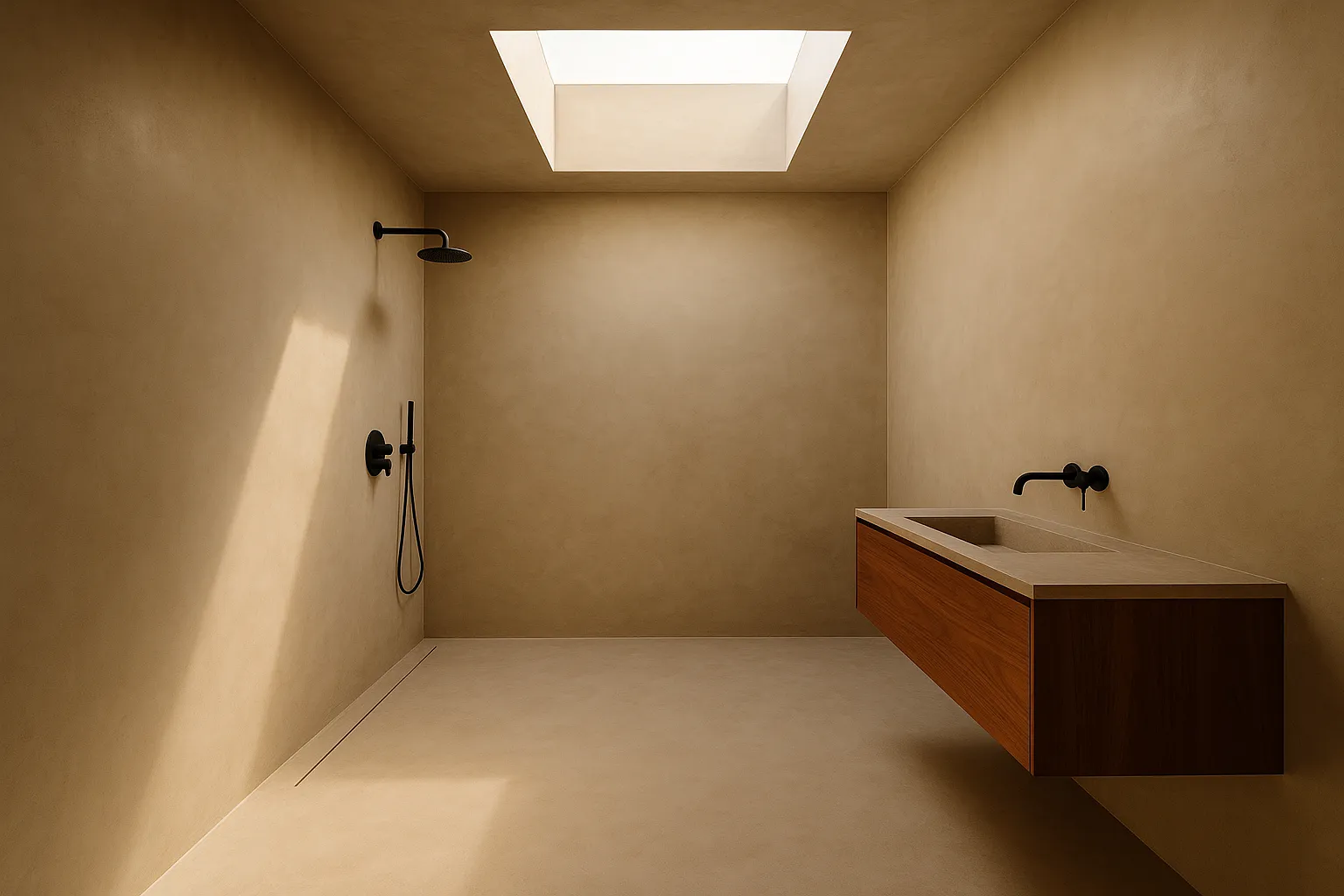
Most homeowners in [Los Angeles](/areas/los-angeles) get their first microcement quote and immediately think the number is wrong — too high, too specific, too different from what they found on Reddit. The truth is, **[microcement bathrooms & wet rooms](/services/microcement-bathrooms) cost ca** projects in 2026 range from **$6,500 to $28,000+** depending on scope, substrate condition, and finish complexity. That spread isn't vague — it reflects real jobs we've completed across [Beverly Hills](/areas/beverly-hills), [Santa Monica](/areas/santa-monica), [Pasadena](/areas/pasadena), and [Glendale](/areas/glendale). This guide breaks down exactly where your money goes, what drives costs up or down, and what a realistic project looks like from start to finish.
---
## What Is Microcement? A Definition Worth Knowing
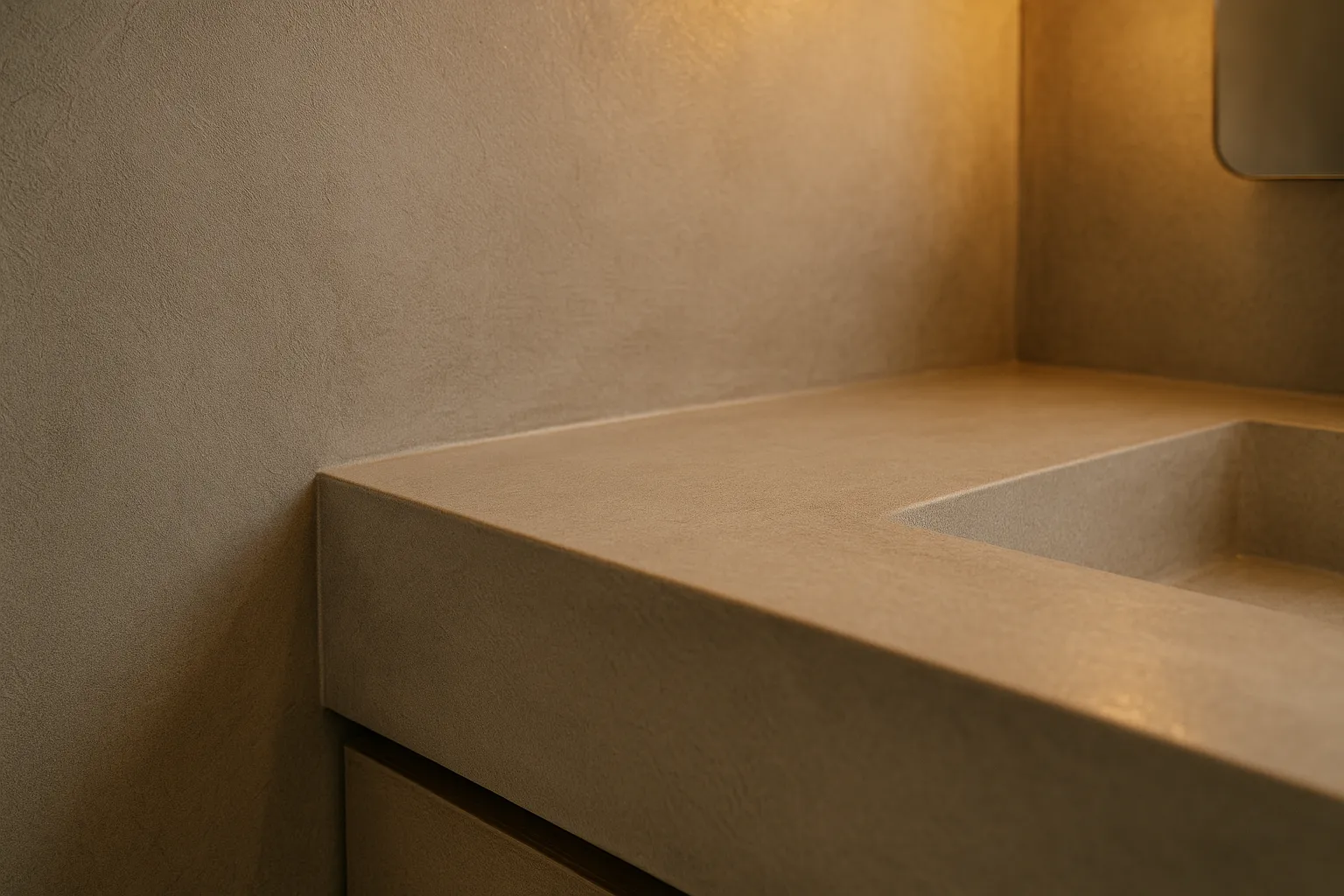
What is microcement? Microcement is a polymer-modified cementitious coating — typically 2–3mm thick — applied in multiple layers over existing surfaces like tile, concrete, drywall, or wood. It's not a poured slab. It's not epoxy. It bonds directly to the substrate, cures to a mineral hardness, and gets sealed for waterproofing.
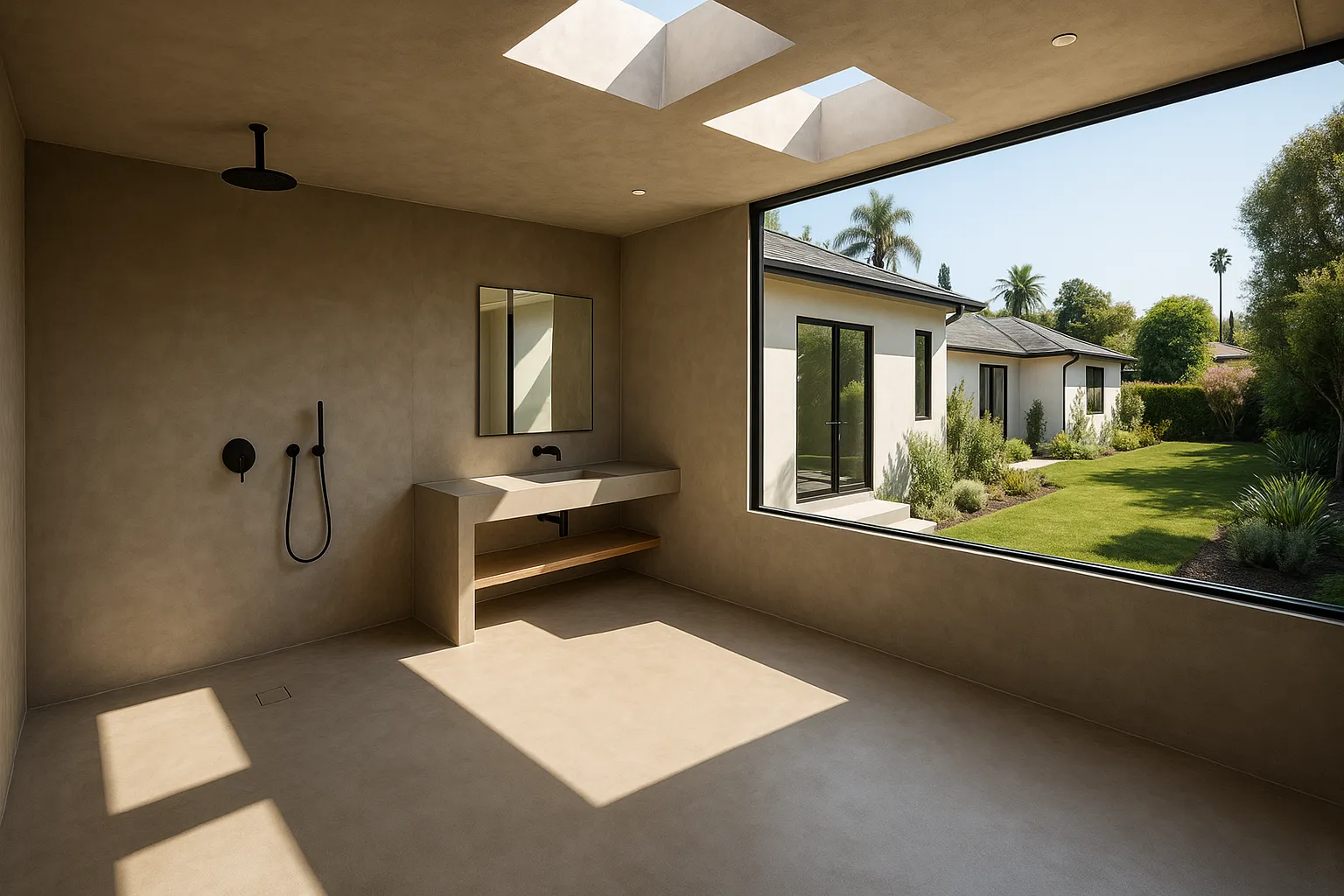
In a bathroom context, that means you can achieve a seamless, grout-free wet room without demolishing the existing tile. The surface looks continuous — floor to wall to ceiling — which is why designers and architects in West LA and Beverly Hills have been specifying it heavily in 2026.
What is a wet room? A wet room is a fully waterproofed bathroom where the shower has no tray or enclosure — water drains across a sloped floor. Microcement is one of the few finishes that can be applied across the entire wet room surface (floor, walls, ceiling) as a single continuous material, making it architecturally seamless in a way tile simply cannot match.
What is a mineral finish? A mineral finish refers to surfaces derived from cement, stone, or clay-based compounds rather than synthetic polymers like vinyl or acrylic. Mineral finishes are breathable, UV-stable, and develop a natural patina over time. Microcement is the most versatile mineral finish currently available for residential bathrooms in Southern California.

---
## [How Much Does](/estimate) Microcement Bathrooms & Wet Rooms Cost CA in 2026?
Based on Cemora's project data across 80+ completed bathrooms in Los Angeles County, here's the realistic cost breakdown for 2026:
| Project Type | Square Footage | Total Cost Range | Cost Per Sq Ft |
|---|---|---|---|
| Small bathroom refresh (walls only) | 60–80 sq ft | $6,500–$9,500 | $95–$130 |
| Full bathroom (floor + walls) | 80–120 sq ft | $9,500–$14,500 | $110–$145 |
| Wet room / walk-in shower only | 40–60 sq ft | $7,000–$11,000 | $145–$185 |
| Master bathroom full conversion | 120–200 sq ft | $14,000–$22,000 | $115–$155 |
| Large wet room + full bath | 200–300 sq ft | $20,000–$28,000+ | $120–$165 |
These figures include labor, materials, primer, base coats, finish coats, and professional-grade sealer. They do not include plumbing modifications, tile removal, or structural waterproofing membrane upgrades — those are separate line items.
**Industry benchmarks from the 2025 Houzz State of the Industry Report** show that bathroom remodels in California averaged **$18,400** in 2025. Microcement-specific projects tend to run **15–25% higher than tile** for the finish work alone, but eliminate grout maintenance costs entirely over the life of the surface.
### What Drives the Price Up?
Several factors push microcement bathroom costs toward the higher end of the range:
- **Substrate condition**: Cracked, uneven, or soft substrates require skim-coating and repair before microcement can be applied. Budget **$500–$2,500** for substrate prep on older homes.
- **Tile removal**: If you're removing existing tile rather than coating over it, add **$800–$2,000** depending on tile thickness and adhesive type.
- **Custom colors and finishes**: Bespoke pigment matching or multi-tone finishes add **$1,000–$3,000** to material costs.
- **Access difficulty**: Tight bathrooms in older Pasadena or Glendale bungalows with limited ventilation slow application time and increase labor hours.
- **Sealer grade**: Residential-grade sealers work fine for most bathrooms. For high-traffic wet rooms or [commercial](/services/microcement-commercial-hospitality) applications, professional-grade polyurethane or epoxy-hybrid sealers add **$400–$900** to the total.
### What Keeps Costs Lower?
- Clean, level substrate in good condition
- Standard color from existing palette (no custom pigment mixing)
- Walls only (no floor application)
- New construction where waterproofing membrane is already in place
- Straightforward rectangular layouts without complex curves or niches
---
## Why Is Microcement More Expensive Than Tile in California?
This is the question we get most often. The short answer: you're paying for skill, not just material.
Tile is modular. A competent installer places individual pieces and fills joints. Microcement is applied freehand in thin layers, feathered at edges, and must cure evenly across the entire surface. A single missed spot in the base coat shows through the finish coat. There's no hiding mistakes behind grout lines.
**Labor accounts for 55–65% of total microcement project cost** in Los Angeles, based on Cemora's internal job costing across 2025–2026 projects. That's higher than most tile jobs, where labor typically runs 40–50% of total cost.
As Cemora's lead applicator puts it: *"Microcement is unforgiving. You can't patch a bad section invisibly the way you can re-grout a tile. Every coat has to be right, which means slower work and more experienced hands — and that costs more per hour than a standard tile crew."*
That said, the long-term math often favors microcement. No grout to seal, clean, or replace. No cracked tiles to re-set. A properly sealed microcement bathroom in Southern California's climate should last **20–30 years** with basic maintenance.
---
## The Microcement Bathroom Installation Process: Step by Step
Understanding the process helps you understand the cost. Here's exactly how a Cemora microcement bathroom project unfolds:
1. **Site assessment and substrate evaluation** (Day 1): We inspect the existing surface for cracks, moisture, and levelness. Any substrate issues get documented and quoted separately.
2. **Surface preparation** (Day 1–2): Existing surfaces are cleaned, sanded, and primed. Damaged areas are repaired with skim coat or patching compound. This step is non-negotiable — it's what separates a 20-year finish from a 3-year failure.
3. **Waterproofing membrane application** (Day 2): In wet zones (shower floors, lower walls), a flexible waterproofing membrane is applied and allowed to cure. This is critical in California — **CSLB requires waterproofing in all wet room applications** per Title 24 standards.
4. **First microcement base coat** (Day 2–3): The first 1–1.5mm layer is applied by hand using a stainless steel trowel. This establishes the body of the finish and begins building texture.
5. **Reinforcement mesh embedding** (Day 3): Fiberglass mesh is embedded in the base coat at joints and transitions to prevent cracking. This step is often skipped by less experienced applicators — it shouldn't be.
6. **Second base coat** (Day 3–4): A second base coat layer smooths and levels the surface, filling any low spots from the first application.
7. **Finish coat application** (Day 4–5): The decorative finish coat is applied in 1–2 passes. This is where color, texture, and the final aesthetic come together. It requires the most skill and the steadiest hand.
8. **Sanding and polishing** (Day 5): Once cured, the surface is lightly sanded and polished to the specified sheen level — matte, satin, or semi-gloss.
9. **Sealer application** (Day 5–6): Two or three coats of penetrating and topcoat sealer are applied with drying time between coats. This is what makes the surface waterproof and stain-resistant.
10. **Final cure and handover** (Day 7–10): The surface needs **5–7 days of cure time** before full water exposure. We walk every client through care and maintenance before we leave.
Total installation timeline: **5–10 working days** for most residential bathrooms. Larger wet rooms or multi-bathroom projects run **10–15 days**.

---
## Real-World Project Examples: What CA Homeowners Actually Spent
Numbers are more useful when they're attached to real projects. Here are three recent Cemora jobs:
**Project 1 — Silver Lake, Los Angeles:** A homeowner converted a dated 95 sq ft master bathroom into a seamless wet room. The existing tile was in good condition and was coated over rather than removed. Total project cost: **$13,200**, including substrate prep, full floor-to-ceiling microcement, custom warm grey finish, and professional-grade sealer. Timeline: 8 working days.
**Project 2 — Pasadena:** A 1940s Craftsman bungalow with a small 65 sq ft bathroom. The substrate had minor cracking that required repair — adding **$900** to the base quote. Walls only were coated (the original concrete floor was retained and polished). Total cost: **$8,750**. The homeowner reported the bathroom sold the house — they listed at **$1.1M** and received an offer within 4 days, which their agent attributed partly to the bathroom's distinctive finish.
**Project 3 — Beverly Hills:** A full master suite renovation including a 280 sq ft bathroom and wet room. Custom two-tone finish (warm sand on walls, darker charcoal on the floor), heated floor integration, and bespoke niche detailing. Total microcement cost: **$26,400**, separate from the plumbing and heated floor work. This project took 14 working days across two applicators.
These aren't cherry-picked outliers — they represent the typical spread across budget, mid-range, and premium projects in LA County.
---
## How Does Microcement Compare to Other Bathroom Finish Options?
| Finish Material | Cost Per Sq Ft (CA, 2026) | Grout Required | Waterproof | Lifespan | Maintenance |
|---|---|---|---|---|---|
| Ceramic tile | $12–$28 | Yes | With grout sealing | 15–25 years | Grout cleaning, periodic resealing |
| Porcelain large-format tile | $22–$45 | Minimal | With grout sealing | 20–30 years | Low, but grout still present |
| Natural stone (marble/travertine) | $35–$75 | Yes | Requires sealing | 20–40 years | High — acid-sensitive, frequent sealing |
| Microcement | $95–$185 | None | Yes (sealed) | 20–30 years | Low — annual sealer check |
| Epoxy coating | $45–$85 | None | Yes | 10–15 years | Medium — UV yellowing risk |
| Venetian plaster | $55–$95 | None | No (not for wet zones) | 15–25 years | Medium — not suitable for showers |
Microcement's cost per square foot is higher than tile at the installation stage. But **over a 20-year period**, the elimination of grout maintenance, re-grouting, and tile replacement often makes it cost-competitive or cheaper in total lifecycle cost.
---
## What Should You Ask Before Hiring a Microcement Applicator in CA?
Microcement is a specialist trade. Not every tile contractor, plastering company, or general contractor is qualified to apply it. California has no specific license category for microcement applicators, but **CSLB requires a C-35 (Lathing and Plastering) or C-54 (Ceramic and Mosaic Tile) license** for most decorative coating work. Always verify.
Here are the questions worth asking before you sign anything:
- **How many microcement bathrooms have you completed in the last 12 months?** Anything under 10 is a red flag for a wet room project.
- **What brand of microcement system do you use, and why?** Professional applicators can explain the chemistry of their system. Vague answers suggest inexperience.
- **Do you apply a dedicated waterproofing membrane before the microcement?** If the answer is "the microcement is waterproof on its own," walk away. Properly installed systems always include a substrate membrane in wet zones.
- **Can I see completed projects in person or speak to past clients?** Photos can be faked or borrowed. References can't.
- **What's your warranty?** Cemora offers a **2-year workmanship warranty** on all bathroom and wet room projects. Industry standard is 1–2 years.
*"We've been called in to fix microcement bathrooms applied by general contractors who watched a YouTube tutorial,"* says Cemora's founder. *"The cost to strip and redo a failed installation in Los Angeles typically runs $4,000–$8,000 — money that could have gone toward doing it right the first time."*

---
## Does Microcement Increase Home Value in Los Angeles?
This is harder to quantify than kitchen ROI, but the data points in one direction. **The 2025 Houzz Bathroom Trends Study** found that **72% of California homeowners who completed a full bathroom renovation recovered more than 60% of costs at resale**. Microcement bathrooms consistently outperform tile in design-forward markets like West LA, Silver Lake, and the Westside.
Real estate agents in Beverly Hills and Santa Monica report that seamless wet rooms are among the **top 5 features buyers mention unprompted** during showings in 2026. In a market where differentiation matters, a microcement bathroom is a genuine selling point — not just a nice-to-have.
For investment properties and short-term rentals, the durability argument is even stronger. Grout harbors mold and bacteria. Microcement's sealed surface is far easier to clean between guests, and it doesn't show wear the same way tile does after heavy use.
If you're weighing the investment for a rental property, our [Commercial & Hospitality Microcement](/services/microcement-commercial-hospitality?utm_source=blog&utm_medium=organic&utm_campaign=microcement-bathrooms-wet-rooms-cost-ca) page covers that application specifically.
---
## How to Budget for a Microcement Bathroom & Wet Room in California
Here's a practical budgeting framework based on scope:
**Entry-level budget ($6,500–$10,000):**
Walls only in a small bathroom, standard color, good substrate condition, no tile removal. This is the right entry point if you want to test the aesthetic before committing to a full renovation.
**Mid-range budget ($10,000–$18,000):**
Full bathroom floor and walls, standard to semi-custom finish, minor substrate prep. This covers the majority of master bathroom conversions in LA County.
**Premium budget ($18,000–$28,000+):**
Full wet room, custom color, complex layout, premium sealer, possible heated floor integration. This is the range for Beverly Hills and high-end Santa Monica projects where finish quality is non-negotiable.
For any project, add a **10–15% contingency** for substrate surprises. Older homes in Pasadena, Glendale, and East LA frequently have moisture issues or uneven substrates that aren't visible until prep begins.
If you're ready to get a real number for your specific bathroom, [book a consultation](/book?utm_source=blog&utm_medium=organic&utm_campaign=microcement-bathrooms-wet-rooms-cost-ca) and we'll assess your space in person. Or start with our [free estimate form](/estimate?utm_source=blog&utm_medium=organic&utm_campaign=microcement-bathrooms-wet-rooms-cost-ca) if you'd prefer to share photos and dimensions first.
For context on how microcement performs across other surfaces, see our guides on [Microcement Floors & Walls](/services/microcement-floors-walls?utm_source=blog&utm_medium=organic&utm_campaign=microcement-bathrooms-wet-rooms-cost-ca) and [Microcement Kitchens & Countertops](/services/microcement-kitchens-countertops?utm_source=blog&utm_medium=organic&utm_campaign=microcement-bathrooms-wet-rooms-cost-ca) — the material behaves differently in each context, and the cost logic changes accordingly.
For a full overview of what Cemora does, our [Microcement Bathrooms & Wet Rooms](/services/microcement-bathrooms?utm_source=blog&utm_medium=organic&utm_campaign=microcement-bathrooms-wet-rooms-cost-ca) service page covers the full scope of what's possible.
---
## Frequently Asked Questions
### How much does a microcement bathroom cost in California in 2026?
Based on Cemora's project data, **microcement bathrooms & wet rooms cost ca** projects range from **$6,500 for a small wall-only application** to **$28,000+ for a full master wet room** with custom finishes. The most common mid-range full bathroom conversion (floor and walls, 80–120 sq ft) lands between **$9,500 and $14,500**. Cost per square foot typically runs **$95–$185** depending on scope, substrate condition, and finish complexity.
### How long does microcement bathroom installation take?
Most residential microcement bathroom projects take **5–10 working days** from start to handover. Larger wet rooms or multi-bathroom projects extend to **10–15 days**. After the final sealer coat, you need to wait **5–7 days** before full water exposure — this cure period is non-negotiable and affects the long-term durability of the waterproof seal.
### Is microcement actually waterproof in a shower or wet room?
Yes — but only when installed correctly with a dedicated waterproofing membrane beneath the microcement layers. The microcement itself is water-resistant, but the substrate membrane is what provides true waterproofing in a wet room context. **Any applicator who skips the membrane is cutting corners**, and the result will eventually leak. Always confirm membrane application is included in your quote.
### Can microcement be applied over existing tile in a bathroom?
In most cases, yes. Microcement can be applied directly over existing ceramic or porcelain tile if the tiles are firmly bonded, the surface is clean and degreased, and there's no significant height variation at grout lines. This approach saves **$800–$2,000** in tile removal costs. However, if tiles are cracked, hollow-sounding, or poorly adhered, removal is necessary before application.
### How does microcement bathroom cost compare to large-format tile in CA?
Large-format porcelain tile installation in California runs **$22–$45 per square foot** installed. Microcement runs **$95–$185 per square foot**. The upfront cost difference is real — microcement is **2–4x more expensive at installation**. However, microcement eliminates grout maintenance entirely and typically has a longer functional lifespan without repair costs, which narrows the lifecycle cost gap significantly over 15–20 years.
### What maintenance does a microcement bathroom require?
Very little. A properly sealed microcement bathroom requires **annual inspection of the sealer** and re-application of a maintenance coat every **3–5 years** depending on use intensity. Daily cleaning with a pH-neutral cleaner is recommended — avoid acidic or abrasive products. The surface should never be scrubbed with steel wool or harsh chemicals. This is far less maintenance than grout-based tile systems, which typically need deep cleaning and resealing every **1–2 years**.
### Will microcement crack in a California bathroom?
Microcement can crack if the substrate moves or if installation skips the fiberglass reinforcement mesh step. In California, where seismic activity is a real consideration, **proper substrate preparation and mesh reinforcement are essential**. A correctly installed microcement bathroom with a stable substrate should not crack under normal use. Hairline cracks from substrate movement can typically be repaired without full resurfacing.
### How do I find a qualified microcement applicator in Los Angeles?
Look for applicators with a **CSLB C-35 or C-54 license**, verifiable references from completed wet room projects, and clear documentation of their waterproofing process. Ask to see at least 5 completed bathroom projects — preferably in person. Be wary of general contractors or tile companies who offer microcement as an add-on service without dedicated applicator experience. Microcement is a specialist trade, and experience directly affects the quality of the result.
### Does microcement increase resale value in the LA real estate market?
Yes, particularly in design-forward neighborhoods like Silver Lake, [West Hollywood](/areas/west-hollywood), Santa Monica, and Beverly Hills. Real estate agents in these markets report that seamless wet rooms are among the **top 5 features buyers mention unprompted** during 2026 showings. While precise ROI varies by property, the **2025 Houzz Bathroom Trends Study** found that **72% of California homeowners recovered more than 60% of bathroom renovation costs** at resale — and microcement finishes consistently outperform tile in premium market segments.
### What's the difference between microcement and polished concrete in a bathroom?
Polished concrete requires a poured concrete slab as its substrate — it's not a coating, it's the structural material itself. Microcement is a **2–3mm coating** that can be applied over virtually any existing surface. In a bathroom context, polished concrete is rarely practical because it requires full demolition and repour. Microcement achieves a visually similar mineral aesthetic at a fraction of the disruption and cost, making it the practical choice for bathroom renovations in existing homes across Los Angeles.
---
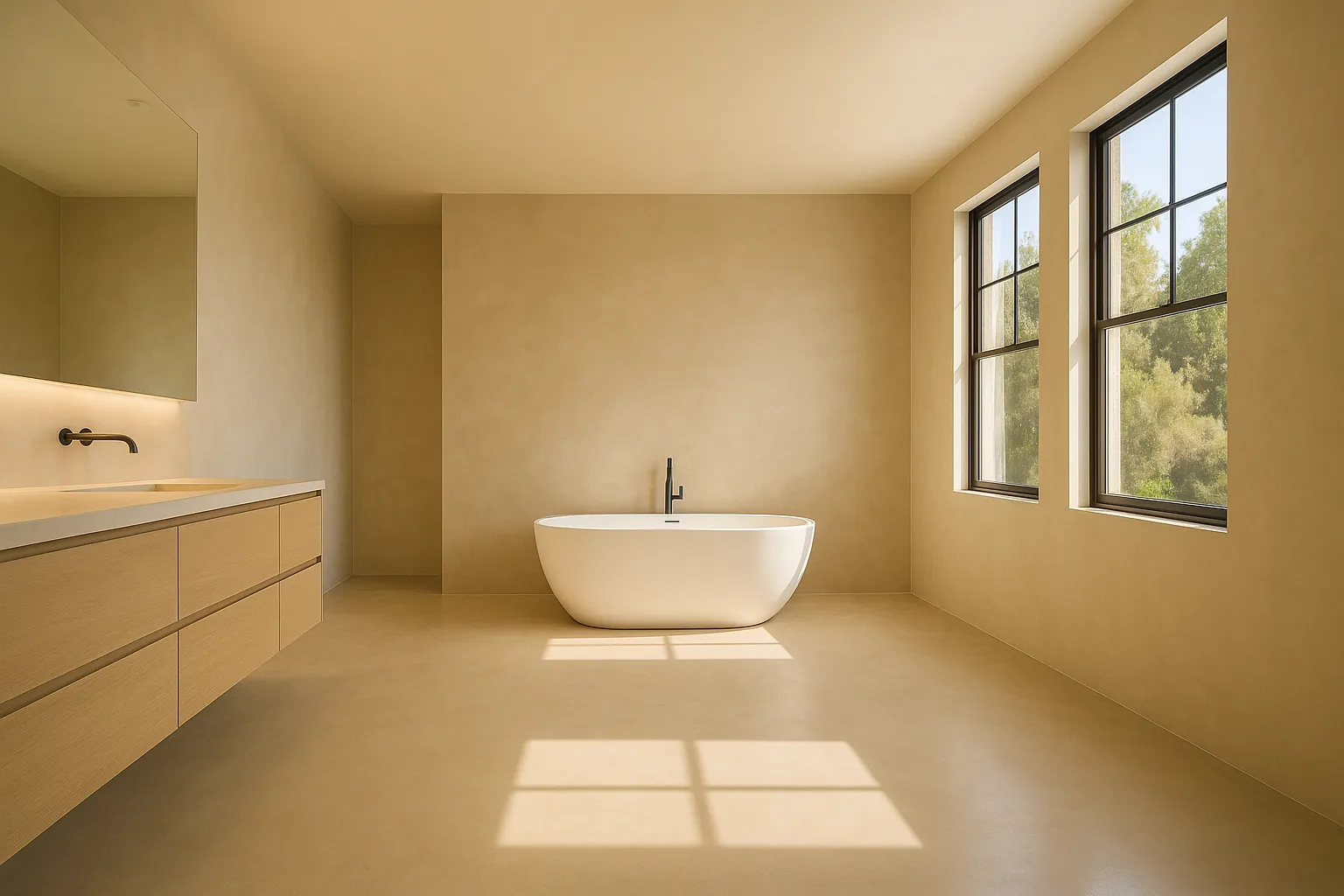
The decision to invest in microcement for your bathroom isn't really about the surface material — it's about what you want the room to feel like for the next 20 years. Grout lines age. Tile trends cycle. A well-executed microcement bathroom in a warm greige or cool stone tone is the kind of finish that looks considered in 2026 and still looks considered in 2040.
If you're working through the numbers for a specific project, [contact us](/contact?utm_source=blog&utm_medium=organic&utm_campaign=microcement-bathrooms-wet-rooms-cost-ca) and we'll walk through the scope with you honestly — including whether microcement is actually the right choice for your bathroom, or whether a different approach makes more sense. We'd rather give you the right answer than the expensive one.
---
**Ready to start your your project in Los Angeles?** [Book a free consultation](/book?utm_source=blog&utm_medium=organic&utm_campaign=microcement-bathrooms-wet-rooms-cost-ca-what-to-expect-in-2026) — we'll come walk through your space and give you straight numbers, no pressure. Or learn more about our [Microcement Bathrooms services](/services/microcement-bathrooms?utm_source=blog&utm_medium=organic&utm_campaign=microcement-bathrooms-wet-rooms-cost-ca-what-to-expect-in-2026).