Microcement Cost vs. Epoxy vs. Polished Concrete in Los Angeles 2026: What You'll Actually Pay
By Gilad Segev · July 13, 2026 · Last updated September 7, 2026 · Cost Guide
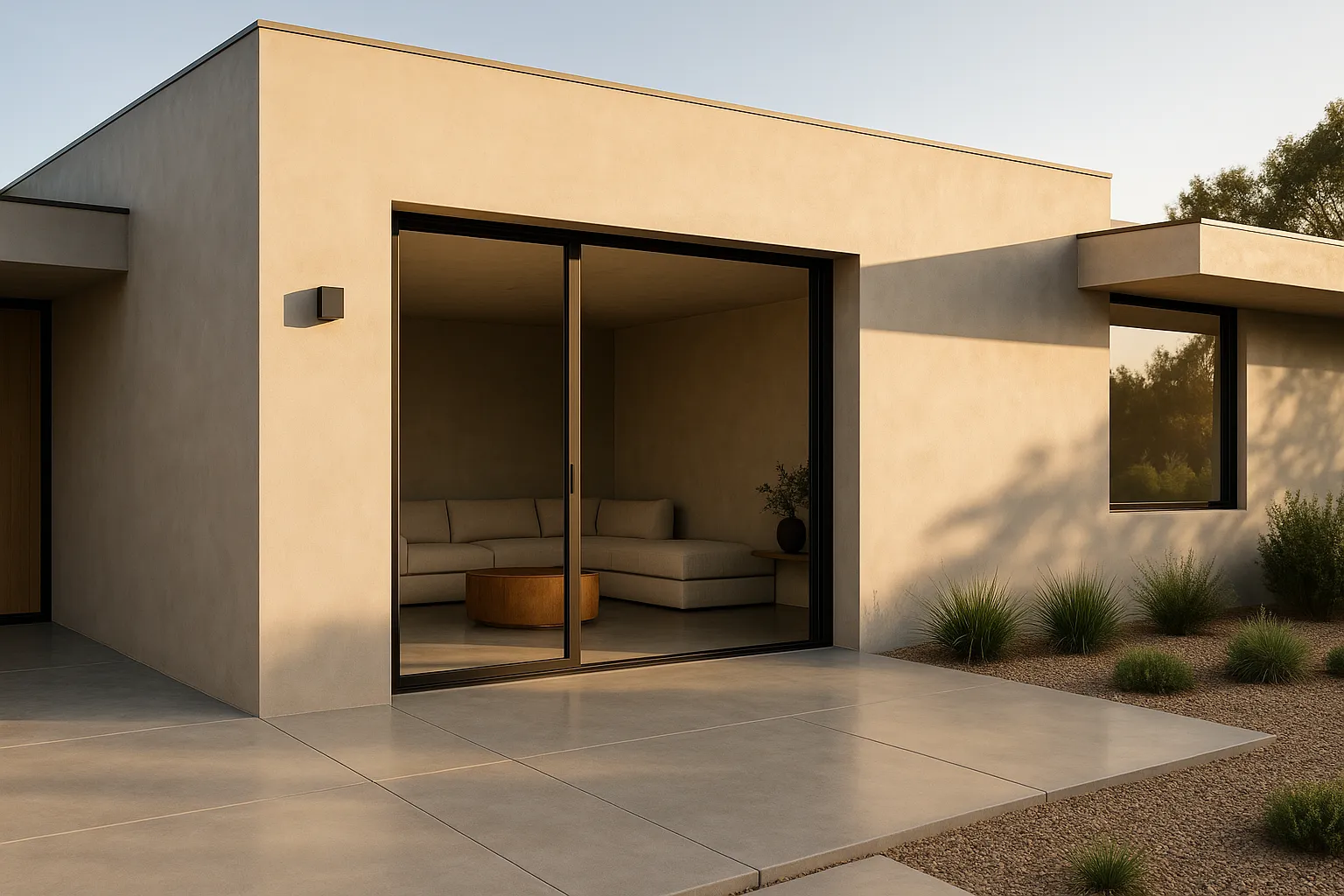
The [microcement](/services/microcement-bathrooms) cost in [Los Angeles](/areas/los-angeles) runs between **$15 and $35 per square foot installed** — and that range tells you almost nothing useful unless you know what's driving the number. A 400-square-foot [commercial](/services/microcement-commercial-hospitality) lobby in [Beverly Hills](/areas/beverly-hills) is a completely different job than a 60-square-foot residential bathroom in [Pasadena](/areas/pasadena), and the finish system you choose will determine not just your upfront spend, but your maintenance costs, your downtime, and how the space looks in five years.
This guide breaks down what microcement, epoxy, and polished concrete actually cost in the Los Angeles market in 2026 — with real project numbers, honest trade-offs, and enough detail to walk into a contractor conversation knowing exactly what questions to ask.
---
## What Is Microcement? A Definition Worth Having
What is microcement? Microcement is a polymer-modified cementitious coating applied in thin layers — typically 2 to 3mm total — over existing substrates including concrete, tile, wood, and drywall. It creates a seamless, waterproof, highly durable mineral surface without the weight or thickness of traditional concrete overlays.
The material originated in Spain and has dominated European hospitality and residential design for over two decades. In Los Angeles, adoption accelerated sharply between 2022 and 2025 as designers and developers discovered it could deliver a high-end raw concrete aesthetic in spaces where structural concrete was impossible — think second-floor bathrooms, kitchen countertops, and wood-framed commercial interiors.
Because microcement bonds directly to the existing substrate, it eliminates demolition costs in most renovation scenarios. That's one of the primary financial advantages over polished concrete, which requires an actual concrete slab to work with.

---
## How Much Does Microcement Cost in Los Angeles?
Based on Cemora's project data across installations in Los Angeles, [Santa Monica](/areas/santa-monica), Beverly Hills, Pasadena, and [Glendale](/areas/glendale), **microcement installation in 2026 typically costs between $15 and $35 per square foot** for the complete system — surface prep, primer, two to three microcement coats, and two to three sealer coats.
Here's how that range breaks down by project type:
- **Residential bathroom or wet room:** $22–$35/sq ft (high complexity, waterproofing requirements, small area premium)
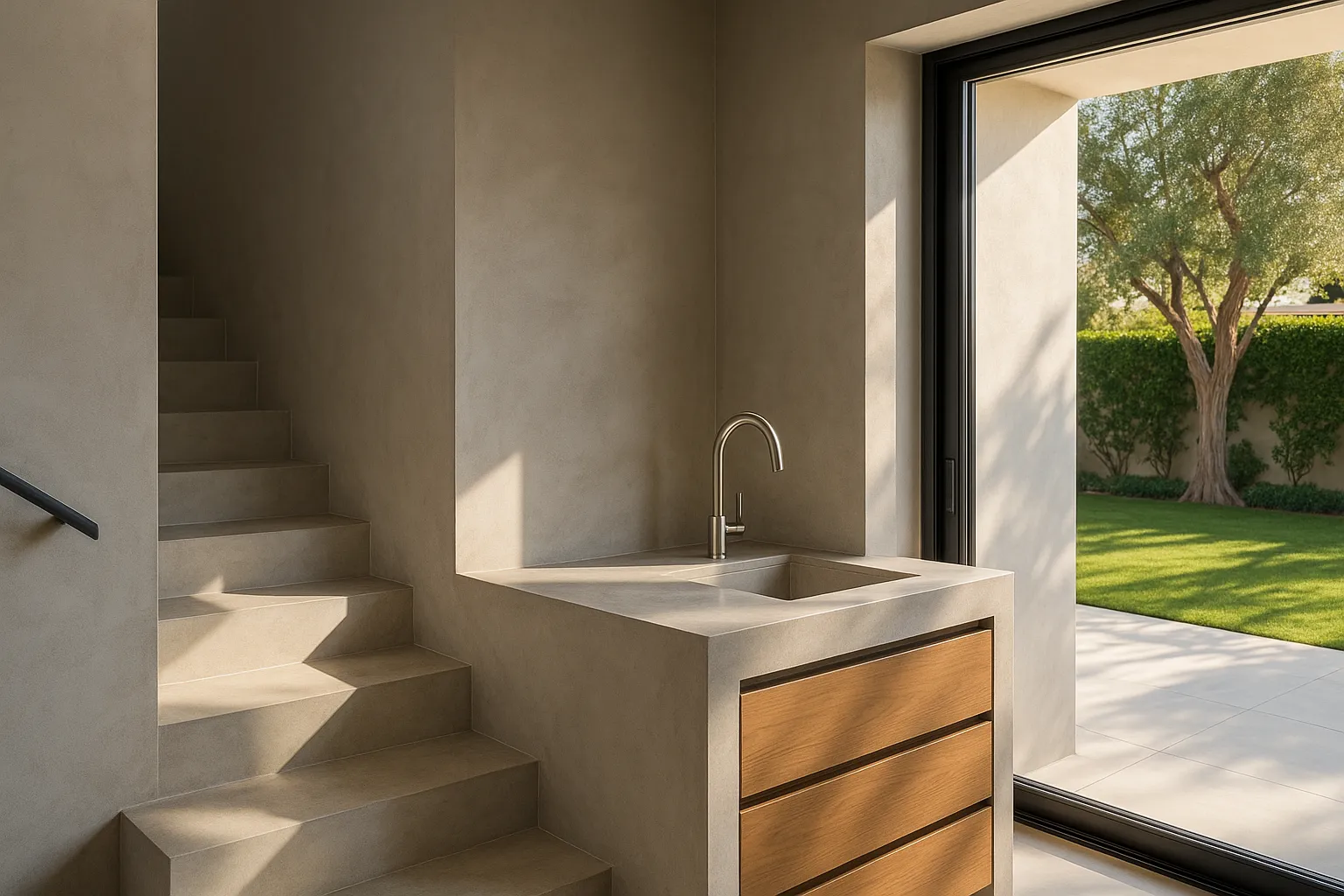
- **Residential floors:** $15–$22/sq ft (larger areas reduce per-foot cost, fewer waterproofing layers)
- **Kitchen countertops:** $55–$90/sq ft (small surface area, high detail work, food-safe sealer required)
- **Commercial floors (500+ sq ft):** $12–$18/sq ft (volume pricing, faster application on open floor plates)
- **Hospitality feature walls:** $18–$28/sq ft (depends on texture complexity and height)
**Labor is the dominant cost driver.** In the Los Angeles market, skilled microcement applicators charge $75–$120 per hour. A two-person crew on a standard 200-square-foot bathroom typically logs 16–24 labor hours across a two-to-three-day installation window, not counting curing time.
### What Drives the Price Up?
Several factors push microcement costs toward the higher end of the range:
- **Substrate condition:** Cracked, uneven, or contaminated surfaces require additional prep — sometimes $3–$8/sq ft in added labor before a single coat of microcement goes down
- **Waterproofing requirements:** Wet rooms and shower enclosures need a waterproof membrane layer beneath the microcement system, adding $4–$7/sq ft
- **Color complexity:** Custom trowel-applied textures and multi-tone color work require more skilled labor time
- **Access and logistics:** High-rise condos in downtown LA or Westside buildings with freight elevator restrictions add mobilization cost
- **Small square footage:** Jobs under 80 square feet carry a minimum charge — most quality applicators won't mobilize for under $2,500–$3,500
### A Real Project: Culver City Restaurant Renovation
A restaurant operator in Culver City recently completed a full floor and bar-surround installation covering **680 square feet** of microcement in a warm sand tone. Total project cost: **$11,900** — approximately **$17.50/sq ft** installed. The substrate was existing concrete slab in good condition, which kept prep costs minimal. The operator chose microcement specifically because the restaurant stayed open during installation; the phased application required no demolition and no extended closure.
---
## What Is Epoxy Flooring? And What Does It Cost in LA?
What is epoxy flooring? Epoxy is a two-component resin system — a hardener and a resin — that chemically bonds to concrete substrates when mixed and applied. It cures into a hard, glossy, highly chemical-resistant surface. Epoxy is not a coating in the traditional sense; it's a reactive plastic that fuses to the concrete at a molecular level.
Epoxy is the workhorse of commercial and industrial flooring. It dominates garage floors, commercial kitchens, warehouses, and healthcare facilities because of its chemical resistance and relatively low cost on large, flat concrete slabs.
**Epoxy installation in Los Angeles in 2026 costs between $5 and $14 per square foot installed**, depending on system complexity:
- **Single-coat epoxy (garage/utility):** $5–$8/sq ft
- **Multi-coat broadcast system (commercial kitchen):** $8–$12/sq ft
- **Decorative metallic epoxy:** $10–$14/sq ft
- **Epoxy with anti-slip aggregate:** Add $1–$2/sq ft
The cost gap versus microcement is real — and so are the trade-offs.
### Where Epoxy Falls Short
Epoxy has three significant limitations that matter in the Los Angeles commercial and hospitality market:
1. **UV yellowing:** Standard epoxy yellows with UV exposure. In Southern California's light-flooded interiors, this is not a minor issue — it's a guaranteed aesthetic problem within 12–24 months on floors with natural light exposure. UV-stable polyaspartic topcoats add cost and partially mitigate this.
2. **Moisture sensitivity during installation:** Epoxy requires concrete moisture content below 4 lbs/1,000 sq ft/24 hours (ASTM F1869). LA's coastal areas and basement slabs frequently fail this threshold, requiring moisture mitigation systems at $3–$6/sq ft additional cost.
3. **Appearance ceiling:** Even the best decorative epoxy reads as a coating. It doesn't achieve the depth, warmth, or mineral variation that microcement or polished concrete delivers. In hospitality and high-end retail, this matters.

---
## What Is Polished Concrete? Costs and Constraints in Southern California
What is polished concrete? Polished concrete is an existing concrete slab that's mechanically ground and refined using progressively finer diamond tooling — typically from 30-grit to 3,000-grit — to achieve a dense, reflective surface. The concrete itself becomes the finished floor; no coating is applied.
Polished concrete is genuinely beautiful and extremely durable when done correctly. It's also the most constrained of the three systems.
**You need an existing concrete slab.** That eliminates polished concrete from most residential renovations, upper-floor commercial spaces, and any wood-framed structure. In Los Angeles, where a significant percentage of residential and commercial construction uses wood framing, this rules out polished concrete for a large share of renovation projects.
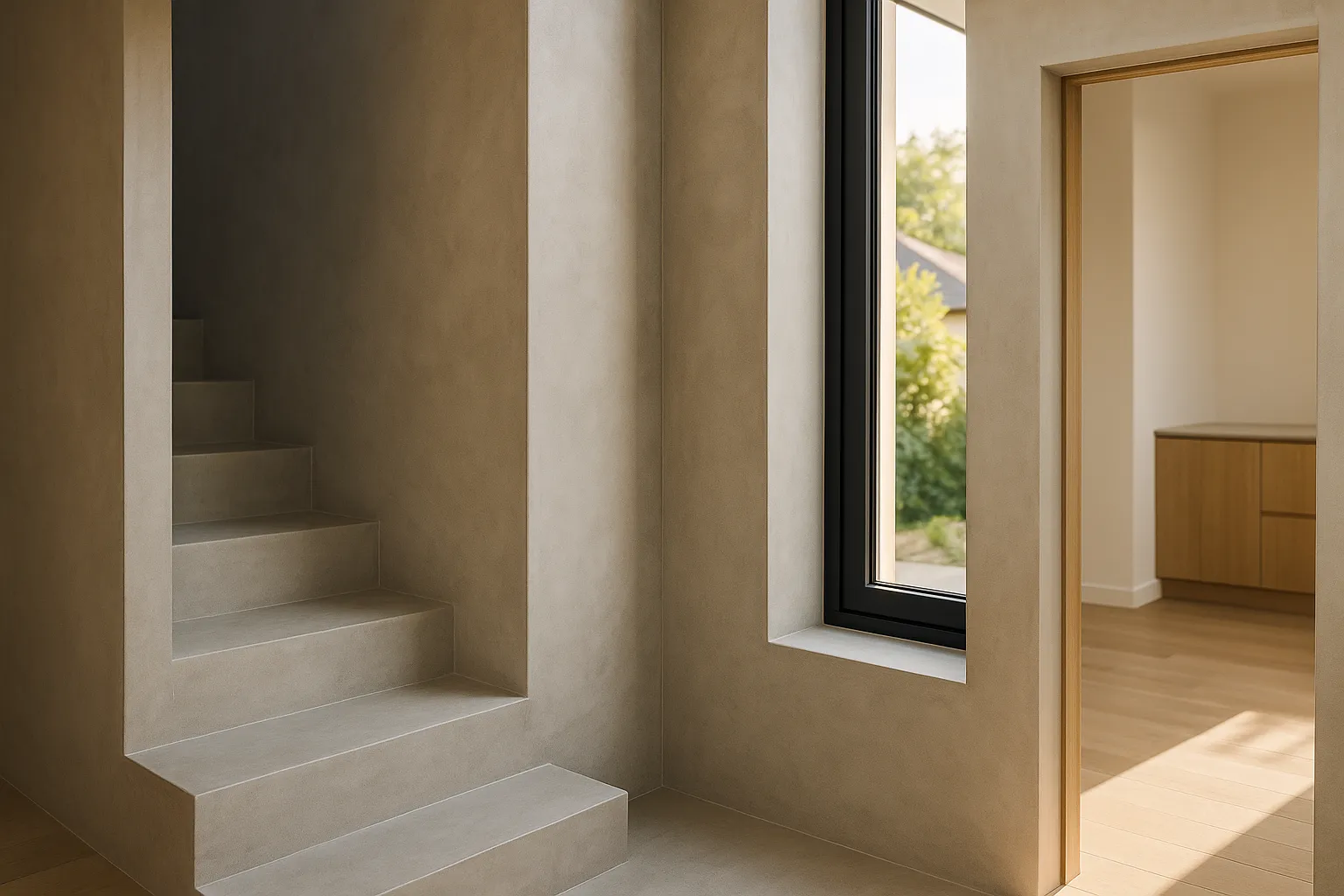
**Polished concrete costs in Los Angeles in 2026 run $8–$18 per square foot**, depending on the existing slab condition and desired finish level:
- **Cream polish (minimal aggregate exposure):** $8–$12/sq ft
- **Salt-and-pepper finish:** $10–$14/sq ft
- **Full aggregate exposure (high-end):** $14–$18/sq ft
- **Slab repair and crack remediation:** $4–$12/sq ft additional, highly variable
### The Hidden Cost of Slab Remediation
The number that surprises most commercial clients is slab remediation. Los Angeles has a significant stock of older commercial buildings with slabs that have been patched, contaminated with adhesive from previous flooring, or compromised by previous plumbing work. A 2025 survey of LA-area concrete flooring contractors found that **over 60% of commercial polished concrete projects required some level of slab repair**, averaging $2,800 in additional cost on a typical 500-square-foot job.
A real estate developer in Glendale learned this firsthand. They budgeted **$9/sq ft** for polished concrete on a 1,200-square-foot retail space. When the existing tile was removed, the slab revealed extensive adhesive contamination and three areas of significant cracking. Final cost: **$16.50/sq ft** — a **$9,000 overage** on a $10,800 original budget. They've since standardized on microcement for their renovation portfolio because it applies over existing tile without removal.
---
## Side-by-Side Cost Comparison: Microcement vs. Epoxy vs. Polished Concrete
| Factor | Microcement | Epoxy | Polished Concrete |
|---|---|---|---|
| **Installed cost (LA, 2026)** | $15–$35/sq ft | $5–$14/sq ft | $8–$18/sq ft |
| **Requires concrete slab** | No | Yes | Yes (mandatory) |
| **Waterproof** | Yes (with sealer) | Yes | No (requires sealer) |
| **UV stable** | Yes | No (standard) | Yes |
| **Seamless finish** | Yes | Yes | Yes |
| **Suitable for walls** | Yes | Rarely | No |
| **Suitable for countertops** | Yes | Rarely | No |
| **Demolition required** | No | No | No |
| **Typical installation time** | 3–5 days | 2–3 days | 3–7 days |
| **Cure time before use** | 24–72 hours | 24–72 hours | Immediate |
| **Maintenance (annual)** | Low (reseal every 3–5 yrs) | Low-medium | Low (reseal annually) |
| **Aesthetic ceiling** | High | Medium | High |
| **Lifespan (well-maintained)** | 20–30 years | 10–15 years | 30+ years |
---
## Which Finish Is Right for Your Commercial Project in Los Angeles?
For most commercial and hospitality projects in Los Angeles, the decision comes down to three variables: substrate availability, aesthetic requirements, and budget.
**Choose microcement when:**
- The space is wood-framed or on an upper floor
- You need floors, walls, and surfaces to flow seamlessly (bathrooms, kitchens, retail)
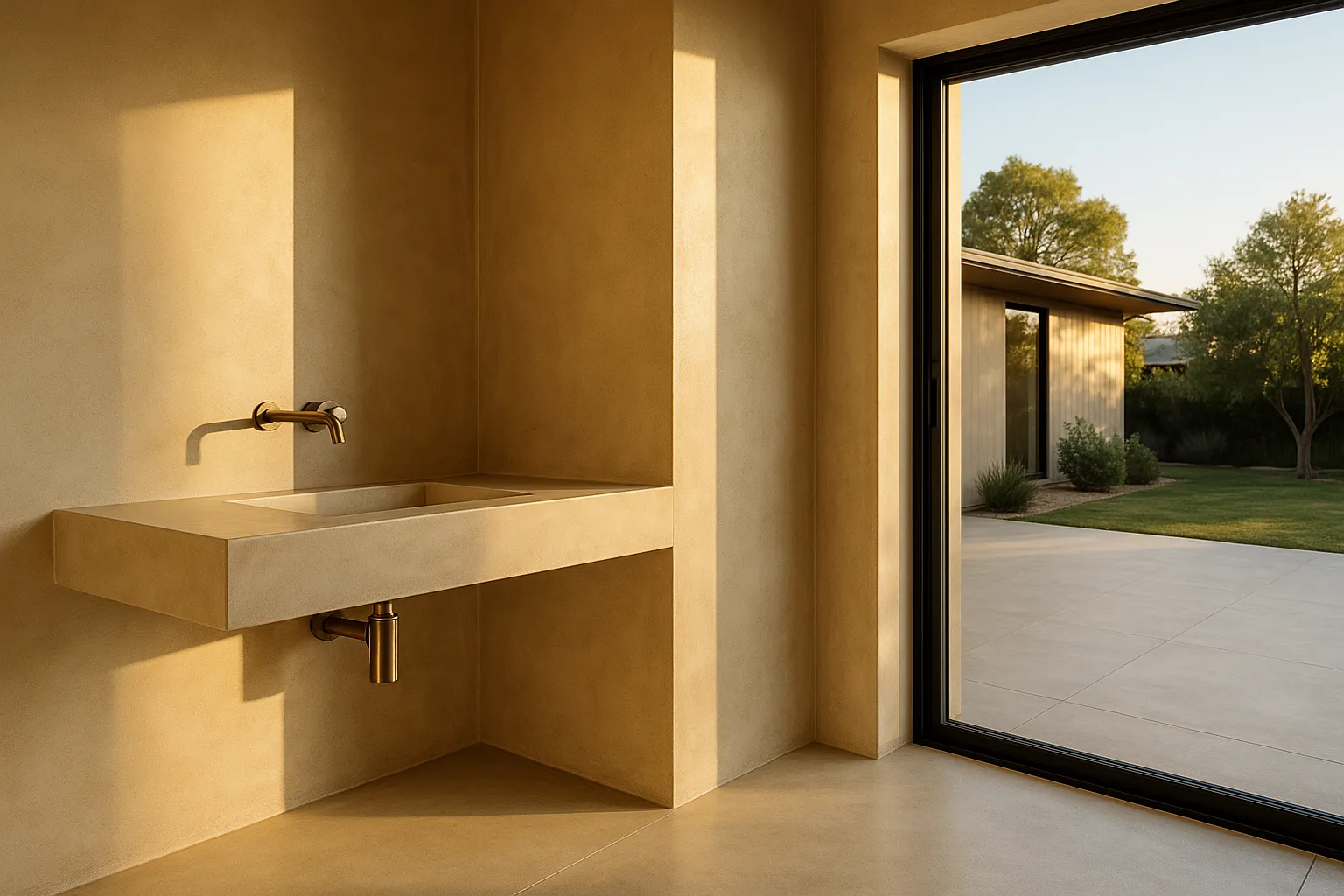
- The existing substrate is tile, plywood, or mixed materials
- UV stability and a premium mineral aesthetic are non-negotiable
- You're renovating a tenant improvement without full demolition budget
**Choose epoxy when:**
- You have a sound concrete slab with verified low moisture content
- The use case is industrial, utility, or back-of-house (commercial kitchens, warehouses, parking structures)
- Budget is the primary constraint and aesthetics are secondary
- Chemical resistance is a specific requirement
**Choose polished concrete when:**
- You have a high-quality existing slab in excellent condition
- The project is new construction or a ground-floor space
- Long-term durability over 30+ years is the priority
- Budget is flexible enough to absorb potential slab remediation costs
### A Hospitality Example: [West Hollywood](/areas/west-hollywood) Hotel Lobby
A boutique hotel in West Hollywood evaluated all three systems for a **1,400-square-foot lobby renovation**. The building was wood-framed, which immediately eliminated polished concrete. Epoxy was rejected because the design team required a matte mineral finish that would read as luxury, not industrial. They chose microcement in a warm grey with a satin sealer. **Total project cost: $29,400** ($21/sq ft). The installation completed in four working days, and the hotel remained operational throughout. The design director noted that guests consistently comment on the floors as a design feature — something that never happened with the previous tile.

---
## How Does Microcement Cost in Los Angeles Compare to the Rest of California?
Los Angeles sits at the higher end of California's microcement pricing spectrum, driven by labor costs and contractor overhead in one of the country's most expensive markets. Based on industry benchmarks from the 2025 Houzz State of the Industry report and Cemora's own project data, **LA microcement installations run approximately 15–25% higher than comparable projects in Sacramento or the Inland Empire**, and roughly 8–12% higher than San Diego.
San Francisco and the Bay Area are the only California markets that consistently exceed LA pricing, primarily due to union labor requirements on commercial projects.
For commercial clients with projects in multiple Southern California markets — say, a restaurant group with locations in LA, Pasadena, and Santa Monica — volume pricing across locations can reduce per-square-foot costs by **10–18%** compared to single-location pricing.
---
## The Installation Process: What to Expect Step by Step
Understanding the installation sequence helps commercial clients plan around business operations and avoid costly surprises.
1. **Substrate assessment (Day 0–1):** The applicator evaluates surface flatness, moisture content, adhesion potential, and any existing damage. This determines prep scope and final pricing.
2. **Surface preparation (Day 1):** Grinding, patching, cleaning, and priming. For tile-over applications, a skim coat may be applied to level grout lines. This is the most variable phase in terms of time and cost.
3. **Waterproofing membrane (Day 1–2, wet areas only):** For bathrooms, wet rooms, and commercial kitchen areas, a waterproof membrane is applied and allowed to cure before microcement begins.
4. **Base coat application (Day 2):** The first microcement layer is trowel-applied. This coat establishes the base texture and begins building thickness.
5. **Intermediate coat(s) (Day 2–3):** Additional layers refine texture and color. Most systems use two to three coats for commercial applications.
6. **Finish coat (Day 3–4):** The final trowel pass determines the surface character — smooth, textured, or somewhere between. Color consistency is finalized at this stage.
7. **Sealer application (Day 4–5):** Two to three coats of polyurethane or epoxy sealer are applied, with sanding between coats. The sealer determines the final sheen level and provides waterproofing and stain resistance.
8. **Curing and handover (Day 5–7):** Light foot traffic is typically permitted after **24 hours**. Full cure for furniture and heavy commercial use requires **72 hours**. Complete chemical cure takes **28 days**, though the surface is functionally ready well before that.
For a 500-square-foot commercial floor in good substrate condition, this sequence typically runs **four to five working days** from first coat to handover.
---
## Microcement Cost in Los Angeles: Long-Term Value Calculation
The upfront cost comparison only tells part of the story. Commercial clients need to factor in lifecycle costs.
**Microcement maintenance costs:**
- Annual cleaning: standard commercial floor care, no special products required
- Resealing: every **3–5 years** in commercial applications, at approximately **$2–$4/sq ft** (sealer and labor)
- Spot repair: localized damage can be repaired without full replacement — a significant advantage over epoxy, which often requires section replacement
**Epoxy maintenance costs:**
- More susceptible to scratching and impact damage in high-traffic areas
- Yellowing in UV-exposed areas may require full recoat within **5–8 years** at **$4–$8/sq ft**
- Recoating epoxy requires mechanical preparation of the existing surface — labor-intensive
**Polished concrete maintenance costs:**
- Annual resealing recommended: **$1–$2/sq ft**
- Scratch and stain sensitivity without consistent sealer maintenance
- Crack propagation over time in seismically active areas — a real consideration in Los Angeles
Over a **15-year period** on a 500-square-foot commercial floor, total cost of ownership (installation plus maintenance) typically runs:
- Microcement: **$9,500–$19,000** (installed) + **$1,500–$3,000** (maintenance) = **$11,000–$22,000**
- Epoxy: **$3,500–$8,000** (installed) + **$4,000–$8,000** (recoat at year 7) = **$7,500–$16,000**
- Polished concrete: **$5,000–$10,000** (installed) + **$3,000–$5,000** (annual sealing) = **$8,000–$15,000**
The gap narrows considerably when you account for lifecycle costs. And microcement is the only system that works across floors, walls, and countertops — eliminating the need for multiple finish systems in a single project.

---
## Getting an Accurate Microcement Quote in Los Angeles
The single biggest mistake commercial clients make is soliciting quotes without a substrate assessment. A number quoted over the phone or from photos is not a real quote — it's a starting point that will shift once the applicator sees the actual conditions.
For an accurate microcement [cost estimate](/estimate) in Los Angeles, expect a quality contractor to:
- Visit the site before quoting (or request detailed photos and substrate information)
- Specify the exact system: primer type, number of microcement coats, sealer type and sheen
- Break out labor and materials separately
- Clarify what's included in substrate prep and what triggers additional charges
- Provide a timeline with identified milestones and curing requirements
If a quote arrives without a site visit and doesn't specify the system in detail, the number is unlikely to hold.
Cemora provides detailed written estimates for commercial and residential projects across Los Angeles, Beverly Hills, Santa Monica, Pasadena, and Glendale. If you're comparing systems or trying to establish a realistic budget before your next project, a consultation is the most efficient starting point.
[Get a free project estimate](/estimate?utm_source=blog&utm_medium=organic&utm_campaign=microcement-cost-los-angeles) — we'll assess your substrate, specify the right system, and give you a number that holds.
Or if you're earlier in the process and want to talk through options: [book a consultation](/book?utm_source=blog&utm_medium=organic&utm_campaign=microcement-cost-los-angeles) and we'll walk through the trade-offs for your specific space.
For commercial and hospitality projects, our [commercial microcement services](/services/microcement-commercial-hospitality?utm_source=blog&utm_medium=organic&utm_campaign=microcement-cost-los-angeles) page covers the full scope of what we handle — from single-location tenant improvements to multi-site rollouts.
For residential projects, explore our [microcement bathroom and wet room installations](/services/microcement-bathrooms?utm_source=blog&utm_medium=organic&utm_campaign=microcement-cost-los-angeles), [microcement floors and walls](/services/microcement-floors-walls?utm_source=blog&utm_medium=organic&utm_campaign=microcement-cost-los-angeles), and [microcement kitchen and countertop work](/services/microcement-kitchens-countertops?utm_source=blog&utm_medium=organic&utm_campaign=microcement-cost-los-angeles).
The decision between microcement, epoxy, and polished concrete comes down to your substrate, your aesthetic requirements, and your timeline. Get the substrate assessment right first — everything else follows from there.
---
## Frequently Asked Questions
### How much does microcement cost per square foot in Los Angeles in 2026?
Based on Cemora's project data across Los Angeles, Beverly Hills, Santa Monica, and Pasadena, **microcement installation costs between $15 and $35 per square foot in 2026**, fully installed including substrate prep, primer, multiple microcement coats, and sealer. Residential bathrooms and wet rooms typically land at the higher end ($22–$35/sq ft) due to waterproofing requirements and small-area premiums, while large commercial floors (500+ sq ft) often come in at $12–$18/sq ft. Kitchen countertops are priced separately and run $55–$90/sq ft due to the precision and food-safe sealer requirements.
### Is microcement more expensive than epoxy flooring?
Yes, microcement carries a higher upfront cost than epoxy — typically **$15–$35/sq ft versus $5–$14/sq ft** for epoxy in the Los Angeles market. However, epoxy's UV yellowing in Southern California's light-filled interiors often requires recoating within 5–8 years at $4–$8/sq ft, which narrows the lifecycle cost gap significantly. Microcement also works on walls, countertops, and upper-floor wood-framed spaces where epoxy cannot be used, making it a more versatile system for most commercial renovation projects.
### How does microcement compare to polished concrete in cost?
Polished concrete costs **$8–$18/sq ft** in Los Angeles — lower than microcement at the base level, but with significant caveats. Polished concrete requires an existing concrete slab in good condition, which eliminates it from wood-framed buildings and upper-floor spaces. Slab remediation costs (adhesive removal, crack repair) frequently add $2,800–$9,000+ to projects, and a 2025 survey found over 60% of LA commercial polished concrete jobs required some level of slab repair. Microcement applies over existing tile, wood, and mixed substrates without demolition, making it the more cost-predictable option in renovation scenarios.
### How long does microcement installation take in a commercial space?
A typical commercial microcement installation on a 500-square-foot floor in good substrate condition takes **four to five working days** from first coat to handover, including substrate prep, primer, two to three microcement coats, and two to three sealer coats. Light foot traffic is permitted after 24 hours; full commercial use after 72 hours. Larger spaces or complex multi-surface projects (floors plus walls plus countertops) may run 7–10 working days. One of microcement's key commercial advantages is that installation can often be phased to keep a business operational.
### Does microcement work in commercial kitchens and wet areas?
Yes — with the correct system specification. Commercial kitchen and wet area microcement installations require a waterproof membrane beneath the microcement system, a food-safe sealer on the finished surface, and proper substrate preparation to prevent moisture intrusion. This adds **$4–$7/sq ft** to the base installation cost but creates a surface that is fully waterproof, easy to clean, and compliant with commercial hygiene requirements. [Cemora's commercial and hospitality microcement work](/services/microcement-commercial-hospitality?utm_source=blog&utm_medium=organic&utm_campaign=microcement-cost-los-angeles) includes full wet area specification as standard.
### What is the minimum project size for microcement in Los Angeles?
Most quality microcement applicators in Los Angeles have a **minimum charge of $2,500–$3,500**, regardless of square footage. This reflects the mobilization cost, material setup, and the multi-day process that even small jobs require. Jobs under 80 square feet are typically priced at the minimum rather than by the square foot. For very small areas — a single bathroom niche or a small countertop — the per-square-foot equivalent can run $60–$90/sq ft when the minimum applies.
### How long does microcement last in a high-traffic commercial environment?
With proper installation and maintenance, microcement in commercial applications lasts **20–30 years**. The key maintenance requirement is resealing every 3–5 years in commercial settings (compared to 5–7 years in residential applications), at a cost of approximately $2–$4/sq ft for sealer and labor. Localized damage — scratches, chips, or staining — can be repaired without full replacement, which is a significant advantage over epoxy systems that often require full section recoating when damaged.
### Can microcement be applied over existing tile in a commercial renovation?
Yes — one of microcement's primary advantages in commercial renovation is that it can be applied directly over existing ceramic, porcelain, and stone tile without removal, provided the tile is sound, firmly bonded, and properly prepared. This eliminates demolition costs (typically $3–$6/sq ft for tile removal and disposal in Los Angeles), reduces construction waste, and significantly shortens the project timeline. The applicator will skim-coat grout lines before the microcement system begins to ensure a flat, seamless finished surface.
### What's the difference between microcement and concrete overlay or skim coat?
What is a concrete overlay? A concrete overlay is a thicker cement-based product (typically 3–10mm) applied to create a new surface over existing concrete. Microcement is a polymer-modified system applied at 2–3mm total thickness, offering superior flexibility, adhesion, and finish quality compared to standard overlays. Microcement's polymer content gives it crack resistance and the ability to bond to non-concrete substrates — including tile, wood, and drywall — that traditional overlays cannot reliably adhere to. The finished surface quality and color consistency of microcement also significantly exceeds standard overlay products.
### How do I get an accurate microcement cost estimate for my Los Angeles project?
An accurate microcement cost estimate requires a site visit or detailed substrate assessment — phone quotes and photo-based estimates are starting points, not reliable numbers. A quality contractor will assess substrate condition, moisture levels, existing surface adhesion, and project complexity before committing to a price. [Contact Cemora](/contact?utm_source=blog&utm_medium=organic&utm_campaign=microcement-cost-los-angeles) for a site assessment across Los Angeles, Beverly Hills, Santa Monica, Pasadena, and Glendale, or [book a consultation](/book?utm_source=blog&utm_medium=organic&utm_campaign=microcement-cost-los-angeles) to discuss your project scope and get a realistic budget range before committing to a system.
---
**Ready to start your your project in Los Angeles?** [Book a free consultation](/book?utm_source=blog&utm_medium=organic&utm_campaign=microcement-cost-vs-epoxy-vs-polished-concrete-in-los-angeles-2026-what-youll-actually-pay) — we'll come walk through your space and give you straight numbers, no pressure. Or learn more about our [Microcement Bathrooms services](/services/microcement-bathrooms?utm_source=blog&utm_medium=organic&utm_campaign=microcement-cost-vs-epoxy-vs-polished-concrete-in-los-angeles-2026-what-youll-actually-pay).