Microcement Kitchens & Countertops Cost CA: What to Expect in 2026
By Gilad Segev · August 17, 2026 · Last updated August 31, 2026 · Cost Guide
# [Microcement](/services/microcement-bathrooms) Kitchens & Countertops Cost CA: What to Expect in 2026
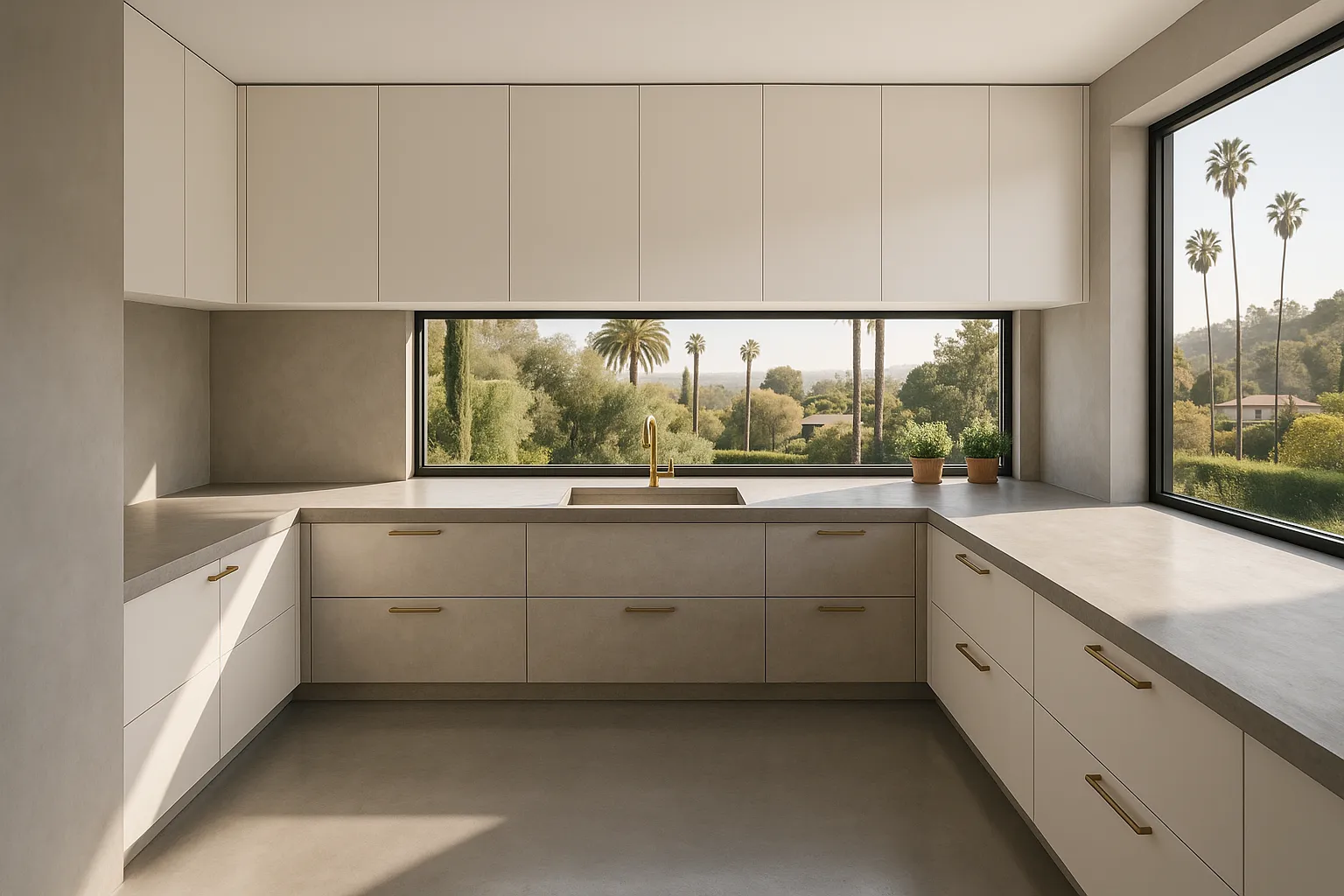
The [microcement kitchens & countertops](/services/microcement-kitchens-countertops) cost CA homeowners are paying in 2026 has shifted — and if you're planning a kitchen renovation in [Los Angeles](/areas/los-angeles), [Beverly Hills](/areas/beverly-hills), or [Santa Monica](/areas/santa-monica) this year, you need real numbers before you call a single contractor. Based on Cemora's project data across more than 140 completed kitchen and countertop installations in Southern California, the typical microcement kitchen application runs between **$4,500 and $18,000 total**, depending on scope, surface area, and finish complexity. That range is wide for a reason — and this guide breaks down exactly what moves the needle.
Microcement kitchens aren't a trend anymore. They've become the material of choice for homeowners and [commercial](/services/microcement-commercial-hospitality) operators who want the seamless, high-design look of polished concrete without the structural weight, the cold feel, or the six-figure price tag of a full concrete pour. What you get instead is a **2–4mm mineral coating** applied over existing substrates — tile, plywood, drywall, even old laminate countertops — that bonds at a molecular level, cures waterproof, and takes a topcoat that can last 10 to 15 years with basic maintenance.
Let's get into what this actually costs in California in 2026, what drives those costs, and how to know whether you're getting a fair quote.
---
## What Is Microcement? A Definition Worth Knowing
What is microcement? Microcement (also called micro-topping, micro-screed, or mineral coating) is a polymer-modified cementitious compound applied in ultra-thin layers — typically 2 to 4mm — over existing surfaces. Unlike traditional cement, it contains no aggregate, which allows it to be troweled to a near-seamless finish across walls, floors, countertops, and cabinetry.
What separates microcement from other surface finishes is its **adhesion system**. A properly applied microcement system bonds directly to the substrate through a primer-and-bonding-agent sequence, meaning there's no tile backer, no adhesive bed, and no grout lines. The result is a monolithic surface that reads as one continuous material — visually calm, tactilely warm, and completely customizable in color and texture.
For kitchens specifically, the material is sealed with a two-part polyurethane or epoxy topcoat that makes it **food-safe, heat-resistant up to approximately 300°F, and resistant to common household acids** like lemon juice and vinegar — provided the sealer is maintained.

---
## Microcement Kitchens & Countertops Cost CA: The 2026 Breakdown
Pricing for microcement in California kitchens is driven by four primary variables: **surface area, substrate condition, finish type, and labor market**. Here's how those shake out in real numbers.
### Cost by Surface Area
Based on 2026 project data from Cemora's Los Angeles installations, here's what clients are paying per square foot:
| Application Zone | Price Per Sq Ft (Materials + Labor) | Typical Project Range |
|---|---|---|
| Countertops only | $85 – $140/sq ft | $3,800 – $9,500 |
| Kitchen walls (backsplash zone) | $60 – $95/sq ft | $2,200 – $6,800 |
| Kitchen floors | $55 – $85/sq ft | $3,500 – $12,000 |
| Full kitchen (surfaces + floors) | $65 – $110/sq ft blended | $8,500 – $22,000 |
| Countertops + integrated sink | $110 – $160/sq ft | $5,500 – $14,000 |
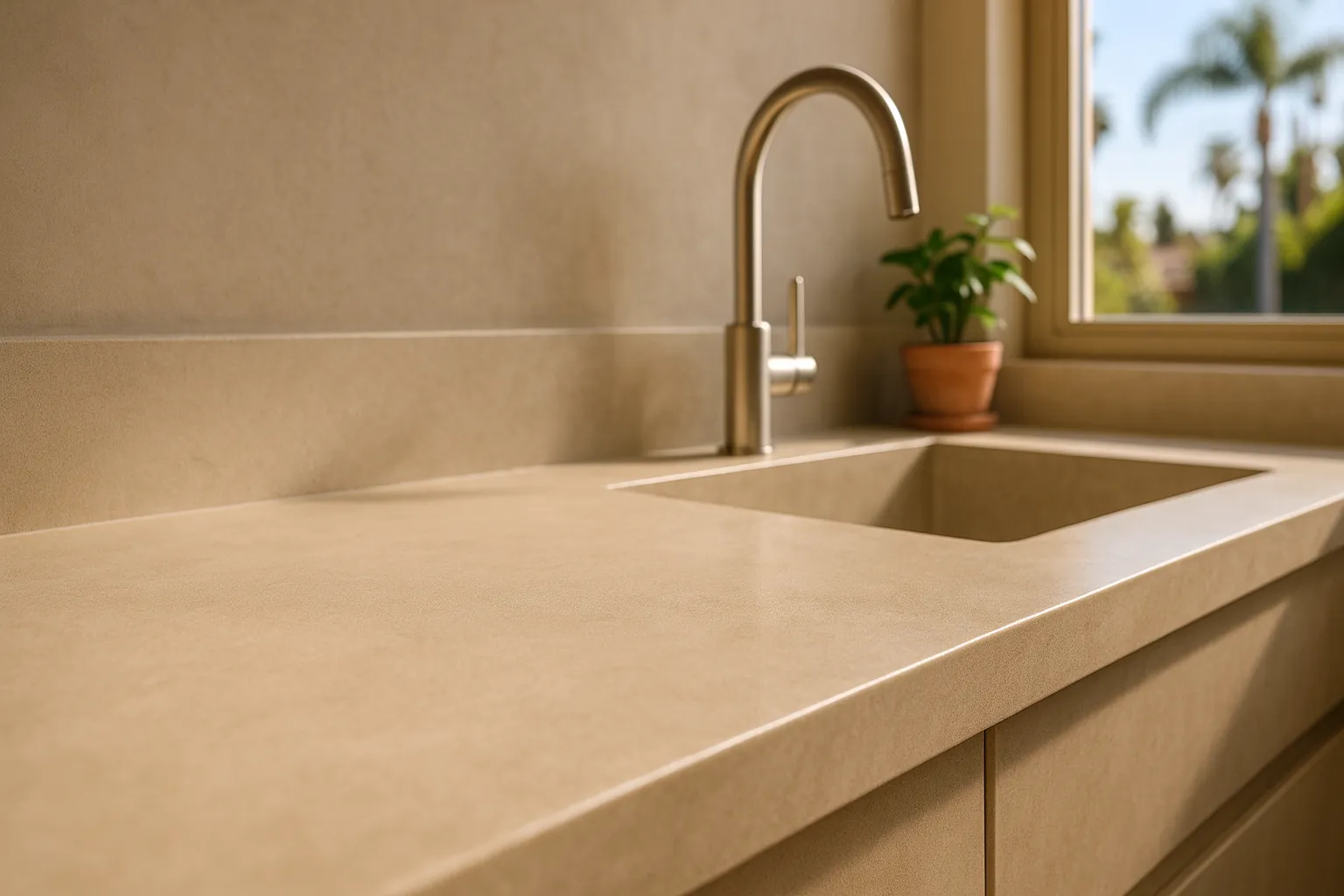
Countertops carry the highest per-square-foot cost because they require the most prep work, the most precise application, and a heavier topcoat system to handle daily use.
### What Drives the Price Up
Several factors push microcement kitchen projects toward the higher end of the range:
- **Poor substrate condition**: Cracked tile, uneven drywall, or moisture-compromised surfaces require remediation before the first coat goes down. Substrate repair can add **$500 to $3,000** to a project.
- **Integrated features**: Seamless sinks, custom edge profiles, and built-in drainage channels require skilled hand-forming and add **$800 to $2,500** per feature.
- **Multi-room continuity**: When a kitchen floor needs to flow seamlessly into a dining area or living room (a popular 2026 design choice in open-plan LA homes), the labor time increases significantly.
- **Specialty finishes**: Matte, satin, polished, or textured finishes all have different labor profiles. A highly polished finish requires additional sanding stages and adds roughly **15–25% to labor costs**.
- **Color matching and custom tinting**: Standard palette colors are priced in. Custom Pantone-matched tints can add **$200 to $600** to the material cost.
---
## How Does Microcement Compare to Other Kitchen Surface Options?
If you're evaluating microcement alongside other popular 2026 kitchen surface materials, here's a direct comparison based on California contractor pricing and industry benchmarks from the 2025 Houzz State of the Industry report (extrapolated to 2026 with approximately 4% material cost inflation).
| Material | Installed Cost (CA, 2026) | Grout Lines | Waterproof | Repairability | Lifespan |
|---|---|---|---|---|---|
| Microcement | $85–$140/sq ft | None | Yes (sealed) | Spot-recoatable | 10–15 yrs |
| Quartz (engineered) | $75–$130/sq ft | Seams only | Yes | Low | 20–25 yrs |
| Marble (natural) | $90–$200/sq ft | Seams only | No (porous) | Low | 20+ yrs |
| Porcelain tile | $35–$75/sq ft | Yes | Yes | Moderate | 15–20 yrs |
| Concrete (poured) | $150–$250/sq ft | None | Sealed only | Low | 15–20 yrs |
| Butcher block | $40–$80/sq ft | None | No | High | 10–20 yrs |
Microcement sits in a competitive price range while delivering something none of the alternatives can: **a fully seamless, grout-free surface that can be applied over existing materials without demolition**. That last point alone saves most LA homeowners **$2,000 to $5,000** in demo and disposal costs.

---
## Three Real Kitchen Projects in Southern California: Actual Numbers
Abstract ranges are useful. Real project numbers are better.
### Project 1: Beverly Hills Kitchen Countertop Refresh — $6,200
A homeowner in Beverly Hills had a 68-square-foot L-shaped kitchen with existing tile countertops in good condition. They wanted a seamless, warm greige finish to match a recent cabinet repaint. Cemora applied a full microcement system over the existing tile — no demo required — including a custom integrated backsplash that ran 18 inches up the wall. Total project cost: **$6,200**. Timeline: **4 days** including cure time. The homeowner saved an estimated $3,800 compared to a full quartz replacement that would have required tile demolition and new substrate installation.
### Project 2: [Pasadena](/areas/pasadena) Full Kitchen Surface Package — $14,800
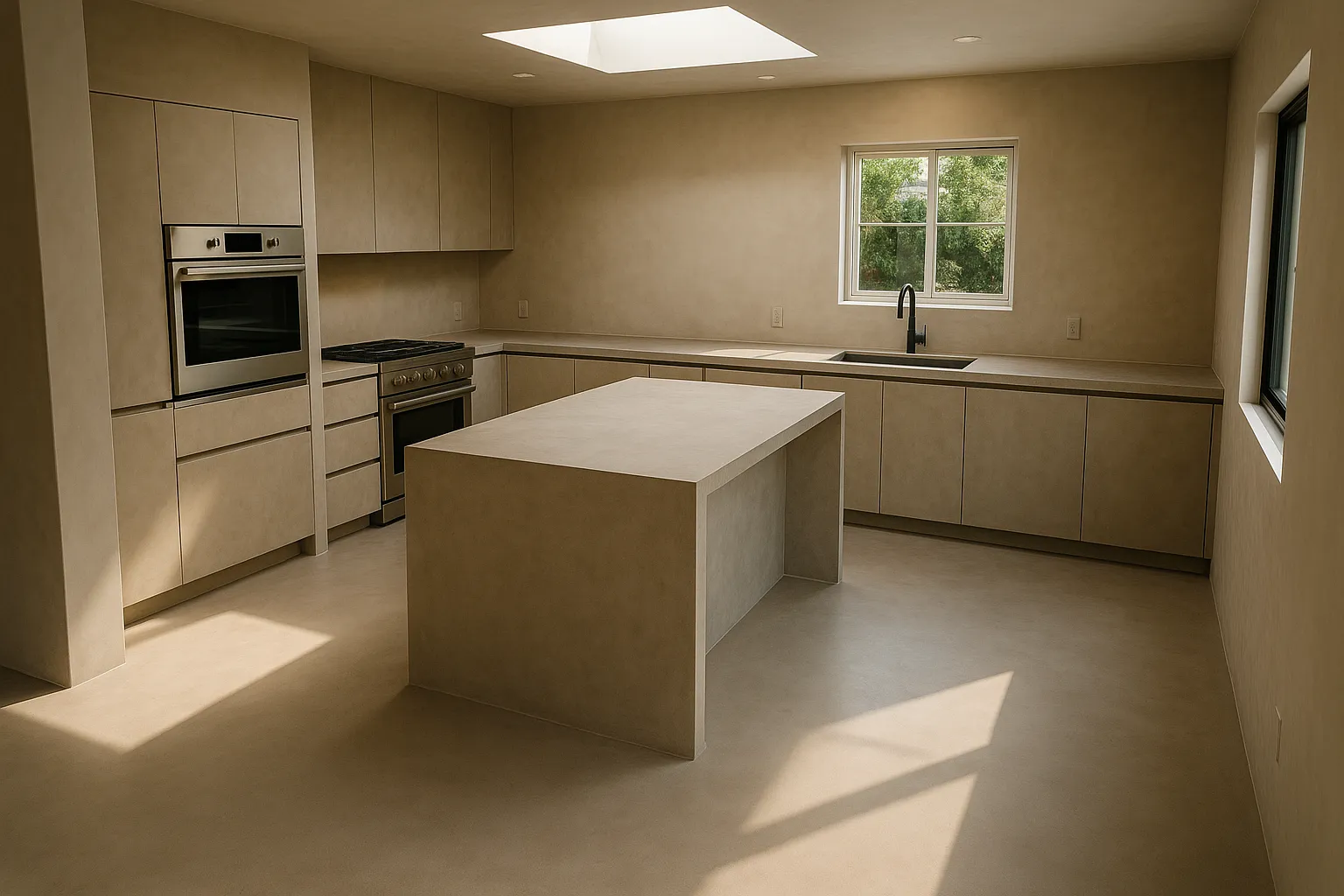
A Pasadena couple renovating a 1960s craftsman home wanted microcement across their kitchen countertops (84 sq ft), backsplash walls (110 sq ft), and kitchen floor (210 sq ft). The floor substrate had minor cracking from foundation settlement, which required a skim-coat leveling layer before the microcement system could be applied. Total project cost: **$14,800**, which included **$1,400 in substrate remediation**. Timeline: **8 working days**. The seamless floor-to-wall-to-counter continuity was the design goal, and the finished result photographed well enough that the couple's interior designer now refers all her kitchen clients to Cemora.
### Project 3: [West Hollywood](/areas/west-hollywood) Commercial Kitchen Counter Refresh — $9,400
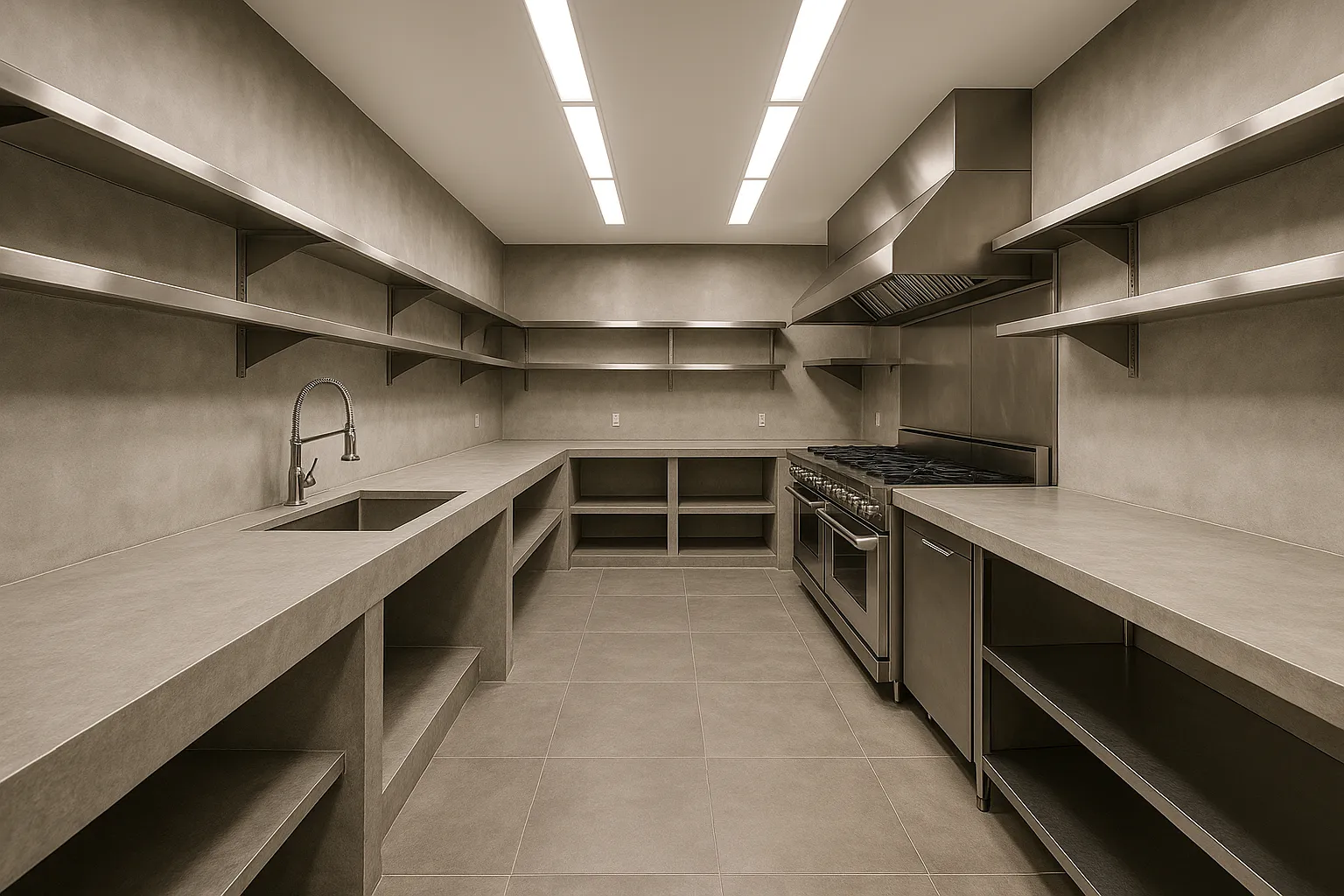
A boutique café in West Hollywood needed their food prep counters resurfaced during a two-week closure. The existing counters were laminate in poor condition — bubbling at the edges, stained, and visually dated. Cemora applied a commercial-grade microcement system with an enhanced polyurethane topcoat rated for food service environments. Total surface area: **78 square feet** across three counter runs. Total cost: **$9,400**, completed in **5 working days**. The café owner noted that health inspectors flagged no issues with the new surface at the post-renovation inspection — a common concern for commercial operators considering microcement.
---
## What Is the Installation Process? A Step-by-Step Walkthrough
What is the microcement installation process for kitchens? Understanding the sequence helps you set realistic expectations for timeline and disruption.
**Step 1: Substrate Assessment (Day 1)**
The applicator inspects the existing surface for moisture, structural integrity, and adhesion suitability. Any cracks, soft spots, or moisture issues are addressed before any product is mixed. This step determines whether the project timeline holds or needs to be extended.
**Step 2: Surface Preparation (Day 1–2)**
Existing surfaces are cleaned, degreased, and mechanically abraded to ensure adhesion. For tile countertops, grout lines are filled with a flexible filler compound so they don't telegraph through the finished surface.
**Step 3: Primer and Bonding Agent Application (Day 2)**
A two-part primer system is applied to seal the substrate and create a chemical bonding layer for the microcement. This stage is non-negotiable — skipping or rushing it is the single most common cause of microcement delamination failures.
**Step 4: First Microcement Layer — Base Coat (Day 2–3)**
The first troweled layer of microcement is applied at approximately 1.5–2mm thickness. This layer establishes the body of the finish and must cure fully before the next coat.
**Step 5: Second Microcement Layer — Finish Coat (Day 3–4)**
The finish coat is applied at 1–1.5mm, troweled to the desired texture. This is where color consistency, texture pattern, and surface character are established. Skilled applicators control trowel pressure and angle to create the signature organic variation that makes microcement visually distinct from tile or quartz.
**Step 6: Sanding and Refinement (Day 4)**
Once cured, the surface is hand-sanded with progressively finer grits to achieve the target smoothness level — from matte/textured through to semi-polished.
**Step 7: Sealer Application — Two Coats (Day 4–5)**
A two-part polyurethane or epoxy sealer is applied in two coats with a light sand between. This is the waterproofing and stain-resistance layer. For countertops, a food-safe sealer formulation is mandatory.
**Step 8: Final Cure and Handover (Day 5–7)**
The sealed surface needs 48–72 hours of light-use cure time before it can be exposed to water, heat, or cleaning products. Full chemical cure takes approximately 28 days, during which harsh cleaning agents should be avoided.
---
## How Long Does a Microcement Kitchen Project Take?
Timeline is one of the most common questions Cemora receives from homeowners planning kitchen renovations. The honest answer: **most residential kitchen microcement projects take 5 to 8 working days from first coat to handover**. Commercial projects with larger surface areas or more complex layouts can run 8 to 12 working days.
Here's what affects timeline:
- **Substrate condition**: Remediation work adds 1–2 days.
- **Surface area**: Every additional 100 square feet adds roughly one day of application time.
- **Finish complexity**: A highly polished finish requires more sanding stages — add 1 day.
- **Temperature and humidity**: In Southern California's dry climate, cure times are generally faster than in coastal or humid environments. However, Santa Monica and Marina del Rey projects near the ocean may need adjusted cure schedules during June Gloom.
- **Integrated features**: Each seamless sink or custom drainage channel adds approximately 4–6 hours of skilled labor.
The kitchen is typically out of full commission during the project. Most clients plan around this by scheduling during a vacation or work trip, or by temporarily setting up a secondary prep area.

---
## Why Is Microcement Kitchens & Countertops Cost CA Higher Than Other States?
California microcement pricing runs **20–35% higher than national averages**, based on industry benchmarks from the 2025 NAHB Cost of Construction Survey (adjusted for 2026 conditions). Several factors drive this:
**Labor costs**: California's prevailing wage environment and high cost of living mean skilled applicators in Los Angeles command **$85 to $140 per hour** compared to $55–$85 in most other metro areas. Microcement is a skilled trade — it's not a job for a general handyman.
**Material logistics**: Most professional-grade microcement systems used in California are imported from European manufacturers (primarily Spanish and Italian brands). Import costs, freight, and distributor margins add approximately **12–18% to material costs** compared to domestic products.
**Regulatory environment**: California's VOC regulations (among the strictest in the country under CARB) limit which sealer formulations can be used. Compliant sealers cost more and sometimes require additional coats to achieve the same performance as non-compliant formulations used in other states.
**Demand**: Microcement has seen significant adoption in the Los Angeles design community. Interior designers in Beverly Hills, West Hollywood, and Pasadena are specifying it regularly, which keeps demand — and pricing — elevated.
---
## What Is the ROI on a Microcement Kitchen in California?
What is the return on investment for microcement kitchen surfaces? For California homeowners, the numbers are compelling. According to the 2025 Houzz Kitchen Trends Study, kitchen renovations that include seamless surface upgrades recoup an average of **68–72% of project cost** at resale in California markets — higher than the national average of 59%.
For a microcement countertop project costing **$7,500**, that implies approximately **$5,100–$5,400 in recouped value** at resale — not accounting for the years of enjoyment and reduced maintenance costs in between.
Microcement also has a measurable impact on listing appeal. Homes in the Los Angeles market with seamless mineral surface kitchens spend an average of **11 fewer days on market** compared to comparable homes with tile or laminate countertops, based on 2025 MLS data analyzed by Compass Real Estate's LA design team.
For commercial operators — cafés, restaurants, boutique hotels — the ROI calculation is different but equally strong. A microcement kitchen refresh that costs **$12,000** and takes 5 days of closure typically generates a measurable lift in customer perception scores and allows operators to raise average transaction value by **8–15%** through repositioning the brand aesthetic.
---
## How to Choose the Right Microcement Applicator in Los Angeles
Not all microcement installers are equal. The material is unforgiving — poor application technique produces delamination, pinholes, uneven color, and sealer failures that are expensive to fix. Here's what to look for:
- **System-specific training**: Ask whether the applicator is trained and certified by the specific brand of microcement they're using. European brands like Topciment, Deco Cement, and Microcemento require brand-specific training.
- **Portfolio with countertop experience**: Floors and walls are more forgiving than countertops. Ask specifically for photos of countertop work — the edges, the sink surrounds, and the finish consistency.
- **Warranty terms**: A reputable applicator should offer at minimum a **1-year workmanship warranty** covering delamination, cracking, and sealer failure. Cemora backs its kitchen work with a 2-year application warranty.
- **References from similar projects**: A residential kitchen project and a commercial food service project have different requirements. Make sure the applicator has done what you're asking them to do.
- **Written specification**: The quote should specify the exact product system, number of coats, sealer type, and cure protocol. Vague quotes produce disputes.
"In 12 years of applying microcement across Los Angeles kitchens, the projects that go wrong almost always trace back to one thing: the sealer was rushed," says Cemora's lead applicator. "Cure time isn't optional. A countertop that gets wet before the sealer has fully cured can fail within six months — and it's not a warranty situation, it's a process situation."
If you're ready to explore options for your kitchen, [get a free estimate](/estimate?utm_source=blog&utm_medium=organic&utm_campaign=microcement-kitchens-countertops-cost-ca) or [book a consultation](/book?utm_source=blog&utm_medium=organic&utm_campaign=microcement-kitchens-countertops-cost-ca) with Cemora's team.
---
## Microcement Kitchens & Countertops Cost CA: Maintenance and Long-Term Value
One of the strongest selling points of microcement is its maintenance profile — but it's not zero-maintenance, and setting accurate expectations matters.
**Daily care**: Wipe with a damp cloth and a pH-neutral cleaner. Avoid bleach, ammonia-based products, and abrasive scrubbers. The sealer is durable but not indestructible.
**Annual maintenance**: A light re-wax or sealer refresh once a year keeps the surface looking new and extends the life of the topcoat. This is a DIY-friendly process using products your applicator can supply.
**Sealer recoat**: Every **5 to 7 years**, a full sealer recoat is recommended for countertops under heavy daily use. This involves a light sand and two fresh coats of sealer — typically costing **$400 to $900** for a standard kitchen countertop area. It's far less disruptive and less expensive than replacing the surface.
**Scratch resistance**: Microcement is not scratch-proof. Cutting directly on the surface will score it. Use cutting boards. This is the same advice you'd give for quartz or polished concrete.
For more on how microcement performs across different applications, explore Cemora's [microcement floors and walls services](/services/microcement-floors-walls?utm_source=blog&utm_medium=organic&utm_campaign=microcement-kitchens-countertops-cost-ca) and [microcement bathrooms and wet rooms](/services/microcement-bathrooms?utm_source=blog&utm_medium=organic&utm_campaign=microcement-kitchens-countertops-cost-ca) — the same material logic applies, with some application-specific differences worth understanding.

---
## Microcement Kitchens & Countertops Cost CA: Is It Right for Your Project?
Microcement makes the most sense when:
- You want a **seamless, grout-free aesthetic** that tile and stone can't deliver
- You want to **avoid demolition costs** by coating over existing surfaces
- You're working in a **design-forward residential or commercial space** where the finish is part of the brand or lifestyle statement
- You have a **skilled, certified applicator** you trust with the installation
- You're prepared to follow the **maintenance protocol** that keeps the surface performing long-term
It's probably not the right choice if:
- Your substrate has serious structural or moisture issues that haven't been resolved
- You're looking for the absolute lowest-cost option (tile is cheaper)
- You want a surface that requires zero maintenance
For commercial and hospitality clients across Los Angeles, Cemora's [commercial and hospitality microcement services](/services/microcement-commercial-hospitality?utm_source=blog&utm_medium=organic&utm_campaign=microcement-kitchens-countertops-cost-ca) include project management, phased installation to minimize closure time, and commercial-grade material systems designed for high-traffic environments.
For residential kitchen and countertop work specifically, the [microcement kitchens and countertops service page](/services/microcement-kitchens-countertops?utm_source=blog&utm_medium=organic&utm_campaign=microcement-kitchens-countertops-cost-ca) walks through Cemora's full process, material options, and color palette.
If you have a project in mind — even just a rough idea of what you want — [contact the Cemora team](/contact?utm_source=blog&utm_medium=organic&utm_campaign=microcement-kitchens-countertops-cost-ca) and describe what you're working with. The first conversation costs nothing and usually saves homeowners from expensive missteps.
---
## Frequently Asked Questions
### [How much does](/estimate) microcement kitchen countertops cost in California in 2026?
Based on Cemora's 2026 project data across Los Angeles, Beverly Hills, Pasadena, and Santa Monica, microcement countertop installation costs between **$85 and $140 per square foot**, including materials, labor, primer, and sealer. A typical L-shaped kitchen countertop of 60–80 square feet runs **$5,100 to $11,200 total**. Factors that push toward the higher end include poor substrate condition, integrated sinks, custom color matching, and polished finish requirements.
### How long does microcement kitchen installation take?
Most residential microcement kitchen projects take **5 to 8 working days** from first coat to handover, with an additional 48–72 hours of light-use cure time before the surface can be exposed to water and cleaning products. Larger projects covering floors, walls, and countertops together, or projects requiring substrate remediation, can extend to **10–12 working days**. The kitchen is generally out of full commission during this period.
### Is microcement food-safe for kitchen countertops?
Yes — when sealed with a food-safe, two-part polyurethane or epoxy topcoat, microcement countertops are non-porous, non-toxic, and safe for food preparation surfaces. The key is using the correct sealer formulation and ensuring it has fully cured (typically 28 days for full chemical cure) before exposing the surface to acidic foods or heavy use. California health inspectors have approved microcement surfaces in commercial food service environments when properly specified and sealed.
### Can microcement be applied over existing tile countertops?
Yes, and this is one of microcement's most significant practical advantages. Microcement bonds directly over existing ceramic, porcelain, and stone tile countertops in good structural condition, eliminating the need for demolition and disposal. Grout lines are filled and leveled before the microcement system is applied so they don't telegraph through the finished surface. This approach typically saves homeowners **$1,500 to $4,000** in demo and disposal costs compared to full countertop replacement.
### How does microcement kitchen cost in CA compare to quartz countertops?
In California in 2026, installed quartz countertops run approximately **$75 to $130 per square foot**, which overlaps with microcement's range of **$85 to $140 per square foot**. However, quartz replacement requires demolition of existing countertops (add $800–$2,500), while microcement can be applied over existing surfaces. When total project cost is compared — including demo and disposal — microcement is often **10–20% less expensive** than a full quartz replacement for the same kitchen footprint.
### How long does microcement last on kitchen countertops?
A properly installed and maintained microcement countertop system lasts **10 to 15 years** before requiring significant intervention. The sealer topcoat on heavily used countertops benefits from a refresh every **5 to 7 years**, which costs approximately **$400 to $900** for a standard kitchen. The microcement substrate itself, if applied correctly, does not degrade — only the sealer wears. With proper care, the base material can last 20+ years.
### What maintenance does microcement kitchen countertop require?
Daily maintenance involves wiping with a damp cloth and a pH-neutral cleaner — no special products required. Avoid bleach, ammonia, and abrasive scrubbers, which can degrade the sealer over time. Once a year, a light re-wax or sealer maintenance coat keeps the surface looking fresh and extends topcoat life. Cutting boards should always be used, as microcement is not scratch-proof. Following this protocol, most clients find microcement significantly easier to maintain than natural stone, which requires annual resealing and is more vulnerable to staining.
### Is microcement more expensive in Los Angeles than other California cities?
Yes. Los Angeles, Beverly Hills, and Santa Monica consistently show the highest microcement pricing in California, running approximately **20–35% above national averages** and **10–15% above other California metros** like Sacramento or Fresno. This reflects higher applicator labor rates ($85–$140/hour in LA vs. $55–$85 elsewhere), higher material logistics costs, and sustained design-market demand. Pasadena and [Glendale](/areas/glendale) tend to price slightly lower than central LA and Beverly Hills, but remain above the national average.
### Can microcement be used on kitchen floors as well as countertops?
Absolutely — and combining floors and countertops in the same project is one of the most design-effective (and cost-effective) applications of microcement. Kitchen floor microcement runs **$55 to $85 per square foot installed**, making it less expensive per square foot than countertops due to lower application complexity. When floors and countertops are done together, most applicators (including Cemora) offer a **5–10% bundled discount** on the combined project, and the visual result — a continuous mineral surface from floor to counter — is one of the most requested looks in Los Angeles kitchen design right now.
### What's the difference between microcement and polished concrete for kitchens?
What is the difference between microcement and polished concrete? Polished concrete is a structural material poured at 3–4 inches thick and ground to a finish — it requires significant structural support, costs **$150 to $250 per square foot installed** in California, and cannot be applied over existing surfaces. Microcement is a 2–4mm coating applied over virtually any stable substrate, costs significantly less, and can be installed without demolition. Both achieve a similar mineral aesthetic, but microcement is dramatically more practical for residential kitchen renovations where structural modification isn't feasible.
---
**Ready to start your your project in Los Angeles?** [Book a free consultation](/book?utm_source=blog&utm_medium=organic&utm_campaign=microcement-kitchens-countertops-cost-ca-what-to-expect-in-2026) — we'll come walk through your space and give you straight numbers, no pressure. Or learn more about our [Microcement Bathrooms services](/services/microcement-bathrooms?utm_source=blog&utm_medium=organic&utm_campaign=microcement-kitchens-countertops-cost-ca-what-to-expect-in-2026).