Microcement Kitchens & Countertops Cost CA: What to Expect in 2026
By Gilad Segev · June 29, 2026 · Last updated June 29, 2026 · Cost Guide
# [Microcement](/services/microcement-bathrooms) Kitchens & Countertops Cost CA: What to Expect in 2026
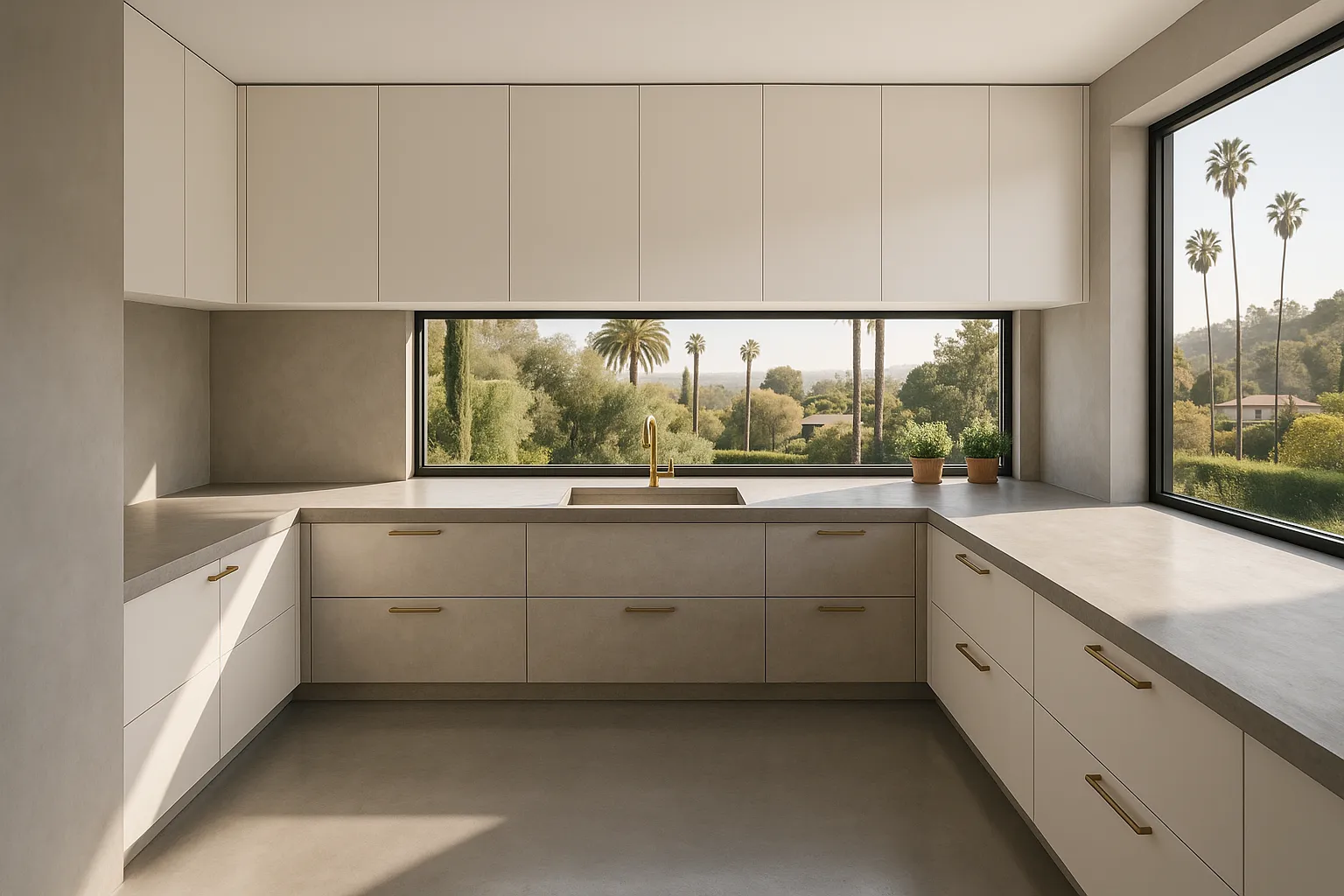
The [microcement kitchens & countertops](/services/microcement-kitchens-countertops) cost CA homeowners are paying in 2026 has shifted — and if you're still working from numbers you found online two years ago, you're probably budgeting wrong. Based on Cemora's project data across more than 80 kitchen and countertop installations in [Los Angeles](/areas/los-angeles) County over the past 18 months, **the realistic range for a microcement kitchen in California runs from $6,500 to $28,000**, depending on scope, surface complexity, and finish type. That's a wide spread — and this guide explains exactly what drives you toward either end.
Microcement isn't a commodity product. The material itself costs a fraction of what labor and preparation do. If a contractor quotes you $18 per square foot installed, ask them what's included in surface prep — because that question alone will tell you whether they know what they're doing.
---
## What Is Microcement, and Why Are Kitchens One of the Best Applications?
What is microcement? Microcement is a polymer-modified cementitious coating — typically 2–3mm thick — applied in multiple layers over existing substrates like tile, concrete, drywall, or plywood. It cures to a dense, seamless surface that can be sealed to be fully waterproof and food-safe. Unlike poured concrete, it doesn't require demolition to install. Unlike tile, it has no grout lines to trap grease or bacteria.
For kitchens specifically, the appeal is practical. **No grout lines means no scrubbing joints behind the stove.** A sealed microcement countertop or backsplash wipes clean in seconds and holds up to cooking splatter, steam, and daily use when properly finished.
Kitchens are also where microcement's aesthetic flexibility shines. You can achieve a warm sand texture, a cool slate-grey, a raw concrete look, or something closer to polished stone — all from the same material, tuned by pigment, aggregate size, and sealer sheen level. That's why interior designers across [Beverly Hills](/areas/beverly-hills) and [Santa Monica](/areas/santa-monica) have been specifying it heavily for high-end residential and boutique [commercial](/services/microcement-commercial-hospitality) projects.

---
## [How Much Does](/estimate) Microcement Kitchen Installation Cost in California in 2026?
Here's the direct answer: **microcement kitchens & countertops cost CA projects typically land between $85 and $175 per square foot installed**, with most residential kitchen projects totaling between $8,000 and $22,000. Commercial kitchen surfaces — think restaurant pass-throughs, café counters, and hotel bar tops — often run higher due to durability specifications and code requirements.
Let's break that down by surface type:
### Countertop Microcement Costs
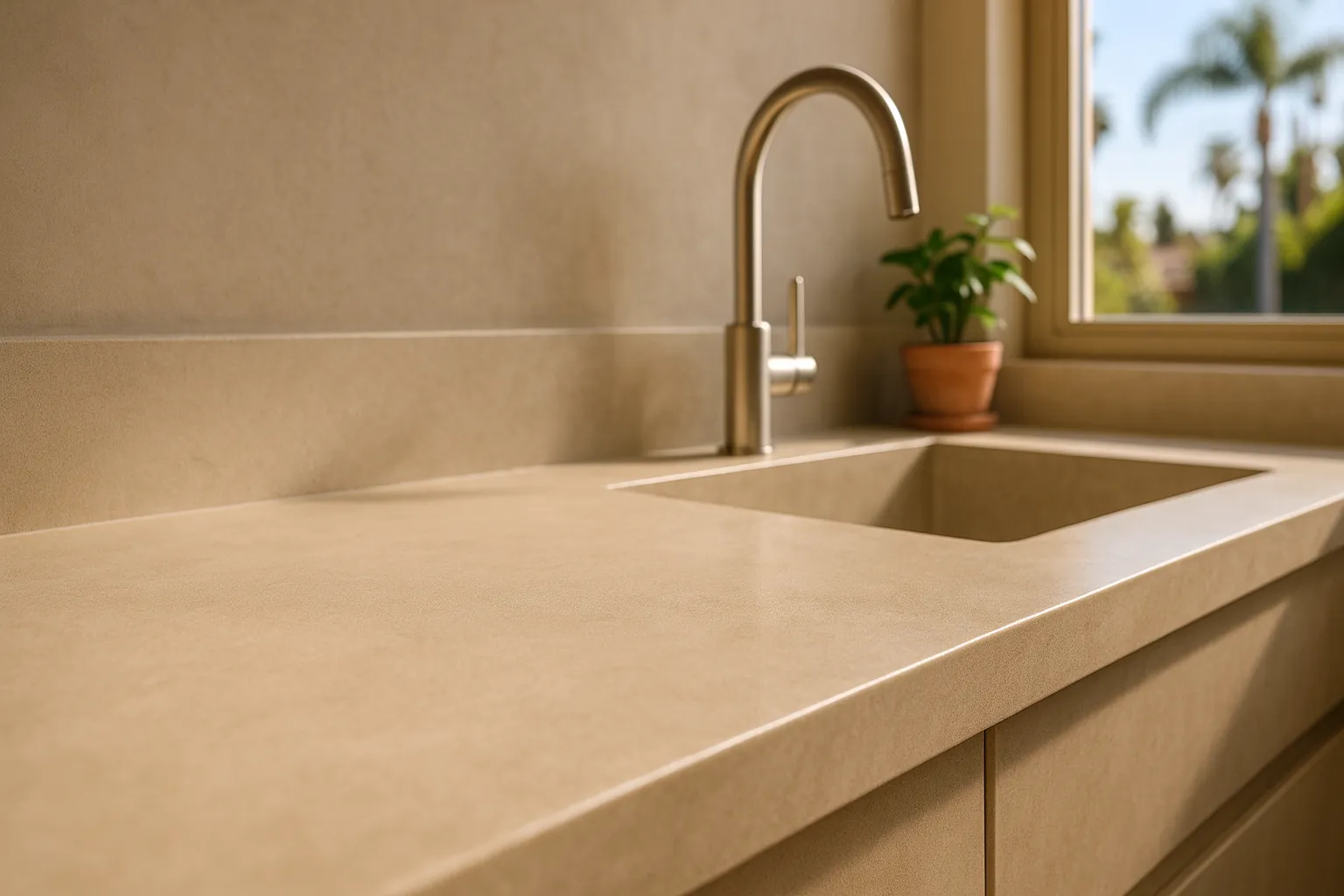
- **Standard countertop application (2-coat system, matte seal):** $95–$130/sqft installed
- **Premium countertop (3-coat system, polished or satin seal):** $130–$165/sqft installed
- **Integrated backsplash extension (per linear foot):** $45–$85/lft
- **Integrated sink cutout and edge detailing:** $350–$650 per sink
A typical 25-sqft kitchen countertop in [Pasadena](/areas/pasadena) with a standard two-coat system and matte sealer runs **$2,375–$3,250** for the surface alone. Add an integrated backsplash running 12 linear feet and you're at **$2,915–$4,270** before any prep work is factored in.
### Full Kitchen Microcement Costs (Countertops + Floors + Walls)
When homeowners in [Glendale](/areas/glendale) or Silver Lake go all-in — countertops, floor, and accent walls — the scope changes significantly:
- **Kitchen floor (150–200 sqft):** $10,500–$18,000
- **Countertops (20–35 sqft):** $1,900–$5,775
- **Backsplash/accent wall (40–80 sqft):** $3,400–$8,000
- **Full kitchen package total:** $15,800–$31,775
Those numbers assume a standard residential kitchen with reasonable substrate condition. Heavily damaged tile, moisture issues, or complex geometry add cost.
---
## What Drives the Price Up (or Down) on a Microcement Kitchen Project?
Five factors move the needle more than anything else.
**1. Substrate condition.** Microcement is a coating, not a structural layer. If the surface underneath is cracked, soft, or uneven, it has to be fixed first. Remediation on a 30-sqft countertop can add $400–$900 to the job. On a 200-sqft kitchen floor with old vinyl that needs removal, it can add $1,200–$2,500.
**2. Number of coats.** A two-coat system is standard for walls and lower-traffic surfaces. Countertops and floors in working kitchens typically require three coats plus a primer layer. Each additional coat adds material, drying time, and labor — usually **$12–$22/sqft per additional coat**.
**3. Sealer specification.** This is where most homeowners don't ask enough questions. A basic water-based polyurethane sealer costs less upfront but needs reapplication every 2–3 years in a kitchen environment. A two-part epoxy or polyaspartic sealer costs **$8–$18/sqft more** at installation but lasts 8–12 years with proper care. For countertops, we almost always recommend the premium sealer — the surface takes more abuse.
**4. Color and finish complexity.** Single-tone neutral finishes (greys, whites, taupes) are the most efficient to apply. Multi-tone blends, veining effects that mimic marble, or textured aggregate finishes take longer and require more skilled applicators. Expect a **15–30% premium** for decorative finish work.
**5. Access and project logistics.** A kitchen on the third floor of a Westwood condo costs more to service than a ground-floor kitchen in Glendale. Material staging, protection of surrounding surfaces, and ventilation requirements all factor into the final quote.

---
## Microcement vs. Other Countertop Materials: How Does the Cost Compare?
The comparison question comes up in every consultation. Here's how microcement stacks up against the most common alternatives in the California market, based on 2026 projections from contractor and supplier pricing data:
| Material | Installed Cost (per sqft) | Lifespan | Grout Lines | Seamless | Customizable Color |
|---|---|---|---|---|---|
| Microcement | $95–$165 | 15–25 yrs (sealed) | None | Yes | Full spectrum |
| Quartz (engineered) | $75–$145 | 20–30 yrs | None | No (seamed) | Limited |
| Granite | $60–$130 | 25–50 yrs | None | No (seamed) | Natural only |
| Concrete (poured) | $100–$180 | 15–25 yrs | None | Yes | Limited |
| Porcelain tile | $35–$90 | 20–30 yrs | Yes | No | Wide range |
| Marble | $110–$200 | 20–40 yrs | None | No (seamed) | Natural only |
| Butcher block | $40–$100 | 10–20 yrs | None | Yes | Natural only |
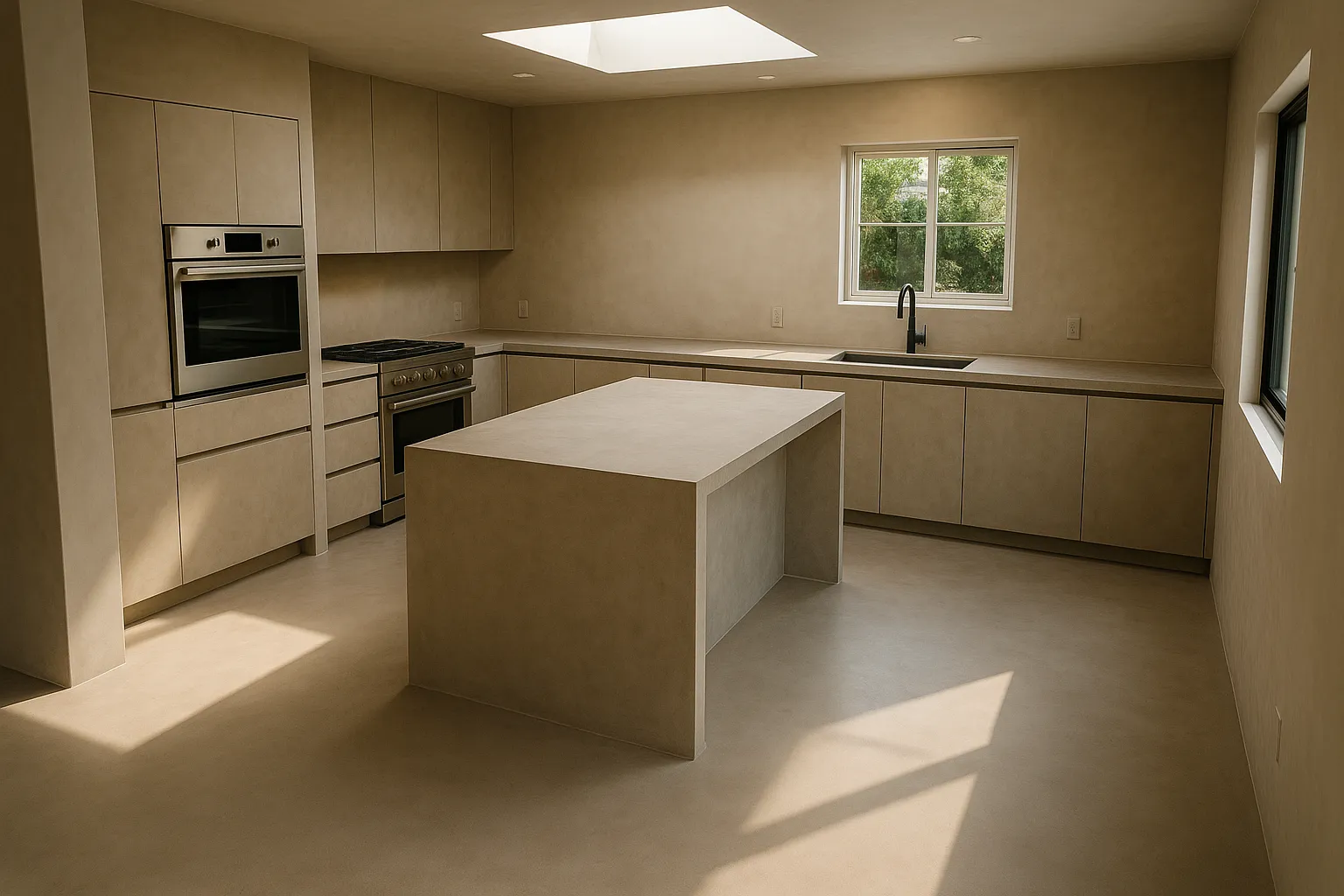
**Key takeaway:** Microcement sits in the premium tier on cost, but it's the only option that's both fully seamless AND completely customizable in color and texture. Poured concrete gets close, but the installation process is more invasive and the weight load is significantly higher — a real concern in condo buildings across Los Angeles.
According to the 2025 Houzz State of the Industry report, **seamless surfaces were specified in 41% of high-end kitchen renovations** — up from 28% in 2022. Microcement and large-format porcelain slabs drove most of that growth.
---
## Three Real Projects: What Homeowners Actually Spent
### Project 1: Silver Lake Kitchen Countertop Refresh — $4,800
A homeowner in Silver Lake had 28 sqft of existing tile countertops they wanted to update without a full demo. The tile was in good condition — no cracked pieces, minimal lippage — so substrate prep was minimal. Cemora applied a three-coat microcement system in a warm sand tone with a satin polyaspartic sealer. The integrated 9-linear-foot backsplash was included. **Total project cost: $4,800. Project duration: 4 days.**
The homeowner had quoted quartz replacement at $6,200 including demo. Microcement came in $1,400 less and didn't require a single day of kitchen downtime for demolition.
### Project 2: Beverly Hills Full Kitchen Surface Package — $19,400
A design-led renovation in Beverly Hills called for microcement across the countertops (32 sqft), island (18 sqft), and a full floor-to-ceiling accent wall behind the range (64 sqft). The client wanted a cool charcoal finish with a subtle aggregate texture — a decorative finish that added roughly **22% to the base cost** versus a plain tone. Surface prep included skim-coating an uneven drywall section on the accent wall. **Total project cost: $19,400. Project duration: 8 working days.**
The design firm specified [microcement kitchens & countertops](/services/microcement-kitchens-countertops?utm_source=blog&utm_medium=organic&utm_campaign=microcement-kitchens-countertops-cost-ca) because the client wanted the kitchen to feel like a single continuous material — something no tile or stone product could deliver across countertops and walls simultaneously.
### Project 3: Pasadena Commercial Café Counter — $11,200
A boutique café in Pasadena needed a 65-sqft service counter and bar top refinished before their spring opening. The existing substrate was plywood over steel framing — not ideal for microcement, but manageable with the right primer system. Cemora used a four-coat system with a two-part epoxy topcoat rated for commercial food service environments. The finish was a deep espresso tone with a matte seal. **Total project cost: $11,200. Project duration: 6 days including cure time.**
For [commercial and hospitality microcement](/services/microcement-commercial-hospitality?utm_source=blog&utm_medium=organic&utm_campaign=microcement-kitchens-countertops-cost-ca) projects like this one, the sealer specification is non-negotiable — food service surfaces need to meet California health code requirements for non-porous, cleanable surfaces.
---
## What Is the Installation Process for a Microcement Kitchen?
Understanding the process helps you evaluate contractor quotes and set realistic timeline expectations. Here's how a standard kitchen countertop installation unfolds:
1. **Site assessment and substrate evaluation** — We check for moisture, structural integrity, and surface flatness. Anything more than 3mm deviation per meter gets addressed before we start.
2. **Surface cleaning and mechanical preparation** — Existing surfaces are cleaned, degreased, and lightly abraded to create mechanical bond. Loose tile or damaged sections are repaired or replaced.
3. **Primer application** — A penetrating primer is applied and allowed to cure fully (typically 4–6 hours). This is the step many budget applicators skip — and it's why their work fails within 18 months.
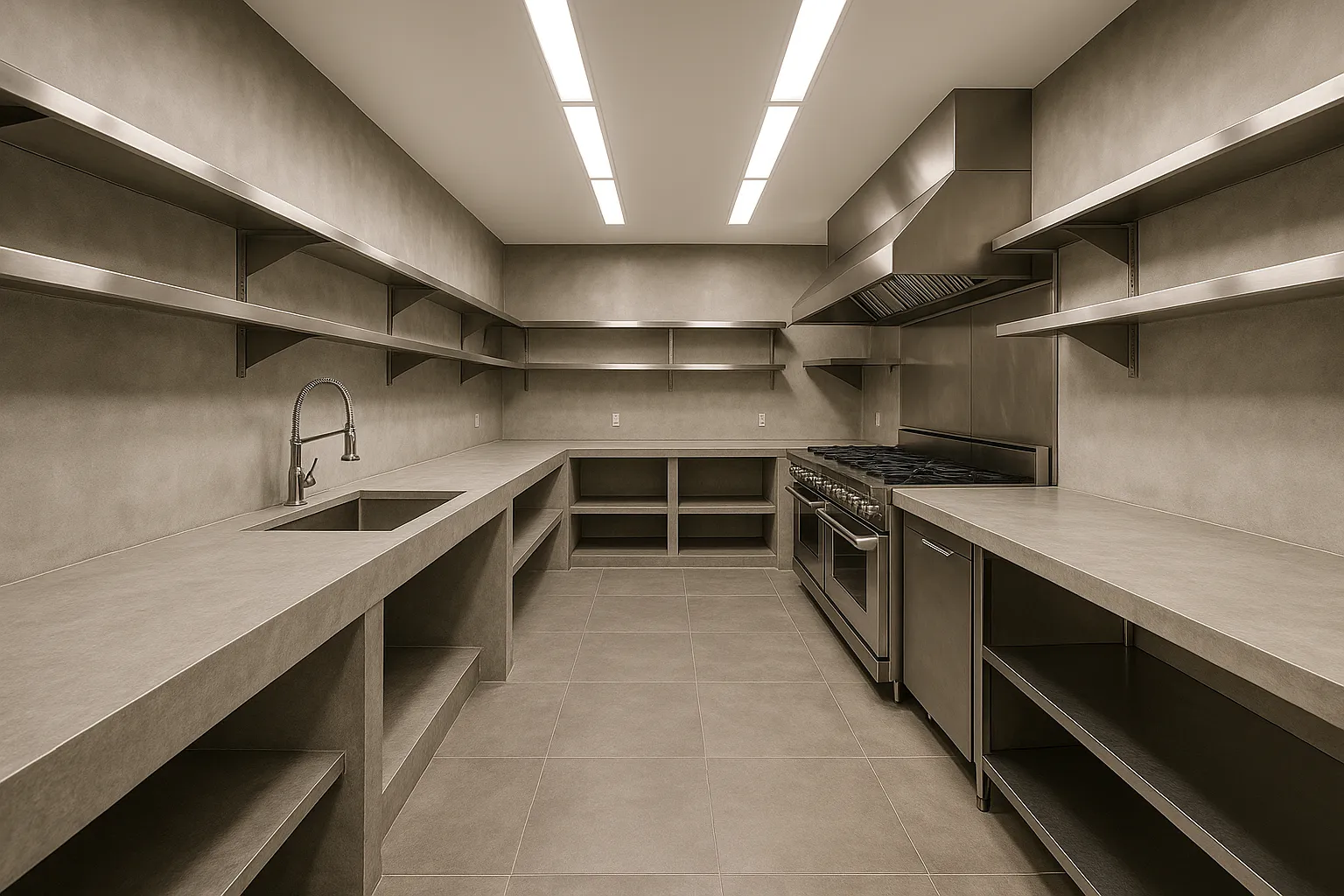
4. **First microcement coat (base layer)** — Applied by hand trowel, this layer establishes the surface plane and begins building depth. Allowed to cure 12–24 hours.
5. **Second microcement coat (build coat)** — This layer refines the surface and adds the primary texture and color. Sanded lightly after cure.
6. **Third coat (finish coat, if specified)** — For countertops and high-traffic floors, this final coat tightens the surface and prepares it for sealing.
7. **Sealer application (1–2 coats)** — Applied in thin, even coats with 2–4 hours between applications. Full cure before the surface is put into use: **48–72 hours for light use, 7 days for full hardness**.
8. **Final inspection and client walkthrough** — We go over care instructions, touch-up protocol, and warranty terms.
Total timeline for a standard kitchen countertop: **3–5 working days**. Full kitchen packages (floors, walls, countertops): **7–12 working days**.
---
## How Does Microcement Hold Up in a Kitchen Environment?
This is the question that separates informed buyers from people who get burned by a cheap installation. Microcement in a kitchen can last **15–25 years** with the right sealer and basic maintenance. The surface itself is hard — typically 40–60 MPa compressive strength — but the sealer is what protects it from acidic foods, oils, and cleaning products.
What is sealer maintenance? Sealer maintenance means periodically applying a surface-refreshing product (usually a penetrating oil or water-based refresher) to keep the topcoat performing. For kitchen countertops, **plan to refresh the sealer every 3–5 years** depending on use intensity. This is not a full reapplication — it's a simple wipe-on product that takes about 30 minutes and costs under $50 in materials.
Things to avoid on a sealed microcement countertop:
- **Cutting directly on the surface** — use a cutting board
- **Leaving acidic liquids** (lemon juice, vinegar, tomato sauce) to sit for extended periods
- **Abrasive scrub pads** — soft cloths and pH-neutral cleaners only
- **Placing extremely hot pans directly on the surface** — use trivets
With those basics observed, microcement performs exceptionally well. We've seen installations in Glendale and Pasadena that are 8 years old and still look sharp with nothing more than routine cleaning.

---
## What Is the ROI on a Microcement Kitchen in California?
What is return on investment for a kitchen surface upgrade? In real estate terms, it's the ratio of value added to the home versus the cost of the improvement. Industry benchmarks from the 2025 Remodeling Magazine Cost vs. Value report show that **minor kitchen remodels in the Pacific region return an average of 81.1% of their cost at resale**. Major kitchen remodels return closer to 52%.
Microcement falls somewhere in between. It's not a full kitchen remodel — it's a surface transformation. But because it dramatically changes the visual character of the space, it tends to punch above its weight in buyer perception.
A Santa Monica real estate agent we've worked with on several staging projects noted that microcement kitchens consistently photograph better than tile or laminate alternatives — and in a market where **over 90% of buyers begin their search online**, listing photos matter enormously.
Based on Cemora's project data, clients who invested in microcement kitchen surfaces as part of a pre-sale renovation saw an average **listing price increase of 4–7%** compared to comparable homes in the same zip code that didn't update their kitchen surfaces. On a $1.4M Los Angeles home, that's **$56,000–$98,000** in additional asking price from a surface investment of $8,000–$20,000.
---
## How to Get an Accurate Quote for Microcement Kitchens & Countertops Cost CA
A legitimate microcement quote requires an in-person or detailed virtual assessment. Any contractor who gives you a firm price from a photo or a square footage number alone isn't accounting for the variables that actually drive cost.
Here's what a thorough estimate process looks like:
- **Substrate inspection** — What's under the existing surface? Is it structurally sound?
- **Moisture testing** — Critical for floors and any surface near a sink or dishwasher
- **Surface measurement** — Actual square footage, not estimated
- **Finish specification** — Coat count, color, texture, sealer type
- **Access assessment** — Parking, elevator, floor level, protection requirements
- **Timeline discussion** — When does the space need to be operational?
We offer a [free estimate](/estimate?utm_source=blog&utm_medium=organic&utm_campaign=microcement-kitchens-countertops-cost-ca) for all kitchen and countertop projects across Los Angeles, Beverly Hills, Santa Monica, Pasadena, and Glendale. The assessment takes 30–45 minutes and gives you a line-item breakdown — not a ballpark.
If you'd rather start with a conversation, you can [book a consultation](/book?utm_source=blog&utm_medium=organic&utm_campaign=microcement-kitchens-countertops-cost-ca) or [contact us directly](/contact?utm_source=blog&utm_medium=organic&utm_campaign=microcement-kitchens-countertops-cost-ca) to discuss your project scope before scheduling a site visit.
For floors and walls beyond the kitchen, our [microcement floors & walls service](/services/microcement-floors-walls?utm_source=blog&utm_medium=organic&utm_campaign=microcement-kitchens-countertops-cost-ca) covers full-home applications. And if you're thinking about a bathroom update to match your kitchen, our [microcement bathrooms & wet rooms](/services/microcement-bathrooms?utm_source=blog&utm_medium=organic&utm_campaign=microcement-kitchens-countertops-cost-ca) page walks through waterproofing specifications and cost ranges for shower and bathroom floors.
---
## Frequently Asked Questions
### How much does microcement kitchen installation cost in California in 2026?
Based on Cemora's 2026 project data across Los Angeles County, **microcement kitchens & countertops cost CA projects typically range from $85 to $175 per square foot installed**. A standard residential kitchen countertop (20–35 sqft) runs $1,900–$5,775, while full kitchen packages including floors and walls range from $15,800 to $31,775. Commercial kitchen surfaces with food-safe epoxy sealers sit at the higher end of that range.
### How long does a microcement kitchen installation take?
A countertop-only project typically takes **3–5 working days** from start to final cure. Full kitchen packages covering floors, walls, and countertops run **7–12 working days**. After the final sealer coat is applied, the surface needs **48–72 hours before light use** and a full 7 days to reach maximum hardness — so plan your kitchen downtime accordingly.
### Is microcement food-safe for kitchen countertops?
Yes — when properly sealed with a food-safe topcoat, microcement countertops are non-porous, non-toxic, and meet California health code requirements for cleanable kitchen surfaces. The key word is "properly sealed" — a water-based polyurethane sealer rated for food contact is the minimum specification. For commercial kitchens, we specify a two-part epoxy or polyaspartic topcoat that meets NSF/ANSI standards for food contact surfaces.
### How does microcement compare to quartz countertops in cost?
Quartz countertops in California run **$75–$145/sqft installed** in 2026, which overlaps with the lower end of microcement pricing. However, quartz requires seams on most countertop runs, while microcement is fully seamless. Microcement also wraps continuously from countertop to backsplash to wall — something no stone or engineered product can do. For clients who prioritize seamlessness and design continuity, the premium is usually worth it.
### How long does microcement last on kitchen countertops?
A properly installed and sealed microcement countertop lasts **15–25 years** in a residential kitchen environment. The sealer is the wear layer — it should be refreshed every **3–5 years** with a simple wipe-on product (under $50 in materials, 30 minutes of your time). The microcement substrate itself is extremely durable; most failures we see in the industry come from poor primer adhesion or inadequate sealer specification, not from the material itself.
### Can microcement be applied over existing tile countertops?
Yes — this is one of microcement's biggest advantages. In most cases, we can apply directly over existing ceramic or porcelain tile without demolition, saving **$800–$2,500 in demo and disposal costs** on a typical kitchen countertop. The tile must be structurally sound (no hollow sections, no cracked tiles, no moisture intrusion), and the surface needs proper preparation to ensure adhesion. A site assessment will confirm whether your existing tile is a suitable substrate.
### What maintenance does a microcement kitchen countertop require?
Day-to-day maintenance is simple: wipe with a damp cloth and a pH-neutral cleaner. Avoid abrasive scrub pads, acidic cleaners (vinegar, lemon-based products), and prolonged contact with acidic foods. Use cutting boards and trivets. Every **3–5 years**, apply a sealer refresher product to maintain the protective topcoat. This is far less demanding than natural stone, which requires annual sealing, and far easier to keep hygienic than tile with grout lines.
### Does microcement increase home value in Los Angeles?
Based on Cemora's project data and feedback from real estate professionals in the Los Angeles market, clients who invested in microcement kitchen surfaces as part of a pre-sale update saw **listing price increases of 4–7%** compared to comparable homes that didn't update their kitchen surfaces. On a $1.2M home in Pasadena or Glendale, that's **$48,000–$84,000** in additional asking price from a surface investment typically under $20,000. The visual impact in listing photography is a major driver in a market where buyers shortlist properties online before ever visiting in person.
### What colors and finishes are available for microcement kitchens?
Microcement is pigmented before application, which means the color palette is essentially unlimited — from warm sand and bone white to deep charcoal, slate blue, terracotta, and everything between. Finish options range from raw matte (the most natural concrete look) to satin and high-gloss polished. Decorative effects like veining (to mimic marble), aggregate texture (for grip on floors), and multi-tone blending are all achievable. Decorative finishes typically add **15–30%** to the base installation cost due to the additional skill and time required.
### How do I get an accurate quote for a microcement kitchen in Los Angeles?
An accurate quote requires an in-person or detailed virtual assessment — not a per-square-foot estimate from a photo. The variables that drive cost (substrate condition, moisture levels, finish specification, sealer type, access logistics) can't be assessed remotely. Cemora offers a [free on-site estimate](/estimate?utm_source=blog&utm_medium=organic&utm_campaign=microcement-kitchens-countertops-cost-ca) for projects across Los Angeles, Beverly Hills, Santa Monica, Pasadena, and Glendale. The assessment takes 30–45 minutes and results in a line-item quote you can actually plan around.
---
Most homeowners who reach out to us have already done their research. They know they want microcement — they just want to know whether their budget is realistic and whether the contractor they're talking to actually knows what they're doing. Those are the right questions to be asking. If you're at that stage, the fastest next step is a site visit. We'll tell you exactly what your kitchen needs, what it'll cost, and how long it'll take — no pressure, no vague estimates.
[Book a consultation](/book?utm_source=blog&utm_medium=organic&utm_campaign=microcement-kitchens-countertops-cost-ca) when you're ready to talk specifics.
---
**Ready to start your your project in Los Angeles?** [Book a free consultation](/book?utm_source=blog&utm_medium=organic&utm_campaign=microcement-kitchens-countertops-cost-ca-what-to-expect-in-2026) — we'll come walk through your space and give you straight numbers, no pressure. Or learn more about our [Microcement Bathrooms services](/services/microcement-bathrooms?utm_source=blog&utm_medium=organic&utm_campaign=microcement-kitchens-countertops-cost-ca-what-to-expect-in-2026).