Microcement vs Polished Concrete Los Angeles: Cost, Durability & Installation Timeline for LA Homes
By Gilad Segev · August 10, 2026 · Last updated September 7, 2026 · Cost Guide
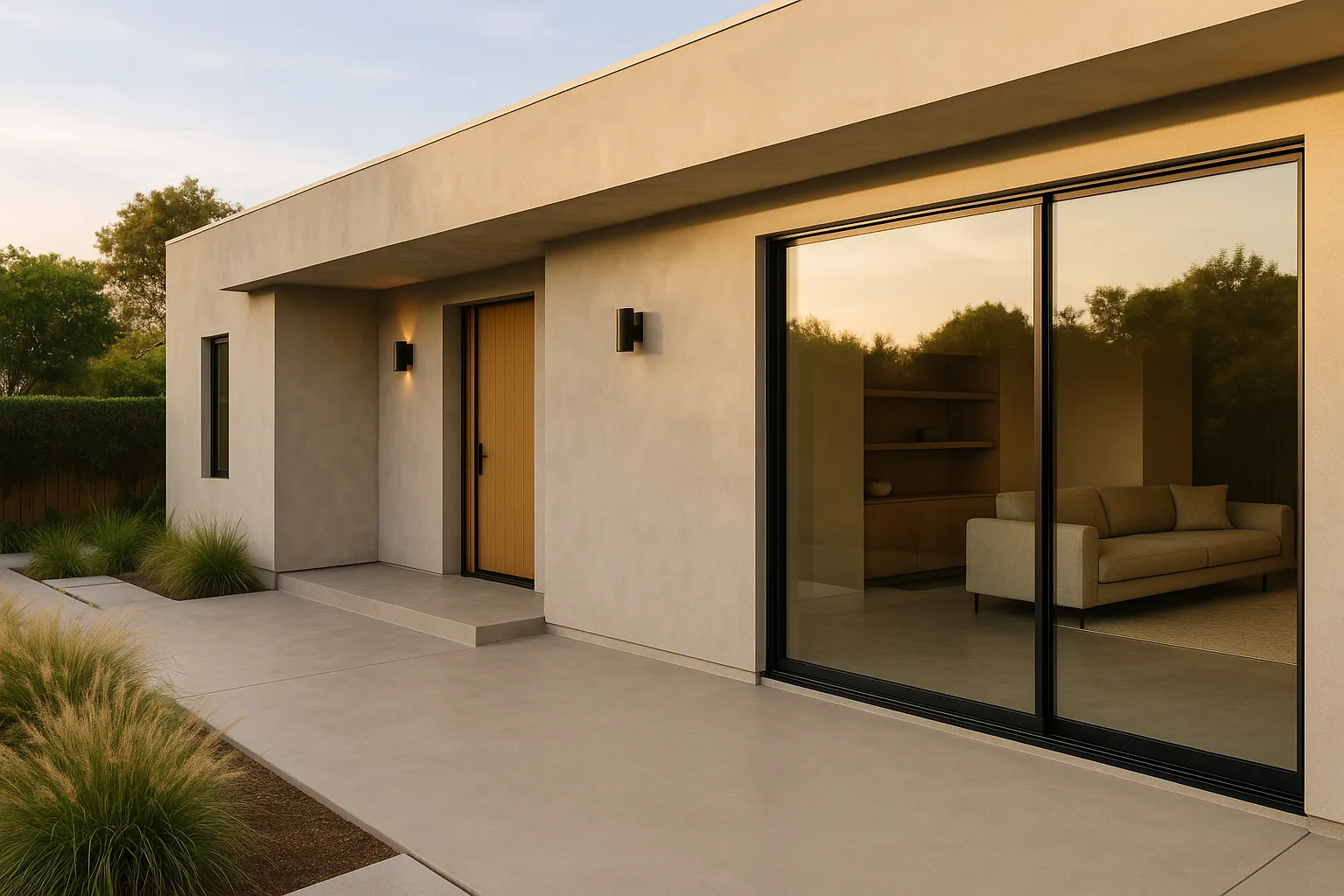
A homeowner in [Pasadena](/areas/pasadena) recently called us after getting two wildly different bids — one for polished concrete at $18,000, one for [microcement](/services/microcement-bathrooms) at $14,500 — and had no idea which material would actually hold up better in her open-plan kitchen and bathroom. That conversation is more common than you'd think, and the answer isn't as simple as picking the cheaper option. When comparing **microcement vs polished concrete [Los Angeles](/areas/los-angeles)**, the right choice depends on your substrate, your timeline, your design goals, and whether you're working in a new build or an existing home.
Both finishes look stunning in the right context. Both are durable. But they behave very differently during installation, and getting that wrong costs serious money to fix.
---
## What Is Microcement? A Definition Worth Knowing
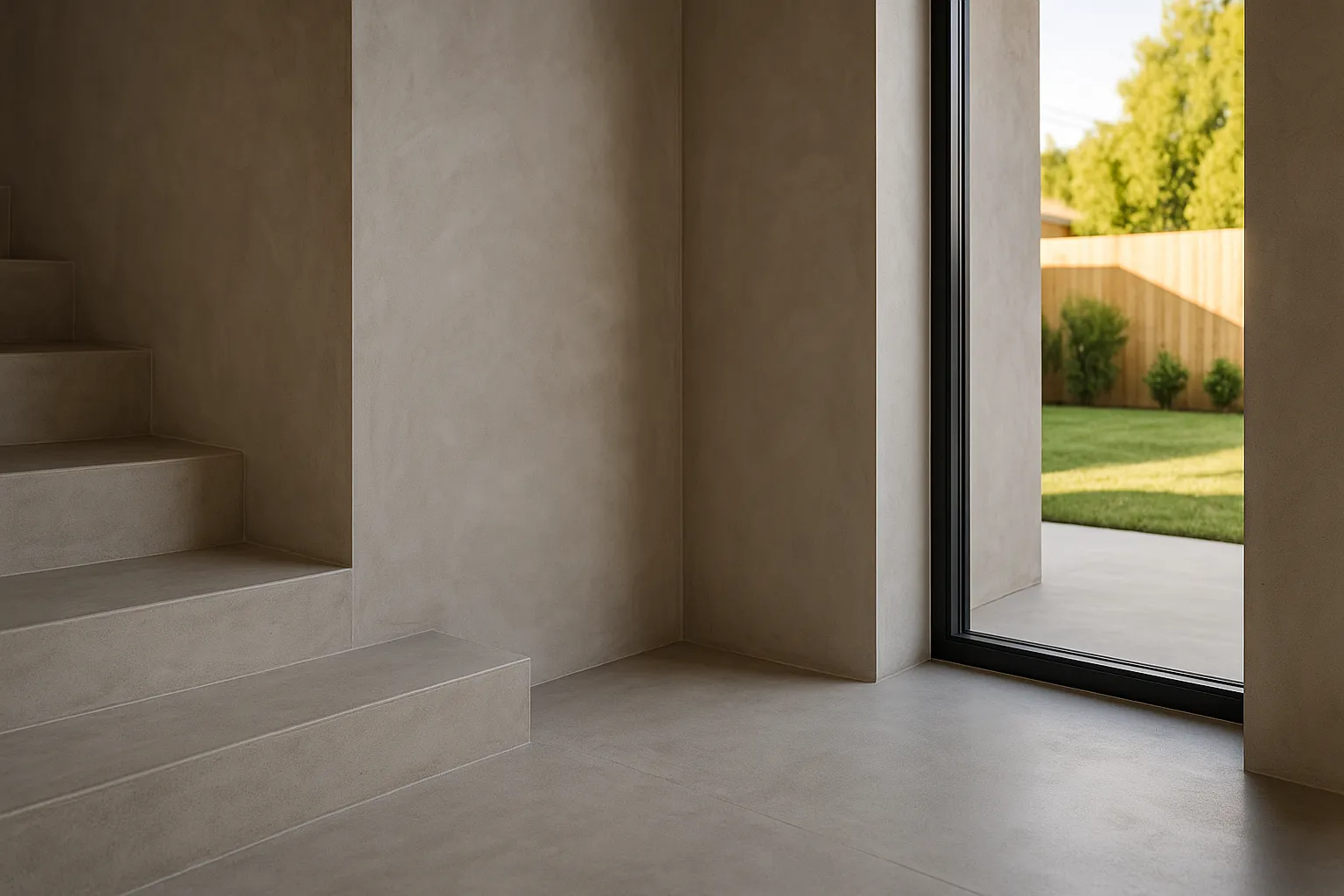
What is microcement? Microcement is a polymer-modified cementitious coating, typically **2–3mm thick**, applied directly over existing surfaces including tile, concrete, wood subfloor, and drywall. It bonds chemically to the substrate rather than mechanically — meaning no demolition, no new slab, no months of curing time.
The finish is seamless, meaning no grout lines, no joints, no visual interruptions across floors, walls, and countertops. It's sealed with a polyurethane or epoxy topcoat that makes it **fully waterproof**, which is why it's become the go-to choice for wet rooms, spa-style bathrooms, and kitchen surfaces across Los Angeles.
Cemora applies microcement across [Beverly Hills](/areas/beverly-hills), [Santa Monica](/areas/santa-monica), [Glendale](/areas/glendale), and greater LA County using a multi-layer system: a base coat, a reinforcing mesh layer, two finish coats, and two to three sealer layers. The entire system sits at roughly **2–3mm above the existing floor level** — critical in bathrooms where door clearances matter.

---
## What Is Polished Concrete? The Other Side of the Comparison
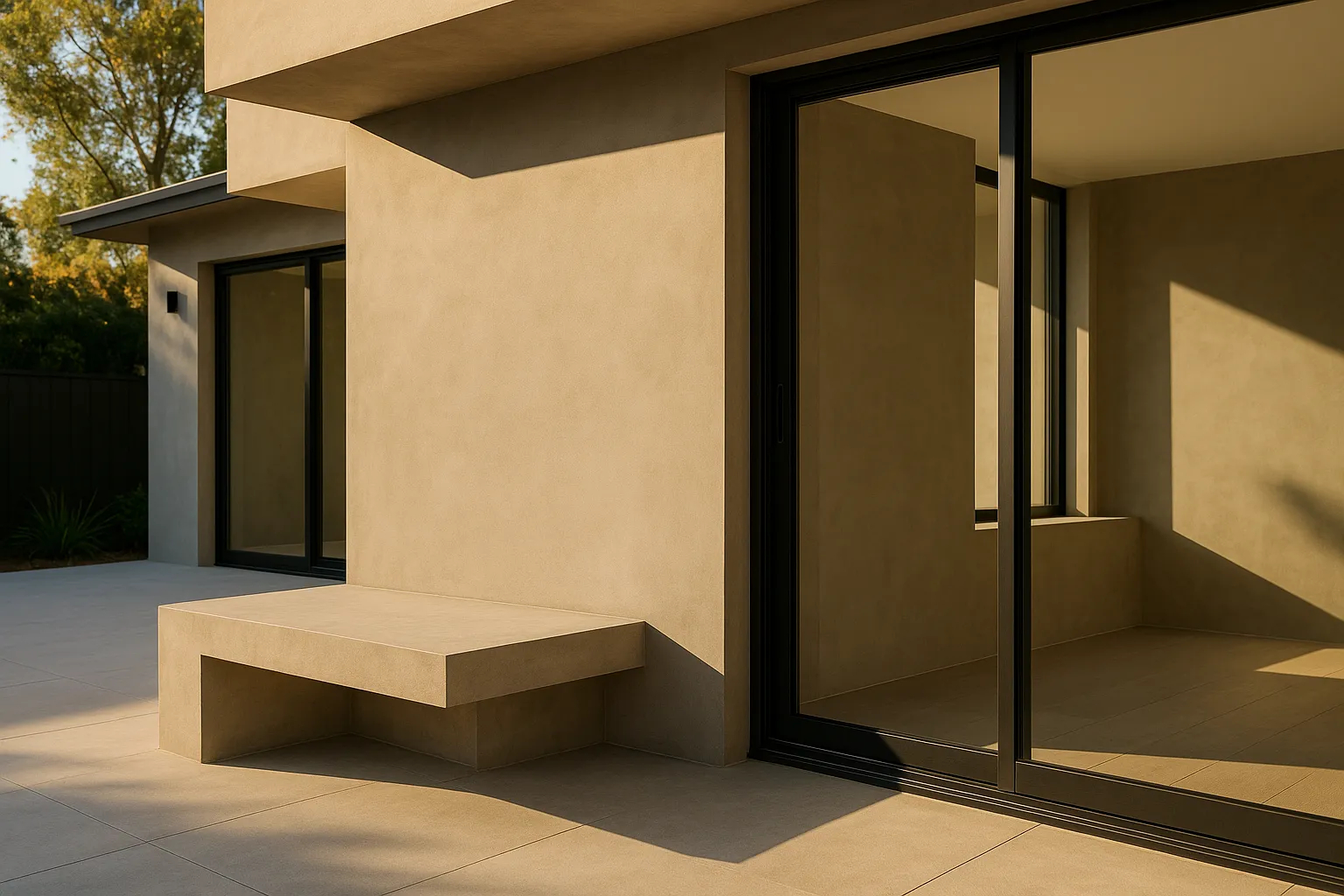
What is polished concrete? Polished concrete is a mechanical process where an existing concrete slab — or a newly poured one — is ground down with diamond tooling through progressively finer grits, then densified with a chemical hardener and buffed to a reflective sheen. The result is a hard, glossy surface that's part of the slab itself, not a coating on top of it.
Polished concrete is **genuinely part of the structure**. There's nothing to peel, delaminate, or wear through because the finish IS the floor. That's a meaningful durability argument for high-traffic [commercial](/services/microcement-commercial-hospitality) spaces.
The catch: you need a concrete slab to polish. If your LA home has a wood-frame floor system — which is extremely common in hillside homes, older Craftsman bungalows in Pasadena, and multi-story buildings throughout [West Hollywood](/areas/west-hollywood) — polished concrete is either impossible or requires pouring a new structural overlay, which changes the cost equation dramatically.
---
## Microcement vs Polished Concrete Los Angeles: Side-by-Side Comparison
Before getting into the weeds, here's the honest comparison based on Cemora's project data across 200+ jobs in Southern California:
| Factor | Microcement | Polished Concrete |
|---|---|---|
| **Thickness added** | 2–3mm | 0mm (existing slab) or 50–75mm (new pour) |
| **Substrate requirement** | Any stable surface | Concrete slab only |
| **Waterproof** | Yes (with sealer) | No (porous without treatment) |
| **Installation time** | 3–5 days | 5–10 days (existing) / 4–8 weeks (new pour) |
| **Cost per sq ft (LA, 2026)** | $18–$35 | $8–$25 (existing slab) / $30–$55 (new pour) |
| **Color options** | 40+ colors, custom tints | Limited (gray tones, dyes) |
| **Repairability** | Spot-repairable | Difficult to match |
| **Heated floors compatible** | Yes | Yes |
| **Suitable for walls** | Yes | No |
| **Resale appeal (LA market)** | High | High |
Based on Cemora's 2026 project data across Los Angeles County, **microcement is the more versatile option for roughly 70% of residential installations** — primarily because most LA homes don't have a grindable concrete slab on upper floors or in bathrooms.
---
## [How Much Does](/estimate) Microcement Cost in Los Angeles?
**Microcement flooring in Los Angeles runs $18–$35 per square foot installed in 2026**, based on Cemora's current project pricing across Beverly Hills, Santa Monica, Pasadena, and Glendale. That range covers material, labor, surface prep, and sealing.
Here's how the numbers break down by project type:
- **Bathroom wet room (80–120 sq ft):** $2,800–$5,500 total
- **Kitchen floor and island countertop (200 sq ft combined):** $5,500–$9,000 total
- **Open-plan living/dining floor (400–600 sq ft):** $10,000–$18,000 total
- **Full-home microcement floors (1,200 sq ft):** $24,000–$38,000 total
- **Commercial lobby or restaurant (500–1,500 sq ft):** $18,000–$45,000 total
Three real projects from Cemora's 2025–2026 portfolio:
**Project 1 — Santa Monica condo bathroom:** A 95 sq ft wet room with floor-to-ceiling microcement walls and a curbless shower. Total cost: **$6,200**. The homeowner had previously been quoted $11,000 for tile demolition and re-tiling. Microcement went directly over the existing tile substrate. Done in 4 days.
**Project 2 — Pasadena open-plan remodel:** 520 sq ft of microcement flooring across a kitchen, dining, and living area in a 1940s Craftsman. Wood subfloor, no concrete slab. Total cost: **$14,800**. Polished concrete was never an option here — the floor system wouldn't support a new slab pour without structural reinforcement.
**Project 3 — Beverly Hills commercial showroom:** 1,100 sq ft of microcement flooring for a luxury retail space. Total cost: **$31,500**, including a custom charcoal finish with matte sealer. Completed in 6 working days — critical for a tenant with a hard lease start date.

---
## How Much Does Polished Concrete Cost in Los Angeles?
Polished concrete pricing in LA splits into two very different categories depending on whether you're working with an existing slab.
**Existing slab polishing:** **$8–$25 per square foot** depending on the condition of the concrete, the gloss level desired (cream polish vs. full aggregate exposure), and whether staining or dyeing is added. A 500 sq ft garage conversion or ground-floor open plan with a good existing slab might run **$6,000–$12,000**.
**New concrete overlay for polishing:** If there's no suitable slab, contractors pour a self-leveling concrete overlay at 50–75mm thickness. That adds **$15–$30 per square foot** before polishing costs, pushing the total to **$30–$55 per square foot** — often more expensive than microcement for the same result.
Industry benchmarks from the 2025 Remodeling Magazine Cost vs. Value Report (Western Region) show that **concrete floor installations in the Pacific Coast market average $22 per square foot**, a figure that's risen approximately **4% year-over-year** into 2026 projections due to labor costs and diamond tooling supply chain pressures.
For a 400 sq ft ground-floor living space with a decent existing slab, polished concrete might genuinely be the cost winner at **$8,000–$10,000 vs. $14,000–$16,000 for microcement**. That's a real difference worth acknowledging.
---
## Which Lasts Longer? Durability Compared for Southern California Conditions
Durability is where most of the internet gets this comparison wrong. Both materials are extremely durable — but they fail differently.
### Polished Concrete Durability
Polished concrete, when properly densified, can last **50+ years** in a commercial setting. It resists heavy foot traffic, forklift wheels, and dropped equipment. The surface hardness is measured in Mohs scale terms — a well-polished slab hits **6–7 Mohs**, similar to granite.
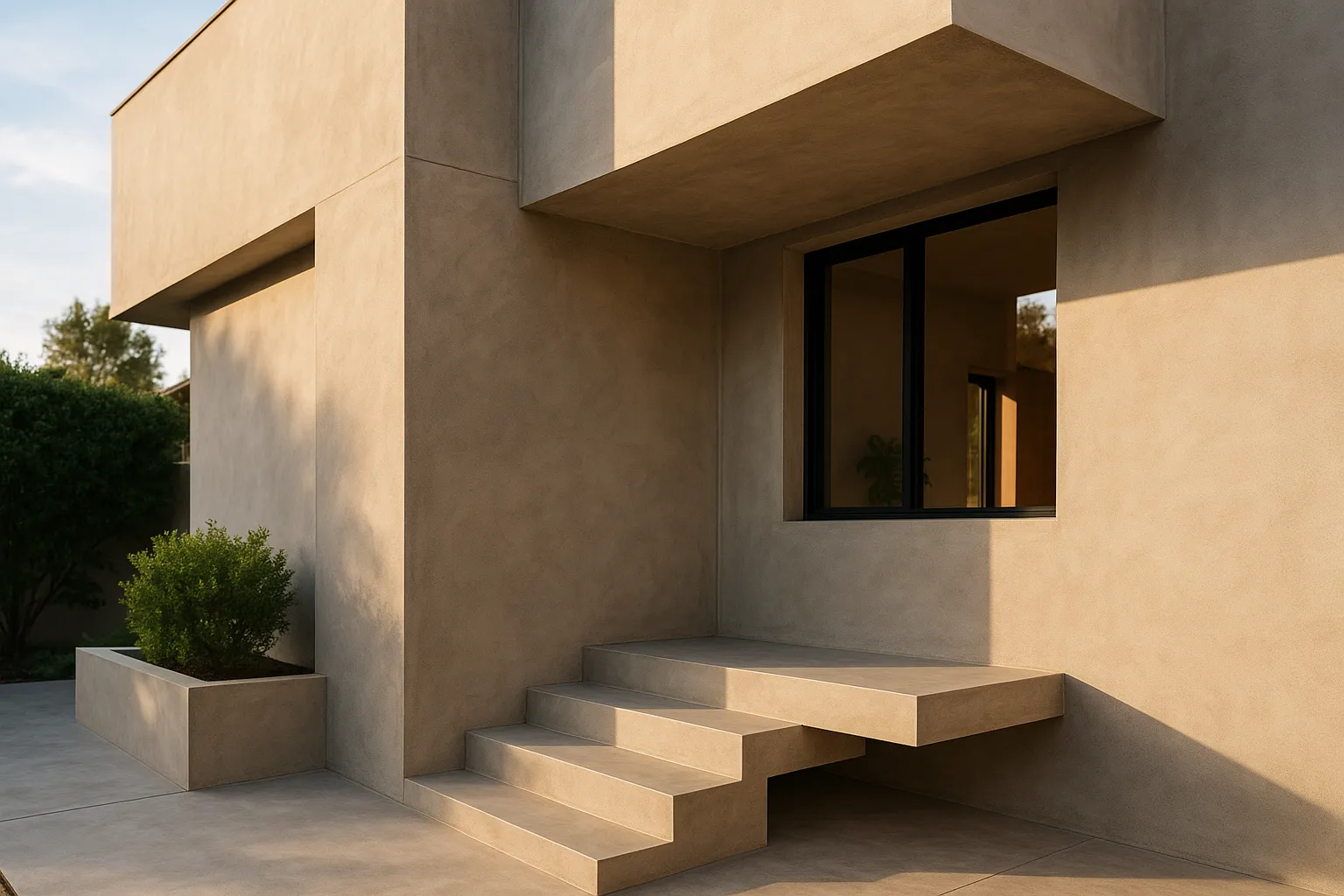
The vulnerability: polished concrete is **not waterproof**. Unsealed polished concrete is porous and will absorb cooking oils, red wine, and cleaning chemicals. Even sealed polished concrete requires **resealing every 2–5 years** in residential kitchens. In a bathroom or wet room, polished concrete without extensive epoxy topcoating is not appropriate — it will stain and potentially harbor mold at the slab level.
Southern California's seismic activity is also a real consideration. The 2025 USGS Seismic Hazard Assessment shows **Los Angeles County sits in a Zone 4 seismic area**, and concrete slabs — particularly new overlays — can develop hairline cracks during even minor tremors. Those cracks are visible in polished surfaces and difficult to repair invisibly.
### Microcement Durability
Microcement's topcoat sealer is the durability variable. A properly applied **two-component polyurethane sealer** (the type Cemora uses) rates at **4–5H pencil hardness** — harder than most painted surfaces, softer than polished concrete. It resists scratching from normal foot traffic, furniture movement, and pet claws, but it can be scratched by dragging heavy metal objects.
The upside: microcement is **fully waterproof from day one**, making it appropriate for shower floors, wet room walls, and kitchen countertops. And if a section is damaged, it can be spot-repaired and resealed without replacing the entire floor — something polished concrete cannot offer.
In Cemora's experience across LA projects, **microcement floors typically need a maintenance resealing every 5–8 years** in residential settings — comparable to or better than polished concrete in wet environments.
---
## How Long Does Installation Take? Timeline Breakdown
This is often the deciding factor for homeowners with a hard move-in date or commercial tenants with lease start dates.
### Microcement Installation Timeline
**Step 1 — Surface preparation (Day 1):** Existing surface is cleaned, any cracks or high spots are addressed, and a bonding primer is applied. This is the most critical step — adhesion failures almost always trace back to inadequate prep.
**Step 2 — Base coat application (Day 1–2):** The first microcement layer is troweled on and allowed to cure for 12–24 hours.
**Step 3 — Reinforcing mesh (Day 2):** A fiberglass mesh is embedded in a second base coat layer. This prevents crack transmission from the substrate into the finished surface — especially important in LA homes where minor movement is expected.
**Step 4 — Finish coats (Day 3–4):** Two thin finish coats are applied, each requiring 12–24 hours of cure time. Texture and color depth are built up in these layers.
**Step 5 — Sanding and sealing (Day 4–5):** The cured surface is lightly sanded, then two to three coats of sealer are applied with drying time between each coat.
**Total timeline: 4–6 days** for a typical residential project. The space is ready for light foot traffic **24 hours after the final sealer coat**, and fully cured for heavy use in **7 days**.
### Polished Concrete Installation Timeline
For an existing slab in good condition: **3–7 days** of grinding, densifying, and polishing. No major curing wait — you're working with existing concrete.
For a new pour: **4–8 weeks total** — 1–2 days for pouring, a minimum of **28 days of concrete cure time** before grinding can begin, then 3–7 days of polishing. That's a significant project delay that many homeowners don't factor into their planning.
---
## Microcement vs Polished Concrete Los Angeles: Which Is Right for Your Home?
Here's the honest decision framework Cemora uses when clients ask:
**Choose microcement if:**
- Your home has wood-frame floors (upper stories, hillside homes, most pre-1980 LA construction)
- You're renovating a bathroom, wet room, or kitchen with waterproofing requirements
- You want walls and floors to match seamlessly
- You have a timeline under 2 weeks
- You want 40+ color options beyond gray
- You're working in a commercial space with a tenant move-in deadline
**Choose polished concrete if:**
- You have an existing concrete slab in good condition (ground floor, garage conversion, new construction)
- Budget is the primary driver and the slab condition is good
- You're doing a large commercial warehouse or industrial space
- You prefer a zero-coating surface with maximum hardness
- You don't need waterproofing (dry retail, office, warehouse)
For most Los Angeles residential projects — **especially bathrooms, kitchens, and multi-story homes** — microcement wins on versatility, waterproofing, timeline, and design flexibility. For ground-floor open plans and commercial spaces with solid existing slabs, polished concrete is a legitimate contender on cost.

---
## Design Trends: What LA Homeowners Are Choosing in 2026
In 2026, the dominant finish direction in Los Angeles residential design is **warm mineral tones** — warm whites, putty, sand, and blush-adjacent microcement colors replacing the cool gray palette that dominated 2022–2024. Based on Cemora's project intake data, **approximately 65% of clients in 2026 are requesting warm or neutral tones** rather than the industrial gray that defined the earlier microcement wave.
Polished concrete, by contrast, is limited to the natural color of the aggregate and cement — typically cool gray — with dyes that can shift it toward amber, charcoal, or terracotta, but with less precision than microcement tinting.
The Houzz 2025 State of the Industry report noted that **seamless mineral surfaces were selected in 38% of bathroom renovations** in the Pacific Coast region — the highest adoption rate of any flooring category in that market. That number is tracking higher into 2026 as the aesthetic has moved from "designer" to "mainstream premium."
For [microcement bathrooms and wet rooms](/services/microcement-bathrooms?utm_source=blog&utm_medium=organic&utm_campaign=microcement-vs-polished-concrete-los-angeles), the design flexibility alone makes microcement the dominant choice. For [microcement floors and walls](/services/microcement-floors-walls?utm_source=blog&utm_medium=organic&utm_campaign=microcement-vs-polished-concrete-los-angeles) across living spaces, the seamless floor-to-wall transition is a look polished concrete simply cannot replicate.
If you're working on a kitchen project, [microcement kitchens and countertops](/services/microcement-kitchens-countertops?utm_source=blog&utm_medium=organic&utm_campaign=microcement-vs-polished-concrete-los-angeles) offer the same seamless aesthetic across horizontal and vertical surfaces — something polished concrete can't do on walls or backsplashes at all.
For commercial clients — restaurants, hotels, retail in Beverly Hills or Santa Monica — [commercial and hospitality microcement](/services/microcement-commercial-hospitality?utm_source=blog&utm_medium=organic&utm_campaign=microcement-vs-polished-concrete-los-angeles) provides the durability of a mineral surface with the installation speed that tenant schedules demand.
---
## How to Get an Accurate Quote for Either Finish
The biggest mistake homeowners make is getting a quote over the phone or based on square footage alone. Both microcement and polished concrete pricing depends heavily on:
- **Substrate condition** — cracks, contamination, unevenness all add prep cost
- **Access and logistics** — a hillside home in Laurel Canyon costs more to supply than a flat-lot home in Glendale
- **Color complexity** — custom tinted microcement costs more than standard palette colors
- **Sealer specification** — matte vs. satin vs. gloss, standard vs. anti-slip additive
- **Number of transitions** — doorways, thresholds, and floor-to-wall junctions add labor time
A reputable contractor should visit the site before quoting. If they're quoting you over email based on square footage alone, that number will change when they see the actual conditions.
Cemora offers a [free estimate](/estimate?utm_source=blog&utm_medium=organic&utm_campaign=microcement-vs-polished-concrete-los-angeles) for projects across Los Angeles, Beverly Hills, Santa Monica, Pasadena, and Glendale — and we do it in person, not over a spreadsheet.
If you're still in the research phase and want to talk through which finish makes sense for your specific project, [book a consultation](/book?utm_source=blog&utm_medium=organic&utm_campaign=microcement-vs-polished-concrete-los-angeles) and we'll walk you through the decision with no pressure and no upsell.
---
## Frequently Asked Questions
### Is microcement cheaper than polished concrete in Los Angeles?
It depends on your substrate. **If you have a high-quality existing concrete slab**, polished concrete can run $8–$15 per square foot — potentially cheaper than microcement's $18–$35 range. However, **if your home has wood floors or you need a new slab poured**, polished concrete becomes $30–$55 per square foot and is usually more expensive. For most LA residential projects, the costs are comparable or microcement comes out ahead when substrate prep is factored in.
### Can microcement be applied over existing tile without removing it?
Yes — and this is one of microcement's most significant advantages for LA renovation projects. Microcement bonds to existing ceramic and porcelain tile as long as the tile is firmly adhered, clean, and structurally sound. This eliminates demolition costs (typically $3–$8 per square foot for tile removal and disposal) and can reduce total project cost by 20–30% compared to a full tile-out renovation.
### How long does microcement last in a Los Angeles bathroom?
A properly installed and sealed microcement bathroom surface typically lasts **15–25 years** before any significant refinishing is needed. The sealer layer may need refreshing every **5–8 years** depending on cleaning habits and water hardness — LA's moderately hard water is generally fine for microcement. Cemora uses commercial-grade polyurethane sealers rated for wet room applications specifically.
### Is polished concrete waterproof enough for a bathroom?
Standard polished concrete is **not waterproof** — it's a porous material that requires epoxy or penetrating sealer treatment to resist water penetration. Even with sealing, polished concrete in a bathroom or shower is significantly more vulnerable to moisture damage and staining than microcement, which is sealed with a purpose-built waterproof topcoat system. Most LA bathroom designers and contractors recommend microcement over polished concrete for wet room applications.
### How long does microcement installation take compared to polished concrete?
Microcement typically takes **4–6 days** from surface prep to final sealer coat, with the space usable for light traffic within 24 hours of completion. Polished concrete on an existing slab takes **3–7 days**. The major timeline difference appears when a new concrete slab is needed — that process requires **4–8 weeks total** due to the mandatory 28-day concrete cure time before grinding can begin. For projects with tight timelines, microcement is almost always the faster path.
### What's the resale value impact of microcement floors in LA?
Based on Cemora's client feedback and local real estate agent input, **microcement floors are viewed positively by LA buyers** — particularly in the luxury and contemporary segments of Beverly Hills, Santa Monica, and Silver Lake. While no definitive ROI study isolates microcement specifically, seamless mineral flooring is consistently cited as a premium feature in listing descriptions. Anecdotally, clients report that microcement bathrooms and kitchens help properties sell faster and at asking price, though resale impact varies significantly by neighborhood and overall renovation quality.
### Can microcement crack?
Microcement can develop hairline cracks if the substrate moves significantly — this is why the fiberglass reinforcing mesh layer is critical. In Los Angeles, where minor seismic movement is a fact of life, **Cemora always includes mesh reinforcement** in every installation. Small substrate cracks (under 2mm) are bridged by the system; larger structural cracks need to be addressed before application. If cracking does occur post-installation, microcement can be spot-repaired and resealed, which is a significant advantage over polished concrete where crack repairs are almost impossible to make invisible.
### Is microcement slippery when wet?
With a standard gloss or satin sealer, microcement can be slippery when wet — similar to polished tile. For bathroom floors, shower floors, and commercial spaces, Cemora applies an **anti-slip additive to the final sealer coat**, which provides a textured grip without affecting the visual finish. This is standard practice for any wet room application and is included in Cemora's bathroom project pricing. Anti-slip treatment adds approximately $1–$2 per square foot to the sealer cost.
### Which finish is better for a commercial restaurant or hospitality space in LA?
For most LA restaurants, hotels, and hospitality spaces, **microcement is the preferred choice** because it installs quickly (critical for tenant buildouts), is available in custom brand-aligned colors, and can be applied to walls, bars, and countertops as well as floors. Polished concrete is appropriate for back-of-house areas, industrial kitchens, and large warehouse-style spaces where the existing slab is sound and the aesthetic suits the concept. Based on Cemora's commercial portfolio, **approximately 80% of hospitality clients choose microcement** over polished concrete.
### How do I find a qualified microcement installer in Los Angeles?
Look for installers who are certified by a specific microcement system manufacturer (not just "experienced with concrete"), who can show you completed local projects in person, and who provide a written warranty on both materials and labor. Ask specifically about their mesh reinforcement process, sealer specification, and how they handle substrate cracks. Cemora is happy to [contact us](/contact?utm_source=blog&utm_medium=organic&utm_campaign=microcement-vs-polished-concrete-los-angeles) to discuss your project and provide references from completed jobs in your area.
---
The decision between **microcement vs polished concrete Los Angeles** ultimately comes down to one question: what floor do you actually have under your feet right now? If it's wood framing on an upper story or in a bathroom, microcement isn't just the better choice — it's often the only practical one. If you're working with a solid concrete slab on a ground floor and budget is tight, polished concrete deserves a real look.
For everything in between — the kitchen that needs to flow into the living room, the wet room that needs to be both beautiful and bulletproof, the commercial space that needs to open in two weeks — microcement is doing the heavy lifting across Los Angeles right now, and for good reason.
If you're trying to make this call for your own project, [reach out to Cemora](/contact?utm_source=blog&utm_medium=organic&utm_campaign=microcement-vs-polished-concrete-los-angeles) and tell us what you're working with. We'll tell you honestly which direction makes sense — even if that means recommending polished concrete.
---
**Ready to start your your project in Los Angeles?** [Book a free consultation](/book?utm_source=blog&utm_medium=organic&utm_campaign=microcement-vs-polished-concrete-los-angeles-cost-durability-installation-timeline-for-la-homes) — we'll come walk through your space and give you straight numbers, no pressure. Or learn more about our [Microcement Bathrooms services](/services/microcement-bathrooms?utm_source=blog&utm_medium=organic&utm_campaign=microcement-vs-polished-concrete-los-angeles-cost-durability-installation-timeline-for-la-homes).