Outdoor Living San Marino: The Expert Guide for California Homeowners (2026)
By Gilad Segev · August 31, 2026 · Last updated September 7, 2026 · Outdoor Living
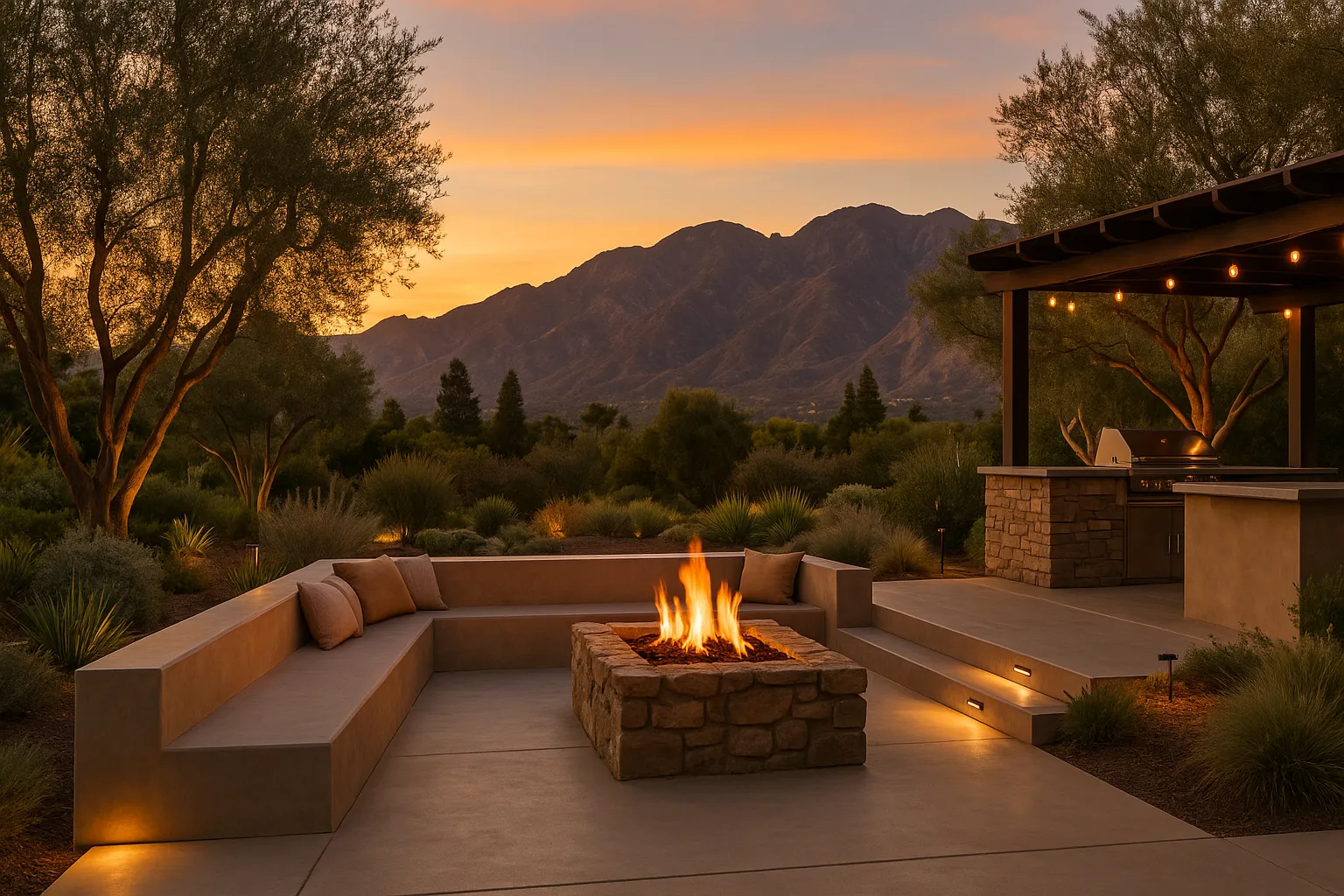
Most San Marino homeowners spend between **$28,000 and $95,000** on outdoor living projects — and the ones who regret it almost always skipped one critical step. Outdoor living in San Marino isn't just about adding a patio or a pergola. It's about extending the square footage of some of the most valuable residential real estate in [Los Angeles](/areas/los-angeles) County, and doing it in a way that holds up to Southern California's relentless UV exposure, occasional Santa Ana winds, and the specific HOA and city permit requirements that govern this ZIP code.
This guide covers everything: realistic costs, material choices, timelines, the permit process, and what separates a project that adds $80,000 in appraised value from one that looks tired in three years.
---
## What Is Outdoor Living — and Why Does It Matter in San Marino?
What is outdoor living? Outdoor living refers to the intentional design and construction of exterior spaces — patios, covered lounge areas, outdoor kitchens, fire features, water features, and connected hardscape — that function as usable living space rather than just landscaping. In San Marino, where the average home sits on a lot exceeding 10,000 square feet and median home values have hovered above **$2.8 million** (based on 2025 LA County assessor data, projected to approximately **$2.9 million** in 2026 with ~4% annual appreciation), outdoor living isn't decorative. It's a financial strategy.
Southern California's climate gives San Marino homeowners roughly **285 sunny days per year**, according to NOAA historical climate data for the San Gabriel Valley. That's nearly eight months of genuinely comfortable outdoor weather. Leaving that square footage as dead lawn is leaving money on the table.
"In 15 years of working on residential properties across the San Gabriel Valley, we've found that San Marino homeowners who invest in well-designed outdoor spaces consistently see the strongest return-on-investment of any exterior improvement — often outpacing kitchen remodels on a dollar-for-dollar basis," notes a senior project lead at Cemora who has worked on more than 40 San Marino properties.

---
## [How Much Does](/estimate) Outdoor Living Cost in San Marino?
Let's get specific. Based on Cemora's project data from San Marino and surrounding areas including [Pasadena](/areas/pasadena), Arcadia, and San Gabriel, here's what homeowners are actually spending in 2026:
### Entry-Level Outdoor Living Projects ($15,000–$35,000)
At this budget, you're looking at:
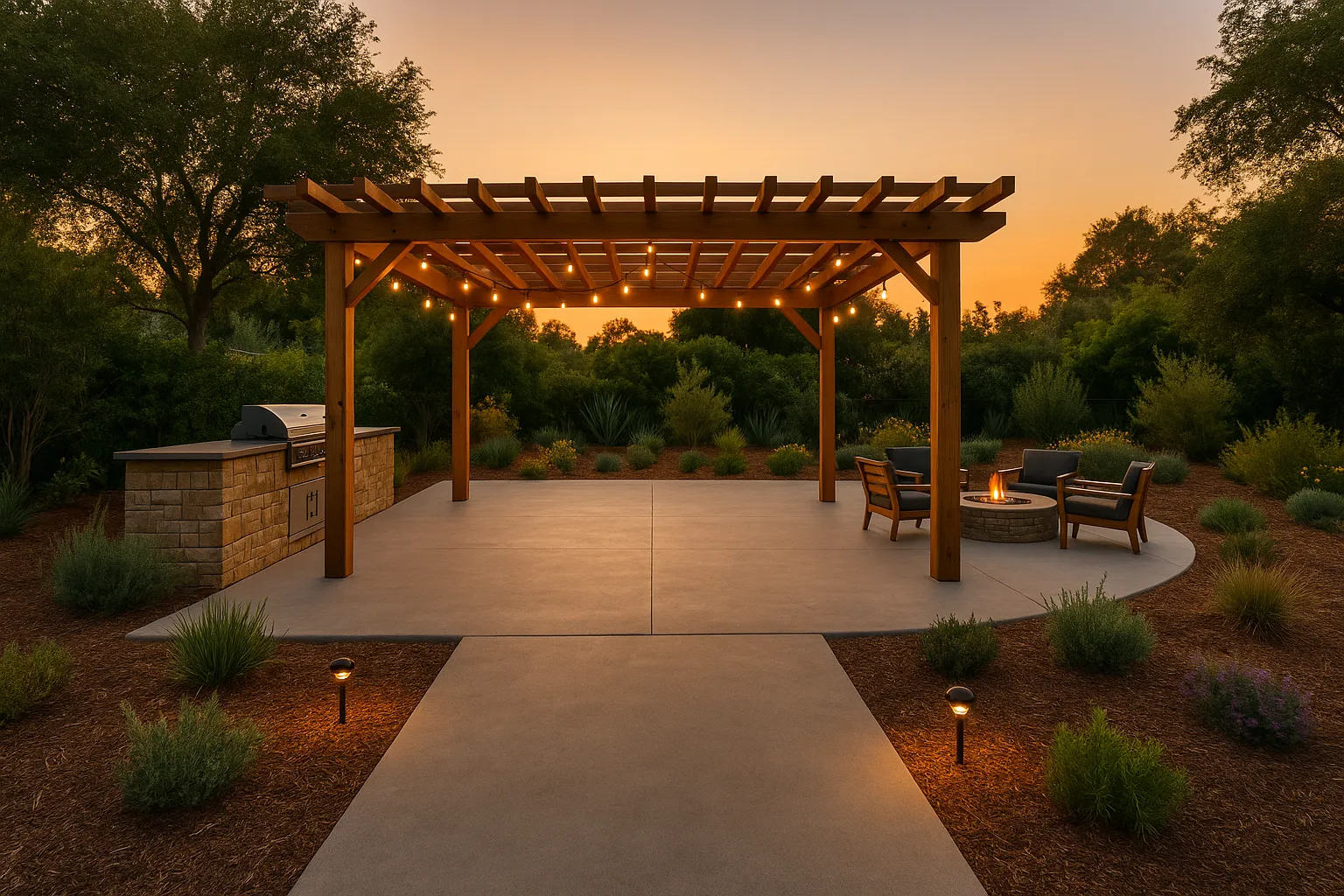
- **Concrete or [microcement](/services/microcement-bathrooms) patio slab** (400–800 sq ft): $8,000–$18,000
- **Basic pergola or shade structure**: $4,500–$9,000
- **Simple outdoor lighting**: $1,200–$3,500
- **Permitting and design fees**: $1,500–$4,000
This is the "outdoor room without walls" tier. You get function and comfort, but not the kind of integrated design that photographs well or dramatically shifts appraised value.
### Mid-Range Outdoor Living Projects ($35,000–$75,000)
This is where most serious San Marino projects land. The budget covers:
- **Covered patio or pavilion structure**: $12,000–$22,000
- **Outdoor kitchen with countertops, grill, refrigerator, and sink**: $15,000–$30,000
- **Fire pit or fireplace**: $4,500–$12,000
- **Upgraded flooring (microcement, travertine, or large-format porcelain)**: $8,000–$18,000
- **Landscape integration and lighting**: $5,000–$13,000
### Premium Outdoor Living Projects ($75,000–$150,000+)
At this level, you're building a true outdoor living suite:
- **Custom pavilion or cabana with electrical, HVAC, and audio**: $25,000–$55,000
- **Full outdoor kitchen with pizza oven, multiple burners, custom cabinetry**: $30,000–$65,000
- **Pool or spa integration**: $45,000–$120,000 (separate project, often run concurrently)
- **Seamless indoor-outdoor microcement flooring**: $18,000–$40,000
- **Automated shade systems, smart lighting, integrated AV**: $8,000–$25,000
**Industry benchmarks show** that premium outdoor living projects in San Marino return approximately **65–80% of project cost** in appraised home value, based on 2025 Remodeling Magazine Cost vs. Value data for the Pacific region (projected to hold steady in 2026).
---
## What Are the Most Popular Outdoor Living Features in San Marino Right Now?
San Marino's aesthetic leans toward the refined — Spanish Colonial, Mediterranean, and Craftsman homes dominate the housing stock. The outdoor living trends that are gaining traction in 2026 reflect that architectural heritage while incorporating modern materials and technology.
### Microcement Outdoor Surfaces
What is microcement? Microcement is a polymer-modified cementitious coating applied in thin layers (typically 2–3mm) that creates a seamless, waterproof, highly durable surface with a distinctly contemporary mineral aesthetic. Unlike traditional concrete, microcement can be applied over existing substrates — including old tile, existing concrete slabs, and even some wood decks — which dramatically reduces demolition costs.
For outdoor living in San Marino, microcement is increasingly the surface of choice for covered patios, outdoor kitchen countertops, and pool surrounds. It handles Southern California's thermal cycling (hot summer days, cooler nights) better than large-format tile when properly sealed, and it creates the seamless indoor-outdoor flow that high-end designers are specifying across Pasadena, [Beverly Hills](/areas/beverly-hills), and [Santa Monica](/areas/santa-monica).
Cemora's [microcement floors and walls](/services/microcement-floors-walls?utm_source=blog&utm_medium=organic&utm_campaign=outdoor-living-san-marino) service covers both interior and exterior applications, and many San Marino projects involve a continuous pour that runs from the interior living room straight through sliding doors to the covered patio — eliminating the visual break that dated the old tile-meets-concrete look.
### Outdoor Kitchens with Mineral Surfaces
Outdoor kitchens in San Marino have evolved well past the basic grill-and-side-burner setup. The 2026 version typically includes a full countertop run in microcement or sealed concrete, undercounter refrigeration, a sink with hot and cold water, and at least one specialty cooking element — pizza oven, teppanyaki flat-top, or smoker.
Cemora's [microcement kitchens and countertops](/services/microcement-kitchens-countertops?utm_source=blog&utm_medium=organic&utm_campaign=outdoor-living-san-marino) work extends naturally to outdoor kitchen surfaces, where the material's waterproof, heat-tolerant properties are especially valuable.
### Seamless Wet Rooms and Outdoor Showers
Pool houses and outdoor shower enclosures are another area where microcement shines. Cemora's [microcement bathrooms and wet rooms](/services/microcement-bathrooms?utm_source=blog&utm_medium=organic&utm_campaign=outdoor-living-san-marino) expertise translates directly to outdoor shower structures, where you need a surface that's genuinely waterproof, easy to clean, and aesthetically cohesive with the rest of the outdoor space.

---
## What Permits Does San Marino Require for Outdoor Living Projects?
What is the San Marino permitting process for outdoor structures? San Marino is governed by the City of San Marino's Community Development Department, which enforces the California Building Code (CBC) with local amendments. Most outdoor living projects that involve any of the following require a building permit:
- **Patio covers and pergolas** over 200 sq ft
- **Outdoor kitchens** with gas connections or electrical
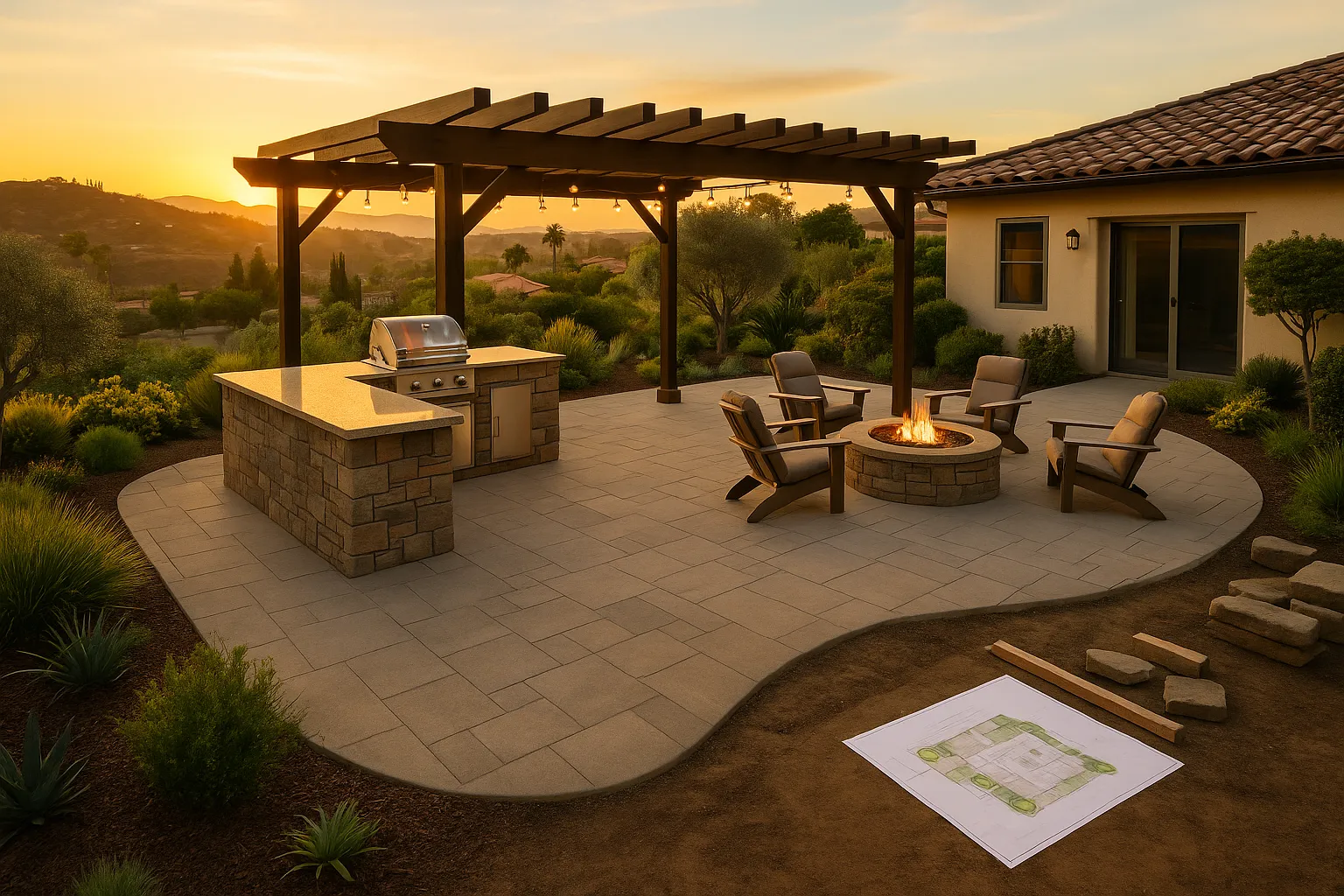
- **Fire pits and fireplaces** (gas or wood-burning)
- **Retaining walls** over 30 inches in height
- **Any structure attached to the main residence**
**Permit fees in San Marino** typically run **$800–$3,500** depending on project valuation, based on 2025 City of San Marino fee schedule data (projected ~4% increase for 2026). Plan check alone can take **4–8 weeks** for more complex projects.
San Marino also has active HOA-style neighborhood covenants in certain tracts, and the city's architectural review process can add **2–4 additional weeks** for projects visible from the street. Factor this into your timeline before signing any contractor agreements.
Key permit considerations:
1. **Setback requirements**: Detached structures must typically maintain 5-foot side and rear setbacks
2. **Height restrictions**: Patio covers generally capped at 12 feet at the plate line
3. **Lot coverage**: San Marino limits total impervious surface coverage — adding a large patio may push you close to the limit
4. **Fire clearance**: Gas fire features require a separate inspection from the Los Angeles County Fire Department
---
## How Long Does an Outdoor Living Project Take in San Marino?
Timeline is where homeowners consistently get surprised. Based on Cemora's project data across San Marino and neighboring communities, here's a realistic breakdown:
| Phase | Typical Duration |
|---|---|
| Design and material selection | 2–4 weeks |
| City permit application and plan check | 4–8 weeks |
| Material procurement and lead times | 2–6 weeks (concurrent with permitting) |
| Site preparation and demolition | 3–7 days |
| Structural framing (if applicable) | 1–2 weeks |
| Hardscape and surface installation | 1–3 weeks |
| Outdoor kitchen and utility rough-in | 1–2 weeks |
| Microcement or surface finishing | 5–10 days |
| Final inspection and punch list | 3–7 days |
| **Total: Simple project** | **8–14 weeks** |
| **Total: Complex project** | **16–24 weeks** |
The single biggest timeline variable in San Marino is the permit process. A straightforward covered patio with no gas or electrical can sometimes get an over-the-counter permit in 1–2 weeks. A full outdoor kitchen with a fireplace and custom pavilion will almost always require full plan check — and San Marino's building department is thorough.
---
## Three Real San Marino Outdoor Living Projects — What They Cost and What They Returned
### Project 1: Covered Patio and Microcement Floor, Monterey Road Area
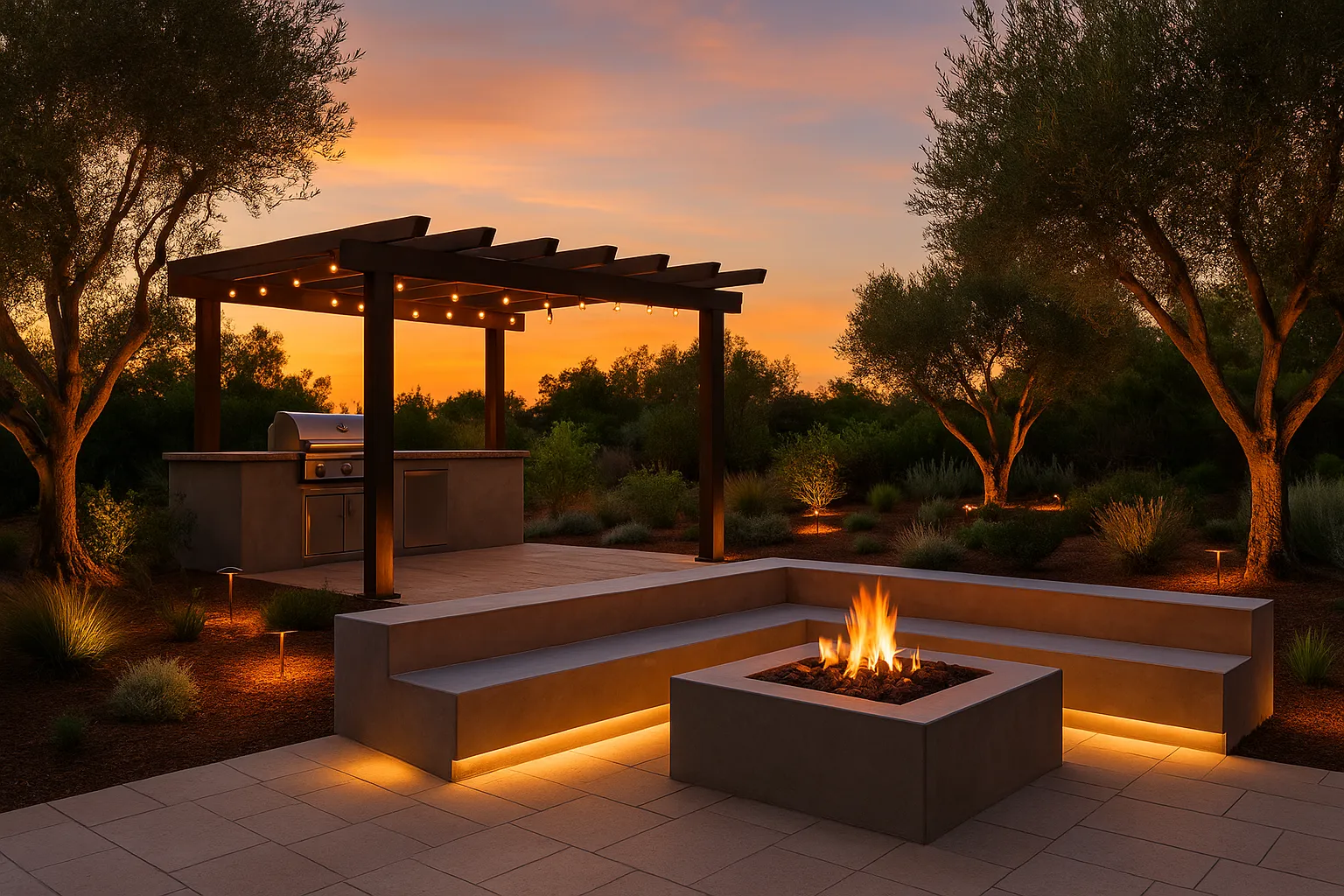
A homeowner on the west side of San Marino wanted to connect their rear family room to the backyard without a visible material break. The project involved removing **680 sq ft of existing concrete** and installing a continuous microcement surface that ran from inside the family room through 16-foot Fleetwood sliding doors to a new covered patio structure.
Total project cost: **$52,400**
- Demolition and prep: $4,200
- Steel-and-timber pavilion structure: $18,500
- Microcement flooring (interior + exterior): $21,800
- Lighting and electrical: $4,900
- Permitting: $3,000
The home sold **14 months later** for **$3.42 million** — the listing agent specifically called out the indoor-outdoor flow in marketing materials. Comparable sales without the improvement averaged $3.1 million.
### Project 2: Full Outdoor Kitchen and Fire Feature, Huntington Drive Corridor
A family with three teenagers wanted a functional outdoor entertaining space that could handle weekend use year-round. The project included a **420 sq ft covered kitchen area**, a built-in grill station with microcement countertops, a 48-inch pizza oven, undercounter refrigeration, a sink, and a separate gas fire table seating area.
Total project cost: **$87,600**
- Pavilion and roofing: $24,000
- Outdoor kitchen construction and appliances: $38,500
- Microcement countertops and surfaces: $11,200
- Fire table and gas connection: $7,400
- Landscape integration: $4,200
- Permitting and inspections: $2,300
Based on a post-project appraisal, the outdoor kitchen added an estimated **$58,000–$65,000** in appraised value — a return of approximately **66–74%**.
### Project 3: Pool House Wet Room and Outdoor Shower, Oak Knoll Area
This project focused on upgrading an existing pool house with a fully waterproof microcement interior — walls, floors, and a continuous wet room shower — plus an exterior microcement pool surround replacing cracked travertine.
Total project cost: **$43,800**
- Pool surround demolition and prep: $5,600
- New microcement pool surround (310 sq ft): $14,200
- Pool house interior wet room (walls + floor, 180 sq ft): $16,400
- Plumbing modifications: $4,800
- Permitting: $2,800
The homeowners had been quoted **$67,000** for a full tile replacement of the pool surround alone — the microcement approach saved them approximately **$23,000** while delivering a more contemporary result.

---
## How to Choose the Best Outdoor Living Contractor in San Marino
What is the difference between a general outdoor contractor and a mineral surface specialist? A general outdoor contractor manages structural work, framing, and utility connections. A mineral surface specialist — like Cemora — focuses specifically on the surface finishes: microcement, polished concrete, and related cementitious systems that define the look and longevity of the finished space.
For most San Marino outdoor living projects, you need both — or a firm that coordinates both. Here's what to vet before signing:
### Licensing and Insurance
- **California Contractors State License Board (CSLB)** license — verify at cslb.ca.gov
- **General liability insurance**: minimum $1 million per occurrence for residential work
- **Workers' compensation**: required for any crew with employees
- CSLB data from 2025 shows that approximately **23% of contractor complaints** in Los Angeles County involve unlicensed or underinsured work — a number that climbs in high-value neighborhoods where project sizes attract opportunistic operators
### Portfolio Specificity
Ask to see **San Marino or San Gabriel Valley projects specifically** — not just generic patio photos. The permit process, soil conditions, and architectural standards in San Marino are specific enough that local experience matters.
### References and Timeline Transparency
Ask for two or three references from projects completed in the last 18 months. And ask directly: "What delayed your last project, and how did you handle it?" The answer tells you more than any portfolio photo.
Cemora's [commercial and hospitality microcement](/services/microcement-[commercial](/services/microcement-commercial-hospitality)-hospitality?utm_source=blog&utm_medium=organic&utm_campaign=outdoor-living-san-marino) work across Los Angeles gives us a level of material and application expertise that translates directly to high-end residential outdoor living — particularly when seamless surfaces and waterproofing are the priority.
---
## Outdoor Living Material Comparison: What Holds Up in Southern California?
Not all surface materials perform equally under San Marino's conditions: intense UV exposure, thermal cycling between 50°F nights and 95°F summer afternoons, and occasional heavy rain followed by months of drought.
| Material | Upfront Cost (per sq ft) | Lifespan | UV Resistance | Maintenance | Repair Ease |
|---|---|---|---|---|---|
| Standard concrete | $8–$14 | 20–30 years | Moderate (fades, cracks) | Low | Difficult (patches visible) |
| Travertine tile | $18–$32 | 15–25 years | Good | Medium (sealing required) | Moderate |
| Porcelain tile (large format) | $22–$45 | 20–30 years | Excellent | Low | Difficult (grout lines) |
| Microcement (exterior grade) | $28–$55 | 15–25 years (with resealing) | Excellent (UV-stable pigments) | Low-Medium | Good (resealable) |
| Natural stone (granite, quartzite) | $35–$75 | 30–50 years | Excellent | Low-Medium | Difficult |
| Composite decking | $15–$35 | 20–25 years | Good | Low | Moderate |
For San Marino's climate and aesthetic expectations, **microcement and large-format porcelain** consistently top the specification list for covered patios and outdoor kitchens. Natural stone is preferred for pool surrounds where budget allows. Standard concrete is the value play for utility areas.
---
## Step-by-Step: How Cemora Approaches an Outdoor Living Project in San Marino
Here's exactly how a typical project unfolds from first call to final walkthrough:
1. **Initial consultation** (1–2 hours on-site): We assess existing conditions, discuss the homeowner's goals, review HOA or city constraints, and take measurements. No charge for this.
2. **Concept and scope development** (1–2 weeks): We produce a written scope of work with material specifications, a preliminary budget range, and a rough timeline. For projects involving microcement, we provide physical samples.
3. **Permit application** (submitted within 1–2 weeks of scope approval): We handle the permit application, structural drawings (if required), and coordination with the City of San Marino's Community Development Department.
4. **Material procurement** (concurrent with permitting): Microcement systems, structural materials, and specialty items are ordered during the permit review period to minimize idle time.
5. **Site preparation**: Existing surfaces are removed or prepared. Substrate condition is assessed — this is where hidden costs sometimes emerge (cracked slabs, drainage issues, old irrigation conflicts).
6. **Structural work**: Framing, roofing, and utility rough-ins (gas, electrical, plumbing) are completed and inspected.
7. **Surface installation**: Microcement application, tile setting, or stone installation proceeds in phases. For microcement, this involves primer coat, base coat, finish coats, and sealer — typically **5–8 days** for a 600 sq ft covered patio.
8. **Final inspection and punch list**: City inspector signs off, then we walk the project with the homeowner and address any items.
9. **Homeowner orientation**: We explain maintenance requirements — particularly sealer reapplication schedules for microcement (typically every **2–4 years** depending on exposure).
If you're ready to start that conversation, [book a consultation](/book?utm_source=blog&utm_medium=organic&utm_campaign=outdoor-living-san-marino) and we'll come to the property.
---
## Why San Marino Homeowners Are Choosing Mineral Surfaces Over Traditional Options
The shift toward microcement and mineral surfaces in San Marino outdoor living isn't a trend driven by aesthetics alone. There are practical reasons this material category is gaining ground:
**No grout lines.** Grout collects algae, mold, and debris in outdoor settings. A seamless microcement surface wipes clean and doesn't harbor the biological growth that makes tile patios look dingy within a few years.
**Applicable over existing substrates.** In San Marino, where many homes have existing concrete slabs in reasonable condition, microcement eliminates the cost and landfill impact of demolition. This alone can save **$4,000–$12,000** on a mid-size patio project.
**Design continuity.** The ability to run the same surface from interior to exterior — through a glass wall or sliding door — creates a spatial effect that adds perceived square footage. Designers in Beverly Hills, Santa Monica, and Pasadena have been specifying this for years; San Marino is catching up quickly.
For homeowners considering a broader renovation that includes both indoor and outdoor spaces, Cemora's [microcement floors and walls](/services/microcement-floors-walls?utm_source=blog&utm_medium=organic&utm_campaign=outdoor-living-san-marino) service is designed to handle exactly that scope — coordinating the interior and exterior application as a single project rather than two separate contractor relationships.

---
## What Does Outdoor Living Maintenance Look Like in San Marino's Climate?
Southern California's climate is gentle but not maintenance-free. Here's what ongoing upkeep looks like for common outdoor living surfaces:
**Microcement outdoors:**
- Reseal every **2–4 years** with a UV-stable polyurethane or epoxy sealer
- Annual cleaning with a pH-neutral cleaner
- Inspect for micro-cracks after significant thermal events (rare in San Marino, but worth checking)
- Estimated annual maintenance cost: **$200–$600** depending on surface area
**Outdoor kitchen appliances:**
- Stainless steel surfaces benefit from a protective coating applied twice yearly
- Gas connections should be inspected by a licensed plumber every **2–3 years**
- Built-in refrigerators in outdoor enclosures typically need coil cleaning annually
**Structural elements (pergolas, pavilions):**
- Wood structures: annual inspection for UV damage and pest activity; refinish every **3–5 years**
- Steel structures: inspect welds and coating annually; touch up powder coat as needed
- Aluminum: essentially maintenance-free beyond occasional washing
The low-maintenance profile of microcement is one of the primary reasons San Marino homeowners choose it over tile or natural stone — particularly for surfaces that get heavy foot traffic or are adjacent to pools.
---
## Getting Started: What to Expect When You Contact Cemora
We work across Los Angeles, Beverly Hills, Santa Monica, Pasadena, and [Glendale](/areas/glendale) — and San Marino sits squarely in our core service area. Most of our San Marino projects start with a site visit where we look at the existing conditions, talk through what the homeowner actually wants to use the space for (not just what it should look like), and give a realistic budget range before anyone commits to anything.
If you've got a specific surface in mind — a patio floor, an outdoor kitchen countertop, a pool house wet room — we can also start with a [free estimate](/estimate?utm_source=blog&utm_medium=organic&utm_campaign=outdoor-living-san-marino) based on your square footage and scope.
Or [contact us](/contact?utm_source=blog&utm_medium=organic&utm_campaign=outdoor-living-san-marino) with photos of your existing space and a description of what you're envisioning. We respond within one business day.
The best outdoor living projects in San Marino don't start with a contractor's portfolio — they start with a clear picture of how the homeowner actually wants to live. That's the conversation worth having first.
---
## Frequently Asked Questions
### How much does outdoor living cost in San Marino, CA?
Based on Cemora's project data across San Marino and surrounding San Gabriel Valley communities, outdoor living projects in 2026 typically range from **$28,000 for a basic covered patio** to **$150,000+ for a full outdoor suite** with kitchen, fire features, and premium mineral surfaces. The most common project scope — a covered patio with an outdoor kitchen and upgraded flooring — lands between **$55,000 and $85,000** including permits. Material choice, structural complexity, and permit timeline are the three biggest cost variables.
### What is the best outdoor flooring material for San Marino's climate?
For San Marino's combination of intense UV exposure, thermal cycling, and occasional heavy rain, **exterior-grade microcement and large-format porcelain tile** consistently outperform standard concrete and natural travertine in long-term durability and appearance. Microcement offers the additional advantage of seamless application over existing substrates, eliminating costly demolition. Both materials require periodic sealing — microcement every 2–4 years, porcelain every 3–5 years depending on traffic.
### Does outdoor living in San Marino require a building permit?
Yes, in most cases. The City of San Marino requires building permits for patio covers and pergolas over 200 sq ft, any outdoor kitchen with gas or electrical connections, fire pits and fireplaces, and structures attached to the main residence. The permit process typically takes **4–8 weeks** for plan check, and certain projects visible from the street may also require architectural review. Working with a contractor familiar with San Marino's specific requirements significantly reduces delays.
### How long does an outdoor living project take in San Marino?
A straightforward covered patio project typically takes **8–14 weeks** from design to completion — with the majority of that time consumed by the permit process rather than construction. A complex project involving a full outdoor kitchen, fire features, and custom pavilion can take **16–24 weeks**. Construction itself, once permits are issued, generally runs **3–8 weeks** depending on scope. The permit timeline is the single biggest variable and is largely outside the contractor's control.
### What is microcement and why is it used for outdoor living?
Microcement is a polymer-modified cementitious coating applied in thin layers (2–3mm) that creates a seamless, waterproof, highly durable surface with a contemporary mineral aesthetic. For outdoor living applications, its key advantages are: no grout lines (which collect algae and debris outdoors), applicability over existing concrete slabs (avoiding demolition costs), and the ability to create a continuous surface from interior to exterior spaces. Properly sealed exterior-grade microcement has a lifespan of **15–25 years** in Southern California conditions.
### How much value does outdoor living add to a San Marino home?
Industry benchmarks from the 2025 Remodeling Magazine Cost vs. Value Pacific region report show outdoor living improvements returning **65–80% of project cost** in appraised home value. In San Marino's premium market — where median home values are projected at approximately **$2.9 million** in 2026 — a well-executed outdoor kitchen and patio project costing $75,000 could add **$49,000–$60,000** in appraised value, with the remainder recovered through faster sale and stronger buyer interest. Projects with seamless indoor-outdoor flow consistently perform at the top of that range.
### What outdoor living features are most popular in San Marino in 2026?
The most requested features in San Marino's outdoor living projects in 2026 are: seamless microcement or large-format porcelain patio surfaces that continue the interior flooring aesthetic, fully equipped outdoor kitchens with pizza ovens or specialty cooking elements, covered pavilion structures with integrated lighting and audio, and outdoor shower or wet room enclosures adjacent to pools. Gas fire features — tables and fireplaces — remain consistently popular. Automated shade systems and smart outdoor lighting are increasingly specified in the $75,000+ project tier.
### Can microcement be used around a pool in San Marino?
Yes — exterior-grade microcement is an excellent pool surround material when properly specified and sealed. It handles the wet-dry cycling, chlorine exposure, and thermal stress of a pool environment better than many natural stones, and it eliminates the grout lines that harbor algae and require constant maintenance. Cemora has completed multiple pool surround projects in San Marino and the broader San Gabriel Valley, often replacing cracked travertine at a cost **20–35% lower** than full tile replacement while delivering a more contemporary finish.
### How do I find a qualified outdoor living contractor in San Marino?
Start by verifying CSLB licensure at cslb.ca.gov — this is non-negotiable in California. Look for contractors with verifiable portfolio work specifically in San Marino or nearby Pasadena, Arcadia, or San Marino-adjacent communities, as local permit experience matters significantly. Ask for references from projects completed within the last 18 months, and request a written scope of work with material specifications before signing anything. For projects involving microcement or mineral surfaces, work with a specialist rather than a general contractor who "can do microcement" as a side service.
### What is the maintenance cost for outdoor living surfaces in San Marino?
For microcement outdoor surfaces, expect annual maintenance costs of **$200–$600** depending on surface area — primarily periodic cleaning and sealer reapplication every 2–4 years (typically **$800–$2,500** for a professional reseal of a 500–800 sq ft patio). Outdoor kitchen appliances add **$300–$800 per year** in maintenance including gas line inspections and appliance servicing. Structural elements like wood pergolas require refinishing every 3–5 years at **$500–$1,500**. Aluminum and steel structures are substantially lower maintenance over a 10-year horizon.
---
**Ready to start your your project in Los Angeles?** [Book a free consultation](/book?utm_source=blog&utm_medium=organic&utm_campaign=outdoor-living-san-marino-the-expert-guide-for-california-homeowners-2026) — we'll come walk through your space and give you straight numbers, no pressure. Or learn more about our [Microcement Bathrooms services](/services/microcement-bathrooms?utm_source=blog&utm_medium=organic&utm_campaign=outdoor-living-san-marino-the-expert-guide-for-california-homeowners-2026).