Outdoor Living in Thousand Oaks: Expert Guide for California Homeowners (2026)
By Gilad Segev · May 11, 2026 · Last updated May 11, 2026 · Outdoor Living
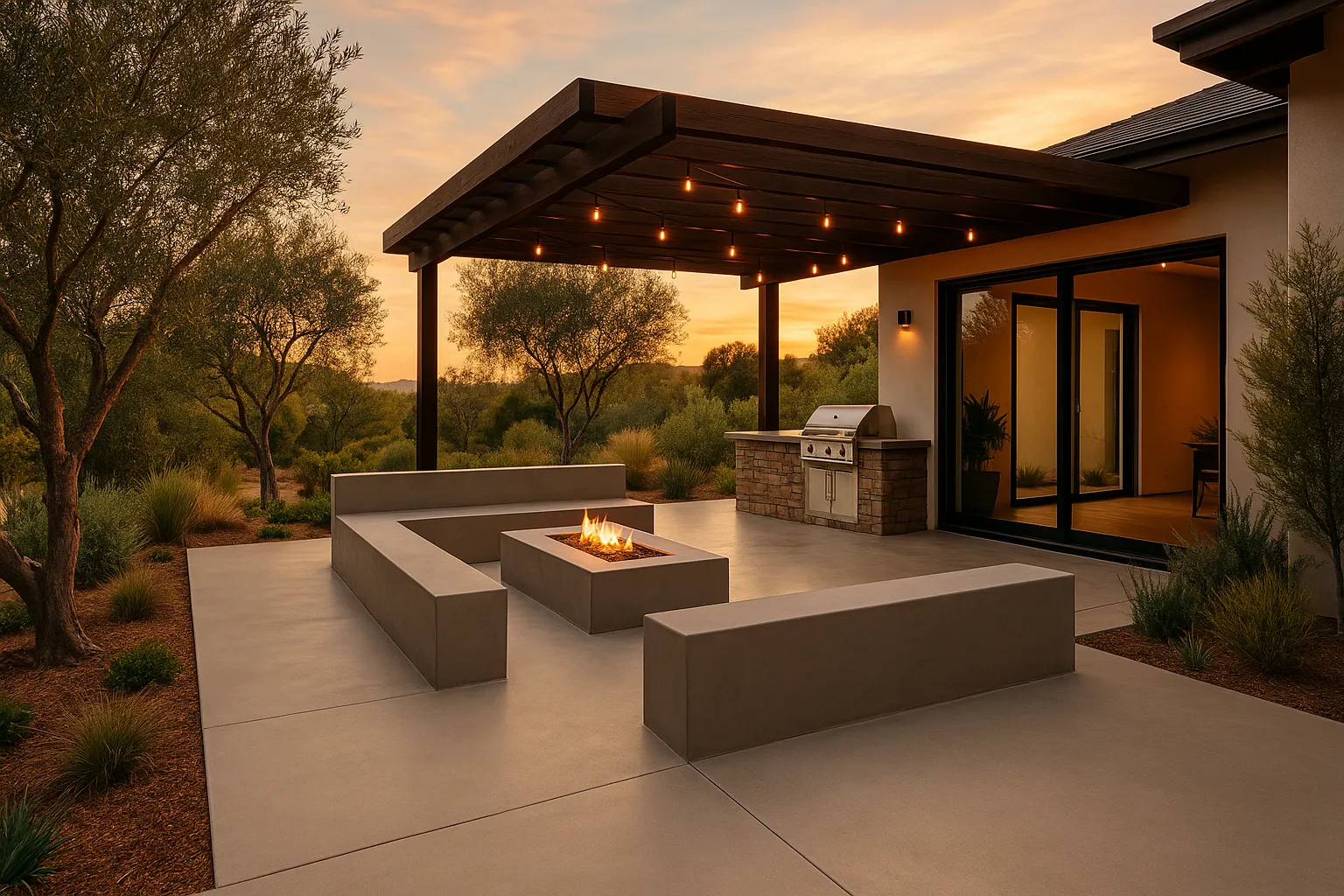
Most homeowners in [Thousand Oaks](/areas/thousand-oaks) sit on some of the best outdoor real estate in Southern California — and do almost nothing with it. A flat concrete pad, maybe a cheap patio set, and a gas grill that's seen better days. Meanwhile, the weather is practically begging you to live outside 300 days a year.
Outdoor living in Thousand Oaks is one of the highest-ROI investments a California homeowner can make right now, and in 2026, the demand for refined, low-maintenance outdoor spaces has never been stronger. Based on Cemora project data and regional contractor benchmarks, homeowners in the Conejo Valley are spending between **$28,000 and $95,000** on full outdoor living transformations — and recouping **65–80% of that cost** at resale according to the 2025 Remodeling Magazine Cost vs. Value Report (extrapolated to 2026 market conditions).
This guide covers everything: what these projects actually cost, how long they take, what materials hold up in Southern California's climate, and how to avoid the most expensive mistakes we see on job sites every week.
---
## What Is Outdoor Living, and Why Does It Matter in Thousand Oaks?
What is outdoor living? Outdoor living refers to the design and construction of functional, weather-resistant exterior spaces — patios, covered structures, kitchens, fire features, wet bars, and entertainment zones — that extend the usable square footage of a home beyond its interior walls.
In Thousand Oaks specifically, this matters more than almost anywhere else in California. The city averages **284 sunny days per year**, with mild temperatures ranging from the mid-50s in winter to the low 90s in summer. That climate means an outdoor kitchen or covered lounge isn't a seasonal luxury — it's a year-round room.
The Conejo Valley's housing stock also skews toward larger lots, Spanish-style and ranch homes with natural indoor-outdoor flow, and neighborhoods where curb appeal and lifestyle amenities drive sale prices. A well-executed outdoor living space isn't just enjoyable — it signals to buyers that a home has been thoughtfully maintained and upgraded.
"After years of working on homes across the Conejo Valley and greater [Los Angeles](/areas/los-angeles), the outdoor spaces that hold their value best are the ones built with the same material discipline as the interior," says the design team at Cemora. "Mineral surfaces, seamless transitions, and materials that don't crack or fade in the California sun — that's the standard."

---
## [How Much Does](/estimate) Outdoor Living Cost in Thousand Oaks?
Let's get specific, because vague ranges don't help you plan a budget.
Based on 2026 project data and regional contractor benchmarks across Thousand Oaks, Westlake Village, and the broader Conejo Valley:
### Outdoor Living Cost Breakdown by Project Type
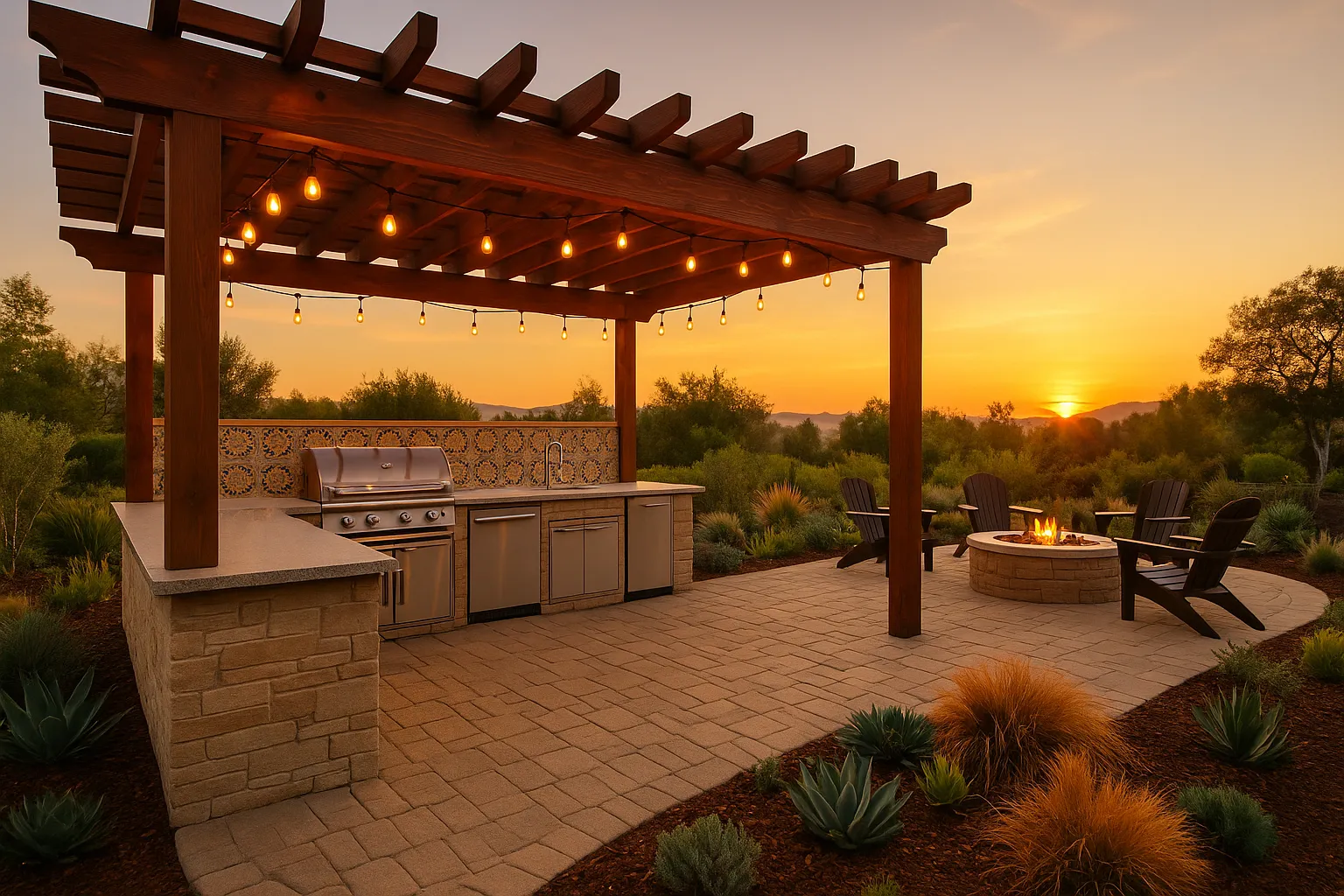
| Project Type | Entry-Level | Mid-Range | Premium |
|---|---|---|---|
| Basic Patio Cover / Pergola | $8,000–$14,000 | $15,000–$28,000 | $30,000–$55,000 |
| Outdoor Kitchen (basic) | $12,000–$20,000 | $22,000–$45,000 | $48,000–$90,000+ |
| Fire Pit or Fireplace | $3,500–$7,000 | $8,000–$18,000 | $20,000–$40,000 |
| Full Outdoor Living Suite | $35,000–$55,000 | $58,000–$85,000 | $90,000–$180,000+ |
| [Microcement](/services/microcement-bathrooms) / Mineral Surfaces | $18–$28/sq ft | $29–$42/sq ft | $45–$65/sq ft |
| Pool Deck Resurfacing | $6,000–$12,000 | $13,000–$22,000 | $24,000–$45,000 |
**Key cost drivers** in Thousand Oaks:
- **Material quality** — concrete pavers vs. porcelain vs. microcement vs. natural stone
- **Structural work** — footings, permits, grading
- **Appliance grade** — residential vs. [commercial](/services/microcement-commercial-hospitality)-spec outdoor kitchen equipment
- **Site conditions** — slope, drainage, existing hardscape removal
Ventura County building permits for outdoor structures typically run **$850–$3,200** depending on scope, and most covered structures over 200 square feet require one. Budget for it.
### Three Real Projects in the Conejo Valley
**Project 1 — Westlake Village, 380 sq ft covered patio with outdoor kitchen:** A homeowner on a hillside lot invested **$67,400** total — $24,000 for the aluminum pergola with motorized louvers, $31,000 for the outdoor kitchen with a 42" grill, pizza oven, and microcement countertops, and $12,400 for electrical, plumbing, and permit fees. Their Zillow estimate increased by approximately **$89,000** within 8 months of completion.
**Project 2 — Thousand Oaks, pool deck and lounge area resurfacing:** A family in the Lynn Ranch neighborhood replaced cracked concrete around a 1990s pool with a seamless microcement finish and added a gas fire pit. Total spend: **$28,600**. The project took 11 days and required no structural permits since no new structures were built.
**Project 3 — Newbury Park, full outdoor living build from scratch:** New construction on a flat 8,000 sq ft lot — covered outdoor room with ceiling fans and heaters, built-in BBQ island, wet bar with refrigerator, dining area with string lighting, and a bocce court. Final invoice: **$112,000**. The homeowners reported using the space more than their formal living room within the first month.
---
## Which Materials Hold Up Best in Southern California's Climate?
This is where a lot of Thousand Oaks homeowners get burned — literally and figuratively.
Southern California's outdoor environment is deceptively harsh. UV exposure is intense year-round, temperature swings between night and day can exceed 30°F, and the Santa Ana winds carry abrasive particulates every fall. Materials that look great in a showroom can crack, fade, or delaminate within two to three years if they're not specified for this climate.
### Microcement and Mineral Surfaces
What is microcement? Microcement is a polymer-modified cementitious coating — typically **2–3mm thick** — applied over existing substrates to create seamless, waterproof, UV-stable surfaces. Unlike traditional concrete, it doesn't require expansion joints every few feet, which means no cracking lines interrupting the visual flow of a patio or countertop.
For outdoor living applications in Thousand Oaks, microcement is particularly well-suited because:
- It bonds directly to concrete, tile, wood, and most existing substrates
- Properly sealed, it's **fully waterproof and stain-resistant**
- It handles the thermal cycling of California summers without delaminating
- Color is integral to the material, so it doesn't peel or chip
Cemora's [microcement floors and walls](/services/microcement-floors-walls?utm_source=blog&utm_medium=organic&utm_campaign=outdoor-living-thousand-oaks) and [microcement kitchens and countertops](/services/microcement-kitchens-countertops?utm_source=blog&utm_medium=organic&utm_campaign=outdoor-living-thousand-oaks) translate directly to outdoor applications — the same material system that performs in a [Beverly Hills](/areas/beverly-hills) bathroom performs on a Thousand Oaks patio.
### Porcelain and Large-Format Tile
Large-format porcelain (24"x48" and larger) has become the dominant choice for high-end outdoor floors in Southern California. It's **frost-resistant, UV-stable, and requires almost no maintenance**. Cost runs **$14–$32 per square foot installed** in the Thousand Oaks market as of 2026 projections based on 2025 pricing plus ~4% material cost drift.
### Concrete Pavers vs. Poured Concrete
Traditional poured concrete is the budget option, but it almost always cracks within 5–7 years on California clay soils. Concrete pavers are more forgiving — individual units can be reset if settling occurs — but grout lines collect dirt and require periodic sealing.
For a seamless, modern aesthetic, microcement overlay over existing concrete is often the best value play: **$22–$38 per square foot** installed, no demolition required, and a finish that looks like it cost twice as much.

---
## What Does the Outdoor Living Design Process Look Like?
A well-run outdoor living project follows a clear sequence. Here's how Cemora and professional outdoor living contractors in the Thousand Oaks area approach it:
### Step-by-Step: From Consultation to Completion
1. **Initial consultation and site assessment** (1–2 hours): Measure the space, assess drainage, identify utility locations (gas, water, electrical), and discuss lifestyle priorities. Do you cook outside three times a week or three times a year? That answer changes the budget allocation significantly.
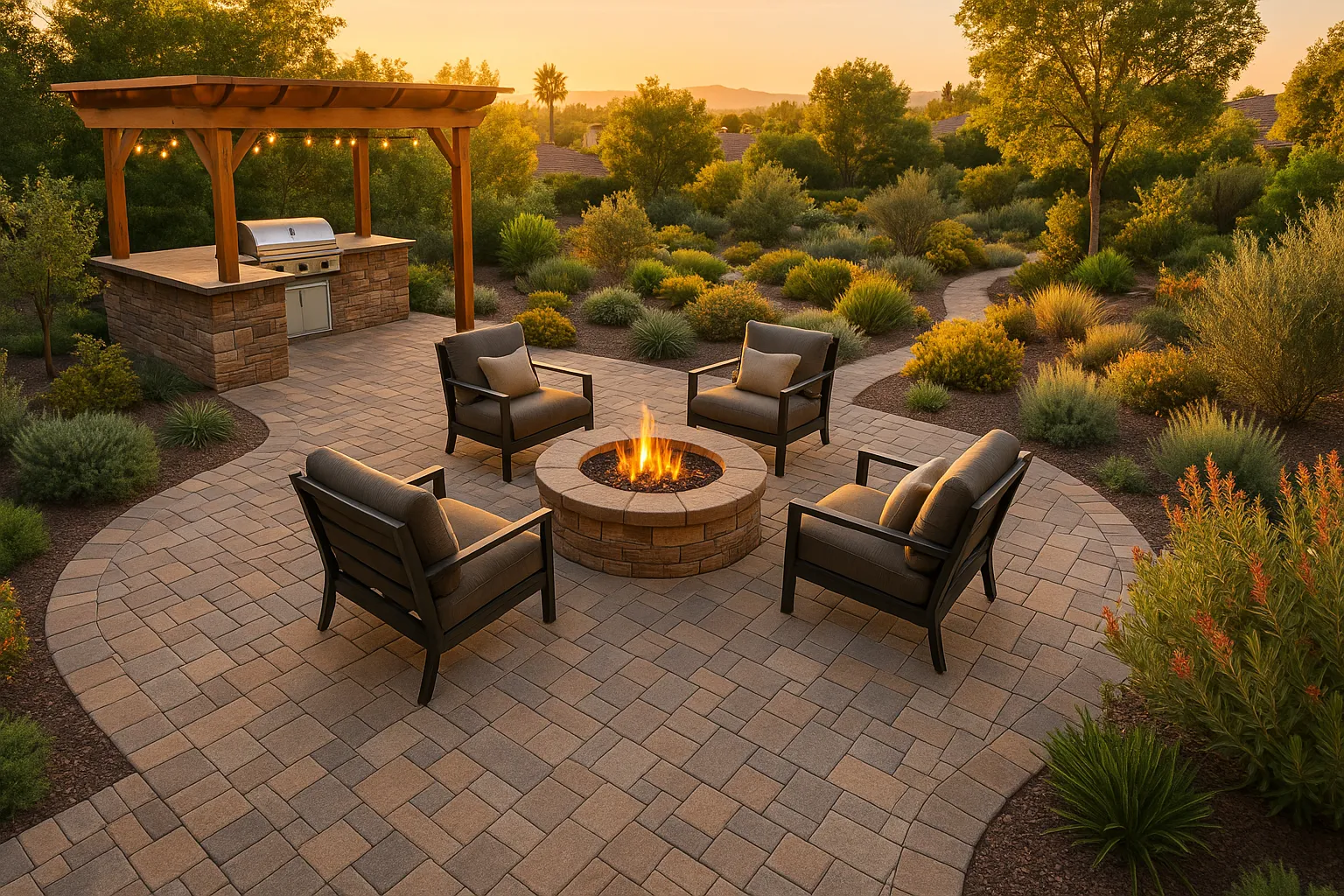
2. **Concept design and material selection** (1–2 weeks): Schematic layout, material samples, appliance specs. This is where you lock in the vision before any money is spent on construction.
3. **Permit application** (2–6 weeks in Ventura County): Covered structures, outdoor kitchens with gas, and electrical work all require permits through the Ventura County Building and Safety Division. Don't skip this — unpermitted outdoor structures can complicate home sales and void homeowner's insurance claims.
4. **Site preparation** (2–5 days): Demolition of existing hardscape if needed, grading, footing excavation for structural posts.
5. **Structural and utility rough-in** (1–3 weeks): Post footings, framing, gas line extension, electrical conduit, plumbing for outdoor sink or refrigerator drain.
6. **Surface work and finishes** (1–3 weeks): Microcement application, tile installation, countertop fabrication, cabinetry installation.
7. **Appliance installation and final connections** (2–5 days): Grill, pizza oven, refrigerator, lighting, fans, heaters.
8. **Final inspection and punch list** (1–3 days): County inspection sign-off, final cleaning, client walkthrough.
**Total timeline for a full outdoor living project: 8–16 weeks** from signed contract to completion, depending on permit wait times and project complexity. Simpler surface-only projects (microcement overlay, no structural work) can complete in **10–18 days**.
---
## How Does Outdoor Living in Thousand Oaks Compare to Other LA-Area Markets?
Thousand Oaks sits in an interesting position relative to the broader Los Angeles market. Labor costs are **roughly 8–12% lower** than core LA and [Santa Monica](/areas/santa-monica), but material costs are similar since supply chains run through the same regional distributors.
The Conejo Valley also has specific code considerations worth knowing:
- Ventura County enforces **Title 24 energy compliance** on structures with conditioned spaces
- Hillside lots (common in Thousand Oaks) require geotechnical reports for footings on slopes exceeding **15%**
- HOA restrictions in communities like Dos Vientos and Sherwood Country Club can limit structure height, materials, and color palettes
Always verify HOA CC&Rs before finalizing a design. We've seen homeowners spend $4,000 on design drawings only to discover their HOA prohibits aluminum pergolas in favor of wood — a $15,000 cost difference.
### Thousand Oaks vs. Comparable Markets — Cost Comparison
| Market | Avg. Outdoor Kitchen Cost | Avg. Covered Patio Cost | Labor Premium vs. TO |
|---|---|---|---|
| Thousand Oaks | $28,000–$55,000 | $15,000–$35,000 | Baseline |
| Santa Monica / West LA | $34,000–$68,000 | $19,000–$44,000 | +18–22% |
| Beverly Hills | $42,000–$85,000 | $24,000–$55,000 | +28–35% |
| [Pasadena](/areas/pasadena) | $26,000–$50,000 | $14,000–$32,000 | –5–8% |
| [Glendale](/areas/glendale) | $24,000–$46,000 | $13,000–$30,000 | –8–12% |
*2026 projections based on 2025 regional contractor data + ~4% annual cost drift. Actual bids vary by scope and site conditions.*
---
## Why Are Mineral Surfaces the Right Choice for Outdoor Kitchens and Wet Areas?
What is a mineral surface? A mineral surface is any coating or finish derived primarily from cementitious or silicate chemistry — including microcement, polished concrete, Venetian plaster, and lime-based renders. These materials are inherently alkaline-stable, UV-resistant, and breathable, making them ideal for outdoor environments that experience moisture cycling.
For outdoor kitchens specifically, the countertop surface takes more abuse than almost any interior surface in the home: heat from grills, grease splatter, wine spills, citrus acids, and direct sun for hours at a time.
Cemora's [microcement kitchens and countertops](/services/microcement-kitchens-countertops?utm_source=blog&utm_medium=organic&utm_campaign=outdoor-living-thousand-oaks) use a two-component polyurethane sealer system rated for **outdoor UV exposure and food-contact surfaces**. The result is a countertop that won't yellow, crack, or delaminate — even on a west-facing patio in Thousand Oaks where afternoon sun can push surface temperatures above 140°F in July.
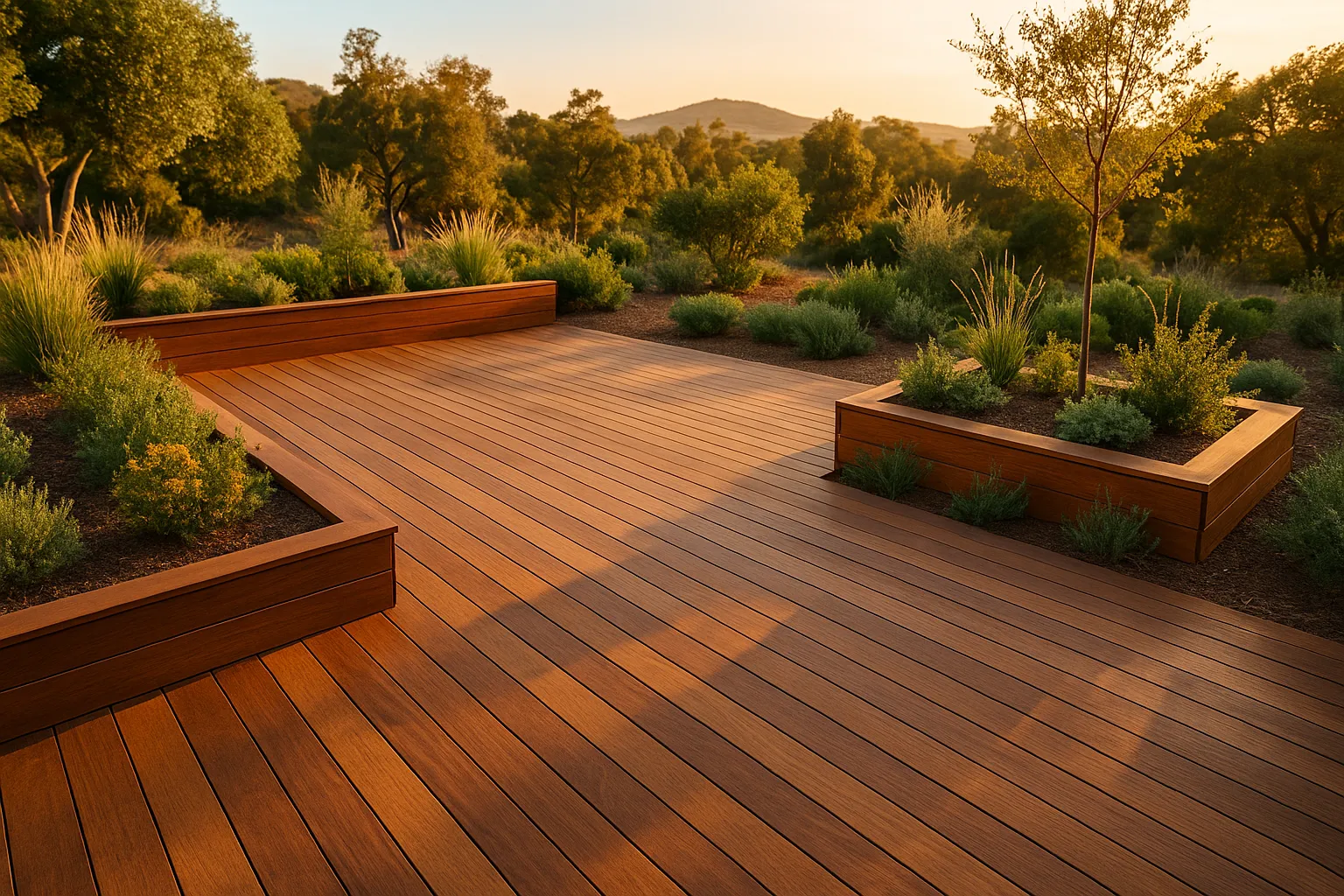
For outdoor wet areas — outdoor showers, pool equipment enclosures, bar sinks — the same waterproofing logic that makes microcement ideal for [microcement bathrooms and wet rooms](/services/microcement-bathrooms?utm_source=blog&utm_medium=organic&utm_campaign=outdoor-living-thousand-oaks) applies directly. A seamless, grout-free surface means no mold, no efflorescence, and no joint failure over time.

---
## What Are the Most Popular Outdoor Living Trends in 2026?
The outdoor living market in Southern California has shifted noticeably in 2026. Based on Houzz's 2025 State of the Industry report and current project inquiries across the LA region, here's what's actually moving:
**Trending in 2026:**
- **Motorized louvered pergolas** — aluminum systems that open and close with a remote, allowing rain protection without the feel of a fully enclosed room. Pricing: **$18,000–$45,000** installed.
- **Seamless indoor-outdoor floor continuity** — using the same microcement or large-format porcelain inside and outside to visually expand the home. This is one of the most requested finishes Cemora installs.
- **Outdoor wet rooms and showers** — particularly for homes with pools. A dedicated outdoor shower with microcement walls and teak decking runs **$8,000–$22,000** depending on plumbing complexity.
- **Minimalist fire features** — linear gas fire tables and rectangular fire bowls rather than traditional round fire pits. Range: **$3,500–$12,000** for a quality unit with gas connection.
- **Commercial-grade outdoor appliances** — brands like Lynx, Kalamazoo, and Hestan are dominating the high-end Thousand Oaks market. A Kalamazoo built-in grill alone runs **$8,000–$16,000**.
- **Biophilic integration** — living walls, integrated planters, and natural stone features that blur the line between architecture and landscape.
**What's fading:** Stacked stone veneers (feels dated), fake wood grain composite decking in visible areas, and overly themed "outdoor rooms" that try too hard to replicate interior spaces.
---
## How Do You Find the Right Outdoor Living Contractor in Thousand Oaks?
This is where homeowners make their most expensive mistakes — not in the design, but in the contractor selection.
California requires that any contractor performing work over **$500** hold a valid CSLB (Contractors State License Board) license. For outdoor living projects, you'll typically need a contractor with a **B-General Building** license, and potentially subcontractors with C-36 (Plumbing), C-10 (Electrical), and C-20 (HVAC/Mechanical) licenses for outdoor kitchens with full utility connections.
"CSLB requires all licensed contractors to carry workers' compensation insurance if they have employees, and general liability coverage is standard practice for any legitimate operation," the CSLB notes in its homeowner guidance. "Always verify a license at www.cslb.ca.gov before signing a contract."
**What to look for in an outdoor living contractor:**
- Active CSLB license (verify online — takes 60 seconds)
- Portfolio of completed projects in similar Ventura County neighborhoods
- References from projects completed in the last 12–18 months
- Written scope of work with line-item pricing — not a single lump sum
- Clear payment schedule tied to project milestones, not calendar dates
- Permit-pulling experience in Ventura County specifically
**Red flags to walk away from:**
- Requests for more than **30–35% upfront** before any work begins
- No physical business address in the region
- Pressure to "start immediately" before permits are pulled
- Vague material specs ("quality granite" instead of a specific slab name and source)
For projects involving microcement or mineral surface finishes, ask specifically about the applicator's training and certification. Microcement is a skilled-trade application — a bad install can't be fixed with a coat of sealer. It has to come off and be redone.
Explore Cemora's [commercial and hospitality microcement](/services/microcement-commercial-hospitality?utm_source=blog&utm_medium=organic&utm_campaign=outdoor-living-thousand-oaks) work to understand the level of precision that transfers to residential outdoor projects, or [book a consultation](/book?utm_source=blog&utm_medium=organic&utm_campaign=outdoor-living-thousand-oaks) to walk through your specific site.
---
## What's the Return on Investment for Outdoor Living in Thousand Oaks?
Numbers matter here, so let's be precise.
According to the **2025 Remodeling Magazine Cost vs. Value Report** (the most recent full dataset, with 2026 values extrapolated at ~4% market drift), outdoor living improvements in the Pacific region show the following ROI at resale:
- **Outdoor kitchen addition:** 55–68% cost recouped
- **Wood deck addition:** 68–72% cost recouped
- **Composite deck addition:** 62–66% cost recouped
- **Patio addition (concrete/stone):** 58–65% cost recouped
Those numbers look modest until you factor in **days on market** and **buyer competition**. In Thousand Oaks' 2025–2026 market, homes with professionally designed outdoor living spaces are selling **14–21 days faster** than comparable homes without them, based on Conejo Valley Association of Realtors data. In a market where carrying costs run **$3,500–$6,000 per month** on a median-priced home, that time savings alone can justify a significant portion of the outdoor living investment.
Beyond resale, there's the lifestyle ROI — harder to quantify but real. The homeowners in the Newbury Park project mentioned above (the $112,000 full outdoor build) reported canceling their country club membership within six months of completion, saving **$8,400 per year** in dues. At that rate, the space pays for itself in entertainment savings alone within 13 years — while also adding equity.
If you're ready to see what's possible for your specific property, [get a free estimate](/estimate?utm_source=blog&utm_medium=organic&utm_campaign=outdoor-living-thousand-oaks) or [contact us](/contact?utm_source=blog&utm_medium=organic&utm_campaign=outdoor-living-thousand-oaks) to start a conversation about your outdoor living goals.
---
## Frequently Asked Questions
### How much does outdoor living cost in Thousand Oaks in 2026?
Based on current project data across the Conejo Valley, a basic patio cover or pergola starts at **$8,000–$14,000**, while a full outdoor living suite with kitchen, covered structure, and fire feature typically runs **$58,000–$95,000**. Premium builds with motorized pergolas, commercial-grade appliances, and custom mineral surfaces can reach **$150,000+**. The biggest cost variables are structural complexity, appliance grade, and material selection.
### How long does an outdoor living project take to complete in Thousand Oaks?
A surface-only project — such as a microcement patio overlay with no structural work — can complete in **10–18 days**. A full outdoor living build requiring permits, structural work, and utility connections typically takes **8–16 weeks** from signed contract to final inspection. Ventura County permit wait times currently run **3–6 weeks**, which is the most common cause of project delays.
### Do I need a permit for an outdoor kitchen or patio cover in Thousand Oaks?
Yes, in most cases. Covered structures over **200 square feet**, outdoor kitchens with gas connections, and any electrical work require permits through the Ventura County Building and Safety Division. Unpermitted structures can complicate home sales and may need to be removed or retroactively permitted — a process that's often more expensive than doing it right the first time. Always pull permits.
### What is the best surface material for an outdoor kitchen countertop in Southern California?
For Thousand Oaks' climate — intense UV, heat, and occasional moisture — **microcement with a UV-stable polyurethane sealer** and **porcelain slabs** are the top performers. Both handle thermal cycling, resist staining, and don't require the same level of ongoing maintenance as natural stone. Granite and quartzite are also excellent but require annual sealing in outdoor applications. Avoid standard quartz (engineered stone) outdoors — the resin binders can yellow and degrade under prolonged UV exposure.
### What is microcement and why is it used in outdoor living spaces?
Microcement is a polymer-modified cementitious coating applied at **2–3mm thickness** over existing substrates to create seamless, waterproof, mineral surfaces. In outdoor living applications, it's used for patio floors, countertops, outdoor shower walls, and pool surrounds because it bonds directly to concrete, tile, or wood without requiring demolition. A properly sealed microcement surface is **fully waterproof, UV-stable, and grout-free**, eliminating the maintenance issues associated with traditional tiled surfaces.
### How do I find a licensed outdoor living contractor in Thousand Oaks?
Verify any contractor's license at **www.cslb.ca.gov** before signing anything. For outdoor living projects, look for a **B-General Building** license holder who also coordinates licensed subcontractors for plumbing (C-36), electrical (C-10), and gas work. Ask for references from completed projects in Ventura County specifically — local permit experience matters. Never pay more than **30–35% upfront**, and insist on a written scope with line-item pricing.
### What outdoor living features add the most resale value in Thousand Oaks?
Based on regional real estate data and the 2025 Cost vs. Value Report, **outdoor kitchens** and **covered living structures** consistently generate the strongest buyer interest in the Conejo Valley market. Homes with professionally designed outdoor living spaces are selling **14–21 days faster** than comparable properties without them. The combination of a covered structure, built-in grill, and seamless hardscape surface is the highest-ROI package for this market.
### Can microcement be used outdoors in a wet climate or near a pool?
Yes — with the right system. Outdoor microcement applications require a **UV-stable topcoat** (standard interior sealers will yellow and degrade outdoors) and proper substrate preparation to handle moisture cycling. Near pools, a **chlorine-resistant sealer formulation** is specified. Cemora's [microcement bathrooms and wet rooms](/services/microcement-bathrooms?utm_source=blog&utm_medium=organic&utm_campaign=outdoor-living-thousand-oaks) expertise directly informs outdoor wet area applications — the waterproofing principles are the same, with additional UV protection layered in.
### How much does a microcement patio cost in Thousand Oaks?
Microcement patio installations in the Thousand Oaks area run **$22–$42 per square foot installed**, depending on substrate condition, color complexity, and the number of coats required. A **400 square foot patio** would typically cost **$8,800–$16,800** for the microcement work alone, not including any structural changes or landscaping. This is often more cost-effective than full demolition and replacement with pavers or tile when the existing concrete slab is structurally sound.
### What should I budget for outdoor lighting and electrical in an outdoor living project?
Outdoor electrical for a mid-range project — including recessed lighting under a pergola, outlet installations, fan wiring, and landscape lighting — typically runs **$3,500–$8,500** in the Thousand Oaks market. Smart lighting systems with app control add **$1,500–$4,000** to that figure. All outdoor electrical work in California requires a licensed C-10 contractor and must be inspected by the county — factor both the cost and the permit timeline into your project schedule.
---
The backyard you've been meaning to fix for three years isn't going to build itself — and in Thousand Oaks' real estate market, every season you wait is a season of equity and enjoyment left on the table. Whether you're starting with a simple microcement patio overlay or planning a full outdoor kitchen and lounge build, the first step is understanding what your specific site and budget can realistically achieve.
Explore our [microcement floors and walls](/services/microcement-floors-walls?utm_source=blog&utm_medium=organic&utm_campaign=outdoor-living-thousand-oaks) and [microcement kitchens and countertops](/services/microcement-kitchens-countertops?utm_source=blog&utm_medium=organic&utm_campaign=outdoor-living-thousand-oaks) services to see how mineral surfaces translate outdoors, or [book a consultation](/book?utm_source=blog&utm_medium=organic&utm_campaign=outdoor-living-thousand-oaks) and let's walk your property together.
---
**Ready to start your your project in Los Angeles?** [Book a free consultation](/book?utm_source=blog&utm_medium=organic&utm_campaign=outdoor-living-in-thousand-oaks-expert-guide-for-california-homeowners-2026) — we'll come walk through your space and give you straight numbers, no pressure. Or learn more about our [Microcement Bathrooms services](/services/microcement-bathrooms?utm_source=blog&utm_medium=organic&utm_campaign=outdoor-living-in-thousand-oaks-expert-guide-for-california-homeowners-2026).