Room Additions in Palos Verdes: The Expert Guide California Homeowners Actually Need (2026)
By Gilad Segev · August 17, 2026 · Last updated August 17, 2026 · Room Additions
## Room Additions [Palos Verdes](/areas/palos-verdes): What It Really Costs and How to Do It Right
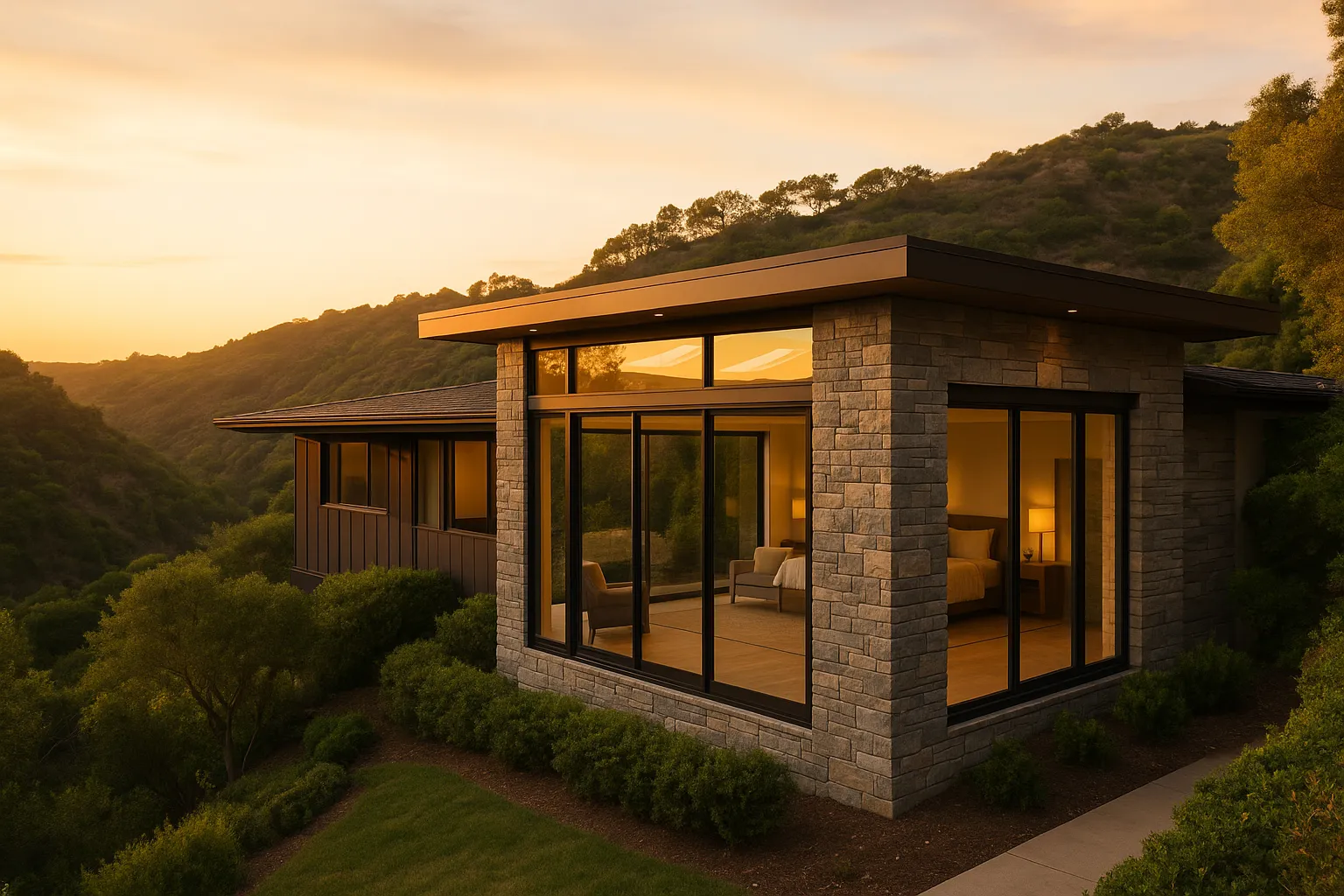
Room additions in Palos Verdes are one of the most complex — and most rewarding — home improvement projects you can take on in Southern California. The Peninsula's hillside terrain, strict HOA covenants, and Rancho Palos Verdes building codes create a permitting environment that trips up even experienced contractors. Before you call anyone, here's what you need to know.
A **typical room addition in Palos Verdes runs between $180 and $380 per square foot** in 2026, based on Cemora project data and regional contractor benchmarks across the South Bay. That means a modest **400-square-foot primary suite addition** lands somewhere between **$72,000 and $152,000** — before landscaping, furniture, or the inevitable surprises that come with hillside construction.
This guide covers real costs, real timelines, and the specific local factors that make Palos Verdes different from anywhere else in LA County.
---
## What Is a Room Addition? (And What Counts as One in Palos Verdes)
What is a room addition? A room addition is any permanent, permitted structure built onto an existing home's footprint — expanding the livable square footage beyond the original building envelope. This is distinct from an ADU (Accessory Dwelling Unit), which is a separate living unit, or a remodel, which works within existing walls.
In Palos Verdes, the term covers a wide range of projects:
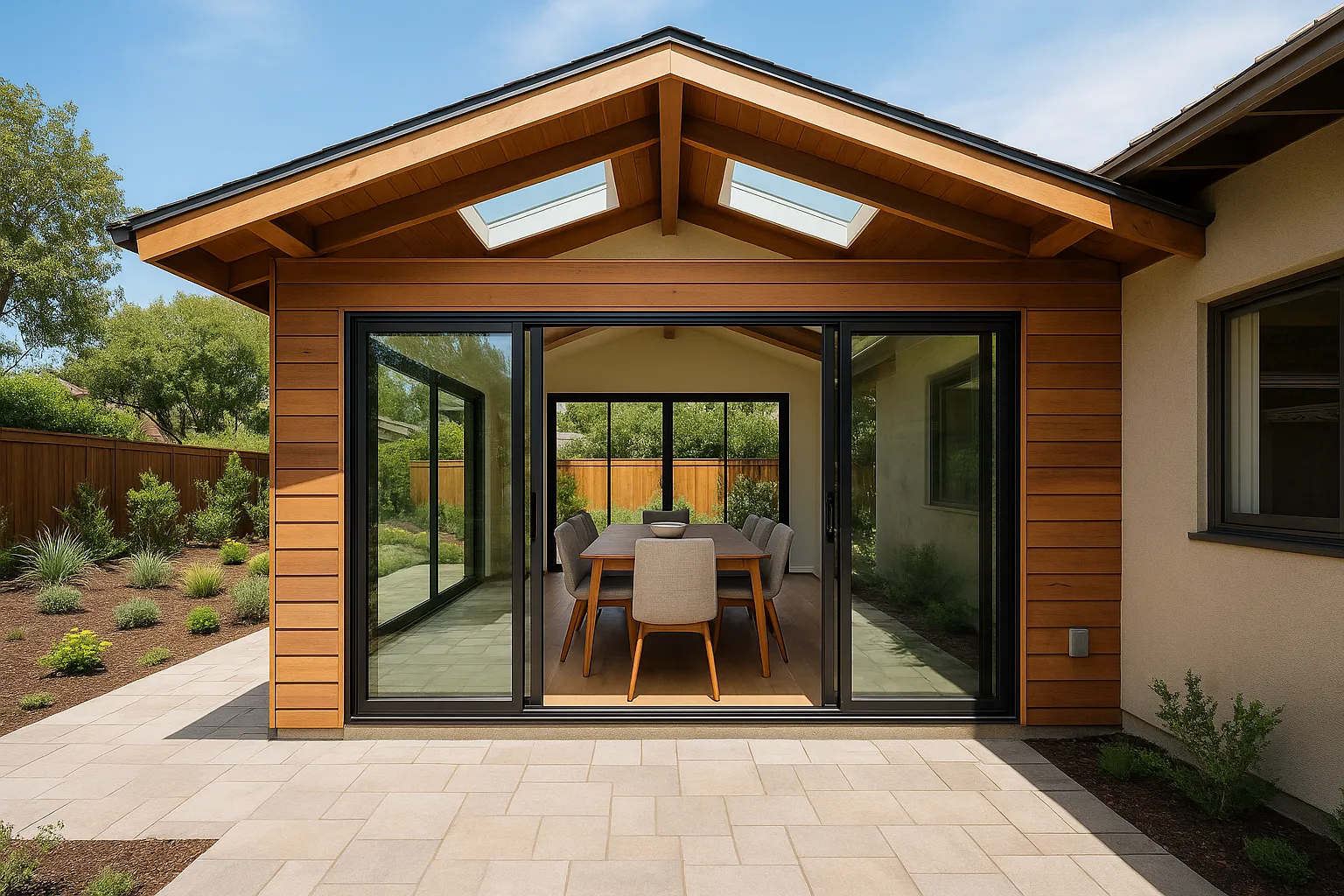
- **Bump-out additions** — extending one room by 50–200 sq ft (a dining room pushed into the backyard, for example)
- **Second-story additions** — adding an entirely new floor above the existing structure
- **Attached garage conversions with new addition** — converting a garage and adding new square footage simultaneously
- **Primary suite additions** — the most popular request in PV, typically 300–600 sq ft
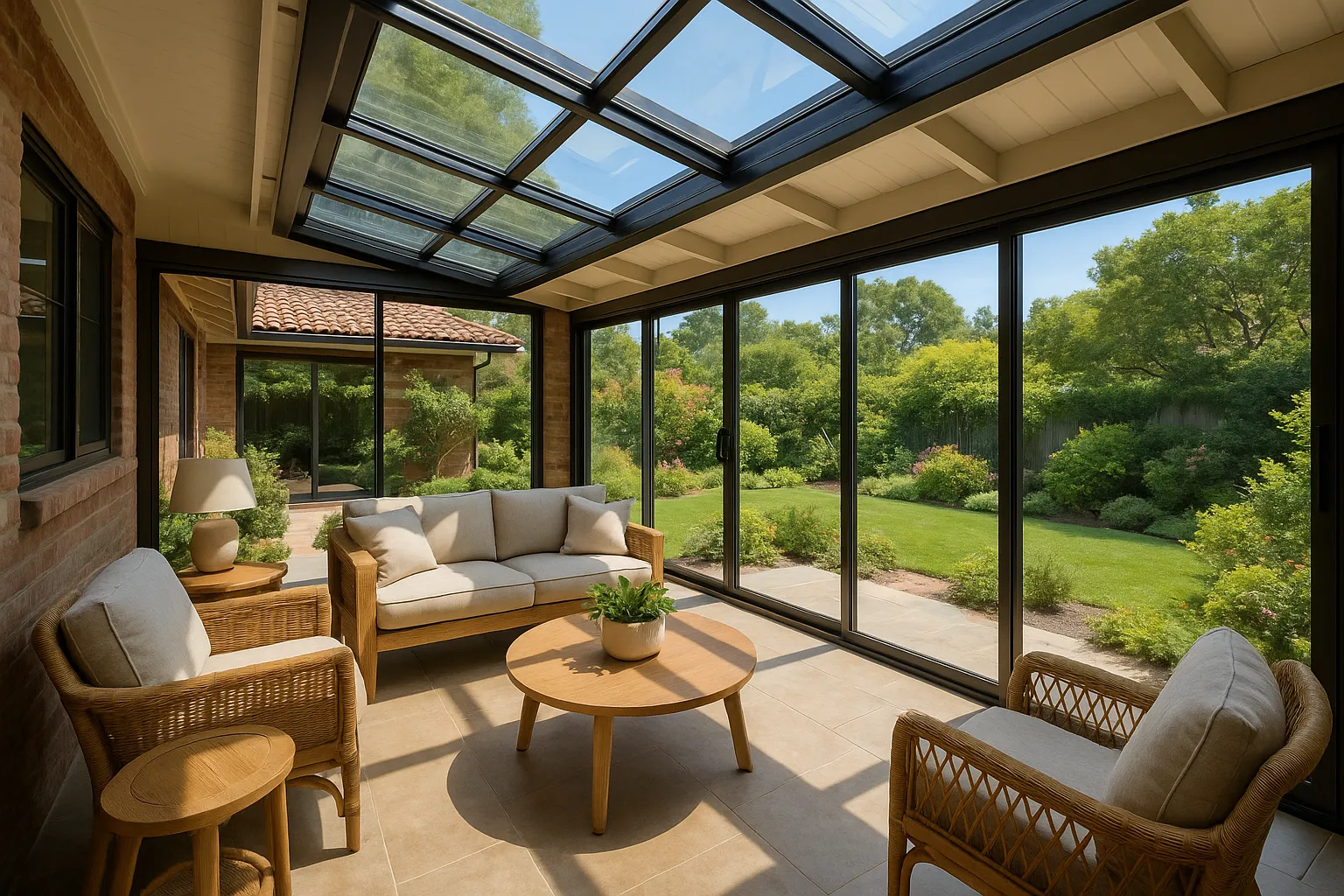
- **Sunroom or covered patio enclosures** — converting outdoor space to conditioned living space
Each category carries different structural, permitting, and cost implications — especially on the Peninsula, where soil reports, grading plans, and geological reviews can add **$8,000–$25,000** to a project before a single wall goes up.

---
## How Much Do Room Additions Cost in Palos Verdes?
Let's get specific. The ranges below are **2026 projections based on 2025 South Bay contractor data**, adjusted for the approximately 4% annual cost drift in LA County construction labor and materials.
### Room Addition Cost by Type
| Addition Type | Size Range | Cost Range (2026) | Cost Per Sq Ft |
|---|---|---|---|
| Bump-out addition | 100–250 sq ft | $28,000–$75,000 | $180–$300 |
| Primary suite addition | 300–600 sq ft | $90,000–$195,000 | $220–$325 |
| Second-story addition | 500–1,200 sq ft | $185,000–$480,000 | $280–$400 |
| Sunroom/enclosure | 150–400 sq ft | $35,000–$110,000 | $160–$275 |
| In-law suite (attached) | 400–700 sq ft | $120,000–$250,000 | $240–$360 |
| Full ground-floor addition | 600–1,000 sq ft | $175,000–$380,000 | $260–$380 |
**Why does Palos Verdes cost more than the LA average?** Three reasons: geological complexity, HOA design review, and the premium labor market in the South Bay. Contractors who know the Peninsula command higher rates — and they're worth it, because a permit rejection from the City of Rancho Palos Verdes or Rolling Hills Estates can add 3–6 months to your timeline.
### What Drives the Cost Up in PV Specifically
- **Soils report and geological review**: Required for most hillside additions. Budget **$4,500–$12,000** for a licensed geologist's assessment.
- **HOA architectural review**: Palos Verdes Homes Association (PVHA) review fees run **$500–$2,500** and can require multiple submission rounds.
- **Structural engineering**: Hillside foundations often require caissons or deepened footings. Engineering alone can run **$8,000–$18,000** on a complex site.
- **Permit fees**: RPV and PVE charge plan check and permit fees based on project valuation. On a $200,000 addition, expect **$6,000–$14,000** in municipal fees.
- **Access and staging**: Narrow canyon roads and steep driveways increase labor time and equipment costs by **15–25%** compared to flat-lot builds.
---
## Three Real Palos Verdes Room Addition Scenarios
### Scenario 1: Primary Suite Addition in Rancho Palos Verdes
A homeowner on Crestridge Road wanted to add a **480-square-foot primary suite** — bedroom, walk-in closet, and ensuite bath — to their 1970s ranch home. The project required a soils report ($6,800), structural engineering for the hillside foundation ($11,200), PVHA architectural review (two rounds, $1,800 total), and RPV building permit ($9,400). Construction costs came in at **$148,000**, bringing the total project to **$177,200**. Timeline: **11 months from design to certificate of occupancy**.
### Scenario 2: Second-Story Addition in Palos Verdes Estates
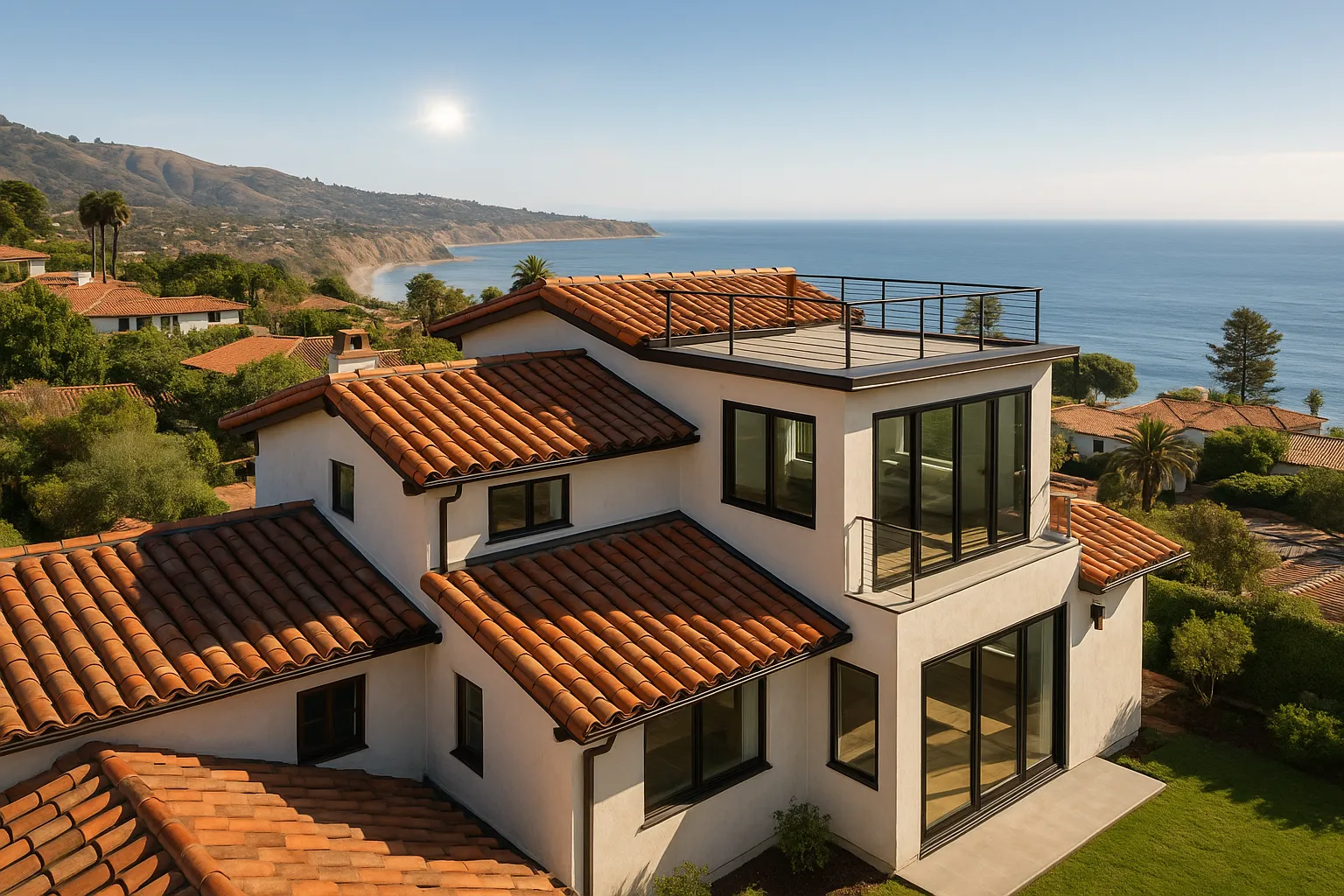
A family in PVE needed more space but had no usable backyard — the lot drops steeply behind the house. They went vertical: a **720-square-foot second story** with two bedrooms and a shared bath. Structural work to reinforce the existing first-floor framing added **$22,000** to the base construction cost. Total project: **$298,500**, including design, engineering, permits, and construction. The addition increased the home's appraised value by approximately **$340,000** — a strong return in the PV market.
### Scenario 3: Sunroom Enclosure in Rolling Hills Estates
A retired couple wanted to enclose their existing covered patio (320 sq ft) and add a small bump-out (80 sq ft) to create a year-round sunroom. Because the existing slab was already in place and the lot was relatively flat by PV standards, costs stayed lower: **$68,400** total, including new windows, HVAC extension, electrical, and insulation. Permit timeline was just **14 weeks** — fast for the Peninsula.

---
## Why Is Palos Verdes Different From Other LA Room Addition Projects?
Most homeowners who've done additions elsewhere in LA County are surprised by the Peninsula's requirements. Here's what sets PV apart:
### The Geological Factor
Palos Verdes sits on an ancient landslide complex. The California Department of Conservation has mapped significant portions of the Peninsula as **active or potentially active landslide zones**. This isn't a scare tactic — it's a real engineering consideration that affects foundation design on nearly every hillside addition. A **caisson foundation** (drilled concrete piers reaching stable soil or bedrock) can cost **$25,000–$65,000** alone, depending on depth and count.
### The HOA Layer
Most of Palos Verdes falls under the jurisdiction of the Palos Verdes Homes Association, which maintains architectural standards across the four PV cities. Before you can pull a building permit, you typically need PVHA approval — and their design criteria are specific. Rooflines must match or complement the existing structure. Exterior materials are reviewed. Setbacks are enforced strictly. Plan on **6–14 weeks just for HOA review**, separate from the city's plan check process.
### What Is a Caisson Foundation?
What is a caisson foundation? A caisson is a deep, drilled concrete pier that transfers structural loads from a building down through unstable surface soils to stable bedrock or competent soil layers below. In Palos Verdes hillside construction, caissons are frequently required for room additions because the native soil — often expansive clay — doesn't provide adequate bearing capacity for conventional spread footings. A typical PV addition might require **8–20 caissons at depths of 15–40 feet**.
---
## How Long Does a Room Addition Take in Palos Verdes?
Timeline is where most homeowners get blindsided. Based on industry benchmarks and South Bay contractor experience, here's a realistic breakdown:
### Phase-by-Phase Timeline
**1. Design and Architecture** — 6–12 weeks
Your architect produces construction drawings. For a primary suite addition, expect 8 weeks minimum. Complex second-story projects can take 14–18 weeks.
**2. HOA Architectural Review** — 6–14 weeks
Submit to PVHA. First review typically takes 4–6 weeks. If revisions are required (common), add another 4–8 weeks for the second round.
**3. City Plan Check and Permit** — 8–16 weeks
Rancho Palos Verdes and Palos Verdes Estates both offer over-the-counter review for simple projects, but most room additions require full plan check. Budget **10–14 weeks** for a typical addition.
**4. Construction** — 12–24 weeks
Actual build time depends on scope. A bump-out addition might take 12 weeks. A full second-story addition with complex structural work can run 20–24 weeks.
**5. Final Inspections and Certificate of Occupancy** — 2–4 weeks
Scheduling final inspections in RPV typically takes 2–3 weeks. If corrections are required, add time.
**Total realistic timeline: 9–18 months from first design meeting to move-in.** Yes, that's longer than contractors in other parts of LA will tell you. In Palos Verdes, it's accurate.
---
## What Does the Room Addition Process Actually Look Like?
Here's the step-by-step process Cemora and experienced PV contractors follow on a typical room addition project:
1. **Initial consultation and site assessment** — Walk the property, assess structural conditions, discuss goals and budget. Identify geological concerns early.
2. **Feasibility study** — Review zoning setbacks, lot coverage limits, HOA restrictions, and geological zone designations before committing to design.
3. **Architect engagement** — Select an architect familiar with PV's HOA requirements. This saves weeks of revision cycles.
4. **Soils report (if required)** — Commission a licensed geologist. Required for most hillside sites and any project in a mapped landslide zone.
5. **Construction document preparation** — Full permit-ready drawings including architectural, structural, mechanical, electrical, and plumbing plans.
6. **HOA submission and approval** — Submit to PVHA. Respond promptly to any revision requests.
7. **City permit application** — Submit to the relevant city building department (RPV, PVE, RHE, or RH depending on your address).
8. **Contractor bidding** — Get **3 competitive bids** from licensed, insured contractors with verifiable PV experience. Check CSLB license status at cslb.ca.gov.
9. **Construction** — Phased build with regular inspections at foundation, framing, rough MEP, insulation, and drywall stages.
10. **Final walkthrough and punch list** — Document every item before releasing final payment.
11. **Certificate of Occupancy** — Issued by the city after all inspections pass.

---
## Which Room Addition Type Adds the Most Value in Palos Verdes?
In the PV real estate market, **primary suite additions and second-story additions** consistently deliver the strongest return on investment. According to the **2025 Remodeling Magazine Cost vs. Value Report** (the most recent data available), primary suite additions in the Pacific region recoup approximately **54–62% of project cost** at resale — but in the Palos Verdes market specifically, where median home prices exceed **$2.1 million** (2025 Zillow data), the value recapture tends to run higher because buyers in this price range expect expanded primary suites.
"In the South Bay luxury market, a well-executed primary suite addition doesn't just recoup cost — it repositions the home in a higher buyer pool," notes one South Bay real estate appraiser who works regularly in PVE and RPV. "A 4-bedroom home with a proper primary suite will outperform a 4-bedroom without one by $200,000–$400,000 in this zip code."
For resale value, prioritize:
- **Primary suite additions** — highest buyer demand in PV
- **Additional bathrooms** included in any addition
- **Natural light and views** — additions that capture canyon or ocean views command premiums
- **Seamless architectural integration** — additions that look original, not tacked-on
---
## How Do You Choose the Best Room Additions Contractor in Palos Verdes?
Not every contractor who does great work in [Torrance](/areas/torrance) or [Long Beach](/areas/long-beach) is the right choice for a Palos Verdes room addition. The Peninsula's specific requirements mean you need someone with local track record.
### What to Look For
- **CSLB Class B General Contractor license** — verify at cslb.ca.gov. As of 2026 CSLB data, approximately **12% of California contractor complaints** involve unlicensed or improperly licensed work.
- **Verifiable Palos Verdes project history** — ask for addresses of completed PV additions, then drive by and look.
- **HOA submission experience** — have they submitted to PVHA before? Do they know the design criteria?
- **Geological awareness** — can they read a soils report and coordinate with a structural engineer? Or do they just say "we'll figure it out"?
- **References from PV homeowners** — not just testimonials on a website. Actual phone calls to past clients.
### Red Flags to Avoid
- Contractors who quote without seeing the site or reviewing setbacks
- Bids that don't include soils report, engineering, or permit fees
- Anyone who suggests skipping the HOA review to "save time"
- Unusually low bids — on a hillside addition, low bids almost always mean something was left out
---
## What Are the Permit Requirements for Room Additions in Palos Verdes?
What is a building permit? A building permit is the official authorization from your city's building department to begin construction, confirming that your plans comply with local zoning, building codes, and safety standards. In California, unpermitted additions are a serious liability — they must be disclosed at sale, can trigger code enforcement, and may be required to be demolished.
For room additions in the Palos Verdes cities, you'll typically need:
- **Building permit** from the city (RPV, PVE, RHE, or RH)
- **Grading permit** if any earthwork is involved
- **PVHA architectural approval** (for most PV addresses)
- **Geological clearance** for hillside sites
- **Structural engineering calculations** stamped by a licensed California SE
- **Energy compliance documentation** (Title 24 report)
The **California Building Code (CBC) 2022**, currently adopted statewide, governs structural requirements. California's Title 24 energy code requires that new additions meet current insulation, window, and HVAC efficiency standards — which adds cost but also long-term energy savings.
---
## Frequently Asked Questions
### [How much does](/estimate) a room addition cost in Palos Verdes?
A room addition in Palos Verdes typically costs between **$180 and $380 per square foot** in 2026, depending on the type, site conditions, and finish level. A 400-square-foot primary suite addition generally runs **$90,000–$152,000** for construction alone, with total project costs (including design, engineering, soils report, and permits) often reaching **$130,000–$200,000**. Hillside sites with caisson foundations will push costs toward the higher end of that range.
### How long does a room addition take in Palos Verdes?
From initial design meeting to certificate of occupancy, most room additions in Palos Verdes take **9–18 months**. The longest phases are HOA architectural review (6–14 weeks) and city plan check (8–16 weeks) — both of which run in sequence, not parallel, in most cases. Construction itself typically takes **12–24 weeks** depending on scope and site complexity.
### Do I need HOA approval for a room addition in Palos Verdes?
Yes, in almost every case. Most Palos Verdes addresses fall under the Palos Verdes Homes Association (PVHA), which requires architectural review and approval before a city building permit can be issued. The PVHA review process typically takes **6–14 weeks**, and revisions are commonly required on the first submission. Working with an architect experienced in PVHA submissions is strongly recommended.
### What is the difference between a room addition and an ADU in Palos Verdes?
A room addition expands the primary home's square footage and is attached to the existing structure — it becomes part of the main house. An ADU (Accessory Dwelling Unit) is a separate, self-contained living unit with its own kitchen and bathroom, which can be rented independently. ADUs are governed by different state and local regulations and have different fee structures. Room additions are typically permitted through standard building permit processes, while ADUs in California benefit from streamlined state law protections under AB 68 and SB 9.
### Will a room addition increase my property taxes in California?
Yes, but only on the value of the new addition — not the entire home. Under California's Proposition 13, a room addition triggers a partial reassessment of the newly constructed square footage only. The existing home's assessed value is not affected. Based on current LA County property tax rates of approximately **1.1–1.3%**, a $150,000 addition would increase annual property taxes by roughly **$1,650–$1,950 per year**.
### Do I need a soils report for a room addition in Palos Verdes?
For most hillside sites in Palos Verdes, yes. The City of Rancho Palos Verdes requires a soils report and geological review for additions in mapped landslide or geological hazard zones — which covers a significant portion of the Peninsula. Even in areas not formally mapped, structural engineers often require soils data to design appropriate foundations. Budget **$4,500–$12,000** for a licensed geologist's report.
### How much does a second-story addition cost in Palos Verdes?
A second-story addition in Palos Verdes typically costs **$280–$400 per square foot** in 2026, making a **700-square-foot second story** a **$196,000–$280,000** construction project before design, engineering, and permit costs. The higher per-square-foot cost reflects the structural reinforcement required to support a new floor above existing construction, plus the complexity of tying new framing into an existing roofline. Total project costs including soft costs often reach **$250,000–$380,000**.
### Can I live in my home during a room addition in Palos Verdes?
In most cases, yes — but with significant disruption. If the addition connects to existing living spaces (which it almost always does), expect periods of noise, dust, and limited access to certain rooms. During foundation work and framing, the disruption is highest. Some homeowners choose to temporarily relocate for **4–8 weeks** during the most intensive construction phases. Discuss this with your contractor before construction starts so you can plan accordingly.
### What finishes work best for room additions in the Palos Verdes climate?
Palos Verdes's coastal climate — moderate temperatures, marine layer, occasional salt air — favors durable, low-maintenance interior and exterior finishes. For interior floors and wet areas in new additions, **mineral [microcement](/services/microcement-bathrooms) surfaces** are increasingly popular in PV homes because they're waterproof, seamless, and handle humidity without warping or grout deterioration. Exterior finishes should be rated for coastal exposure; stucco with elastomeric coating or fiber cement siding both perform well in the PV microclimate.
### How do I find a reputable room additions contractor near me in Palos Verdes?
Start with the CSLB contractor license lookup at cslb.ca.gov to verify any contractor's license, bond, and insurance status. Ask for addresses of completed Palos Verdes additions — not just photos — and drive by to evaluate the work. Request references from PV homeowners specifically, since local HOA and geological experience is non-transferable. Get at least **3 detailed bids** that include design coordination, permit fees, soils report costs, and a clear construction timeline before making a decision.
---
## The Interior Finishes That Make Palos Verdes Additions Stand Out
Once the structure is built and permitted, the finish selections define whether your addition feels like a seamless part of the home or an obvious bolt-on. In the high-end PV market, buyers and appraisers notice the difference.
For bathrooms and wet areas in new primary suite additions, [microcement bathrooms and wet rooms](/services/microcement-bathrooms?utm_source=blog&utm_medium=organic&utm_campaign=room-additions-palos-verdes) have become a go-to choice among South Bay homeowners who want a spa-quality finish without grout lines or tile seams. The seamless surface reads as more expensive than it is — and in a PV primary suite, that perception matters.
For floors throughout the new addition, [microcement floors and walls](/services/microcement-floors-walls?utm_source=blog&utm_medium=organic&utm_campaign=room-additions-palos-verdes) offer a continuous, polished look that photographs beautifully and holds up to the coastal humidity that can cause hardwood to expand and contract seasonally.
If your addition includes a kitchen expansion or new kitchenette, [microcement kitchens and countertops](/services/microcement-kitchens-countertops?utm_source=blog&utm_medium=organic&utm_campaign=room-additions-palos-verdes) provide a waterproof, heat-resistant surface that integrates cleanly with modern cabinet designs popular in PV homes right now.
For homeowners building additions as part of a larger [commercial](/services/microcement-commercial-hospitality) or hospitality project — a guesthouse, a home office suite, or a property being prepared for the short-term rental market — [commercial and hospitality microcement](/services/microcement-commercial-hospitality?utm_source=blog&utm_medium=organic&utm_campaign=room-additions-palos-verdes) finishes offer the durability and maintenance profile that high-traffic spaces demand.
---
## Making the Decision: Is a Room Addition Right for Your Palos Verdes Home?
Room additions in Palos Verdes are not quick projects, and they're not cheap ones. But for homeowners who love their neighborhood, their views, and their lot — and don't want to sell and search in one of California's most competitive luxury markets — adding square footage is often the most financially sound decision available.
The math works when:
- Your home is **underbuilt relative to the lot** and neighborhood comps
- You plan to stay **7+ years** after the addition is complete
- The addition addresses a real functional need (not just more space for the sake of it)
- You've budgeted realistically — including the soft costs that most contractors don't mention upfront
If you're still in the early research phase and want to understand what a specific addition might cost on your property, the most useful next step is a site visit from someone who knows the Peninsula. Every lot in PV is different, and the difference between a $90,000 project and a $180,000 project often comes down to what's 20 feet underground.
[Book a consultation](/book?utm_source=blog&utm_medium=organic&utm_campaign=room-additions-palos-verdes) to talk through your project, or [get a free estimate](/estimate?utm_source=blog&utm_medium=organic&utm_campaign=room-additions-palos-verdes) if you already have a general sense of scope. And if you have questions before you're ready for that step, [contact us](/contact?utm_source=blog&utm_medium=organic&utm_campaign=room-additions-palos-verdes) — we're happy to point you in the right direction even if the project isn't a fit for Cemora's scope of work.
The right addition, done right, on the Palos Verdes Peninsula is one of the best investments a California homeowner can make. The wrong contractor, on the wrong site, without the right permits, is a problem that outlasts any renovation.

---
**Ready to start your your project in California?** [Book a free consultation](/book?utm_source=blog&utm_medium=organic&utm_campaign=room-additions-in-palos-verdes-the-expert-guide-california-homeowners-actually-need-2026) — we'll come walk through your space and give you straight numbers, no pressure. Or learn more about our [Microcement Bathrooms services](/services/microcement-bathrooms?utm_source=blog&utm_medium=organic&utm_campaign=room-additions-in-palos-verdes-the-expert-guide-california-homeowners-actually-need-2026).